A financial system is already in trouble when its last line of defense is a locked room full of exhausted private men trying to save it overnight. In the autumn of 1907, that room was J.P. Morgan’s private library on Madison Avenue in New York City, where Morgan convened the most powerful bankers and trust company heads in the country and proceeded to hold them there until they agreed to contribute to a rescue fund that would keep the American financial system from collapsing. The rescue worked — barely. But the fact that it required one private individual’s force of personality to stabilize a national financial system made the structural problem impossible to ignore.
The Panic of 1907 was not only a market crisis or a banking crisis. It was a systems failure — a demonstration that the United States had built a financial infrastructure far larger and more interconnected than the informal rescue mechanisms that had served it in earlier, simpler times. The trust companies that sat at the center of the panic operated with minimal regulation, no clearinghouse support, and no access to emergency liquidity. They had grown enormously by exploiting exactly these regulatory gaps to take on more risk and offer higher yields than the conventional banking system permitted. When that system came under stress, the deficiencies became catastrophic.
The panic did not only break trust. It exposed how fragile a national financial system becomes when private prestige has to perform public rescue work. The six years between the panic and the Federal Reserve Act of 1913 were not a comfortable interlude. They were a race to design a permanent institutional solution before the next crisis made the improvisation of 1907 impossible to repeat.

The Architecture of Fragility
American finance in 1907 was operating on a structure that had grown up organically over decades without any central coordinating institution. At its foundation were the nationally chartered banks, subject to federal oversight, required to hold reserves, and connected through the clearing house system that provided at least some emergency liquidity management during crises. Above them sat the trust companies — state-chartered, lightly regulated, with lower reserve requirements and freedom to invest in equities and real estate that national banks could not touch.
Trust companies had grown rapidly in the preceding decades by exploiting this regulatory arbitrage. By 1907, they held nearly a third of all bank deposits in New York State and were deeply interconnected with the stock market, particularly through call loans — overnight credit extended to securities brokers that could be called in immediately. Trust companies were major suppliers of call money, which meant they were exposed to stock market volatility in a way that conventional banks were not, and they held this exposure without the reserve requirements or clearinghouse access that would allow them to absorb it under stress.
The copper speculation that triggered the panic was almost incidental. Augustus Heinze and Charles Morse’s failed attempt to corner the copper market in early October 1907 revealed connections between several trust company officers and speculative ventures — connections that, once exposed, immediately called into question whether other trust companies held similar hidden exposures. The National Bank of Commerce’s announcement on October 21 that it would no longer honor Knickerbocker Trust checks was less a judgment about the Knickerbocker specifically than a signal about the entire category of institutions it represented.

Morgan’s Private Rescue
J.P. Morgan’s intervention in the Panic of 1907 is one of the most documented episodes in American financial history — and also one of the most mythologized. The reality is both more impressive and more alarming than the heroic version. Morgan did organize the rescue. He did convene the bankers, direct the capital, and use his personal authority to prevent an even broader collapse. The Trust Company of America was stabilized. The New York City government avoided default on short-term obligations that would have cascaded into further market disruption.
But Morgan succeeded partly through methods that illustrated exactly why private rescue was inadequate as a permanent system. He held bank presidents in his library and refused to let them leave until they signed commitment letters. He organized press management to avoid accelerating the panic further. He made allocation decisions — which institutions would be supported, which would be allowed to fail — based on his personal assessment of which were worth saving, without any public accountability or transparent process. The Knickerbocker Trust was allowed to fail; the Trust Company of America was saved. The difference, in large part, was who knew whom.
The episode demonstrated both the utility and the limits of concentrated private authority. Morgan could organize a rescue that the government — which had no central bank, no emergency lending mechanism, and no institutional framework for financial crisis management — could not. But his ability to organize it depended on conditions that could not be replicated: his personal prestige, his relationships with every major institution in the country, his capacity to compel cooperation through social authority rather than legal mandate, and his willingness to deploy his own capital and that of his firm as anchors for the rescue fund.

Why Private Rescue Could Not Scale
The fundamental problem was arithmetic. Paul Warburg and the advocates for a central bank had been making this argument for years before the panic: the American financial system had grown too large, too interconnected, and too prone to confidence dynamics for any private actor or private consortium to stabilize reliably. The rescue Morgan organized in 1907 cost approximately $25 million in private commitments — a meaningful sum, but modest compared to the scale of the exposures involved. If the panic had spread further, or if Morgan had been unwilling or unable to organize the response, the resources available would have been exhausted quickly.
Warburg’s vision and Morgan’s model represented genuinely different theories of how financial stability should be organized. Morgan believed that concentrated private authority — backed by relationships, reputation, and the credible threat of exclusion from capital markets — was the appropriate mechanism for managing financial crises. Warburg believed that only a public institution with the legal authority to issue currency, the mandate to act as lender of last resort, and the institutional permanence to outlive any individual could provide the scale of emergency support that a modern financial system required.
The 1907 panic settled the argument empirically, if not immediately politically. The question of how to design the central bank Morgan’s intervention had proved necessary — whether it should be publicly controlled or privately organized, regional or national, transparent or opaque — occupied Congress and the banking community for the next six years. The Bank of England’s rescue experience, which had managed lender-of-last-resort functions through a combination of institutional authority and market discipline for a century, was the most available model for American reformers to study.

The Hidden Machine Behind the Crisis
The trust machine at the center of the 1907 panic was not a conspiracy or a fraud — it was the predictable output of a regulatory system that rewarded risk-taking without providing the institutional backstops that risk-taking at scale requires. Trust companies had been allowed to grow large, interconnected, and under-reserved because doing so generated short-term profits for their owners and shareholders, satisfied depositors who wanted higher yields than conventional banks offered, and served the speculative financing needs of a rapidly expanding stock market and industrial economy.
The hidden machine was the set of incentive structures that made this outcome rational for every individual actor while making it dangerous for the system as a whole. A trust company president who maintained conservative reserves was forgoing profits that competitors willing to operate on thinner margins were capturing. A depositor who chose a trust company over a conventional bank was earning higher interest on funds that were, in fact, less protected. A broker relying on call money from trust companies for stock market financing was accessing a more flexible and cheaper source of credit than the conventional banking system offered. Each decision was locally rational. The collective result was a system tuned for normal times and catastrophically fragile under stress.
That is why the Panic of 1907 belongs inside Hidden Fortunes as a systems story rather than an individual story. The crisis was not produced by Morgan’s ambition or by the copper speculators’ greed, though both contributed. It was produced by an institutional architecture that had been optimized for growth without being designed for resilience — a pattern that recurs in every financial crisis, regardless of the specific instruments, regulations, or actors involved.

The Road to the Federal Reserve

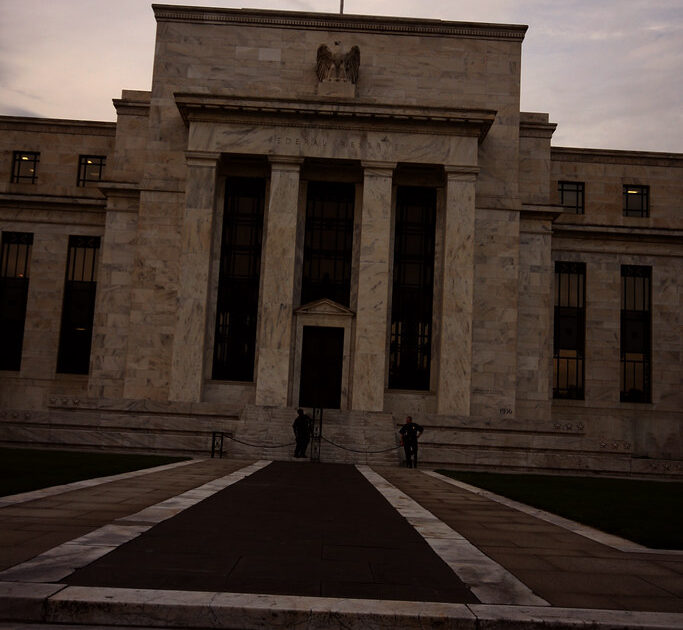
The Federal Reserve Act of 1913 was the direct institutional consequence of the 1907 panic — but its specific design reflected the political compromises necessary to pass it through a Congress deeply suspicious of centralized banking power. The Nelson Aldrich plan, developed by the National Monetary Commission that Congress established in the wake of the panic, proposed a privately controlled reserve association. The Owen-Glass bill that actually became law compromised between private control and public accountability, creating twelve regional reserve banks coordinated by a Federal Reserve Board in Washington.
The result was neither fully what Morgan would have designed nor what Warburg had proposed in his earlier writings. It was a political artifact that reflected the Progressive Era’s simultaneous desire for financial stability and suspicion of Wall Street dominance. Whether it solved the underlying problem — the absence of a credible lender of last resort available at sufficient scale to stabilize a modern financial system — was a question that would not be fully answered until the Great Depression demonstrated that the Federal Reserve Act had created the right institution in the wrong configuration.
The panic of 1907 and the Federal Reserve Act it produced are best understood as a single episode in the longer story of how institutional design catches up with the financial systems it is supposed to govern. Every generation builds financial structures that outpace existing rescue mechanisms. Eventually, a crisis forces the design of new institutions. Those institutions then constrain the next cycle of innovation, which eventually produces a new generation of structures that outpace them in turn. The 1907 panic was not the end of this cycle. It was one well-documented turn of a wheel that has not stopped turning.
Lessons for Modern Business Readers

1. Regulatory arbitrage creates systemic risk at the boundary
Trust companies grew dangerous not because they were poorly managed but because they occupied a regulatory boundary that rewarded risk-taking without requiring resilience. Every financial innovation that exploits the gap between what regulators can see and what market participants can do produces the same dynamic. The specific instrument changes; the pattern does not.
2. Private rescue is limited by the scale of private authority
Morgan’s 1907 intervention worked because the system was still small enough relative to his authority and capital that private rescue was conceivable. A decade later, the American financial system had grown large enough that the same rescue would have been impossible for any private actor. The lesson for crisis management design is that private mechanisms work until they don’t, and by the time they fail, it is too late to build public alternatives quickly.
3. The lender of last resort must be credibly unlimited
What makes a central bank effective in a crisis is not primarily its capital — it is the credibility of its commitment to supply liquidity without limit when the system requires it. A private rescue fund, no matter how large, is constrained by finite resources. An institution with the legal authority to create the currency can provide a backstop that changes the calculus of a bank run: if depositors believe the institution will be supported, they have no reason to run. The architecture of that commitment is what the Federal Reserve was designed to provide.
4. Every shadow banking system eventually needs a rescue
Trust companies in 1907, money market funds in 2008, crypto lending platforms in 2022 — the pattern is identical. A sector that grows large by exploiting regulatory gaps, paying higher yields, and operating with thinner buffers than the regulated system eventually encounters a stress event for which it has no institutional protection. The crisis is predictable in form even when the specific trigger is not.
5. Political constraints shape institutional design more than technical ones
The Federal Reserve that emerged from the 1907 crisis was not the optimal central bank design — it was the politically achievable one. The compromises embedded in the Owen-Glass Act created weaknesses that contributed to the Federal Reserve’s failures during the Great Depression. Understanding that institutional design is always a political process, not a purely technical one, is essential for evaluating what new institutions will actually do when tested.
6. Study the architecture, not the anecdote
The Morgan library story is a compelling anecdote. The institutional gap it revealed is the actual lesson. Every financial crisis has compelling anecdotes that attract attention and obscure the structural conditions that made the crisis possible. The Hidden Fortunes approach is to look past the drama to the architecture — because the architecture is what persists and what determines whether the next cycle produces the same outcome.
Conclusion
The Panic of 1907 matters because it is the clearest American example of a financial system that had outgrown its rescue mechanisms — and because the institutional response it produced reshaped American finance for the next century. The Federal Reserve, whatever its limitations and failures, represents the recognition that a modern financial system cannot be stabilized by private authority alone, however concentrated and credible that authority might be.
For readers thinking about contemporary finance, the 1907 parallel is not hard to draw. Crypto markets, private credit, leveraged loan markets, and other lightly regulated sectors are all producing structures that look, in their essential features, like the trust company system of 1907: higher yields than the regulated system, thinner reserves, dependence on confidence, and limited access to emergency liquidity. The specific instruments are different. The underlying architecture is familiar.
The question the 1907 panic poses for every generation is the same: which private rescue mechanisms will fail to scale, which institutional gaps will be exposed under stress, and how long after the crisis it will take to build the institutional architecture that should have existed before it. The panic did not only break trust. It broke the comfortable assumption that private authority was sufficient for a job that required public institutions. That assumption keeps coming back. The panic keeps proving it wrong.
![House of Morgan (REV 10) by Chernow, Ron [Paperback (2010)]](https://m.media-amazon.com/images/I/31SI3uU1S-L.jpg)