In every major panic, one question arrives before all the moral arguments: what happens if no one steps in?
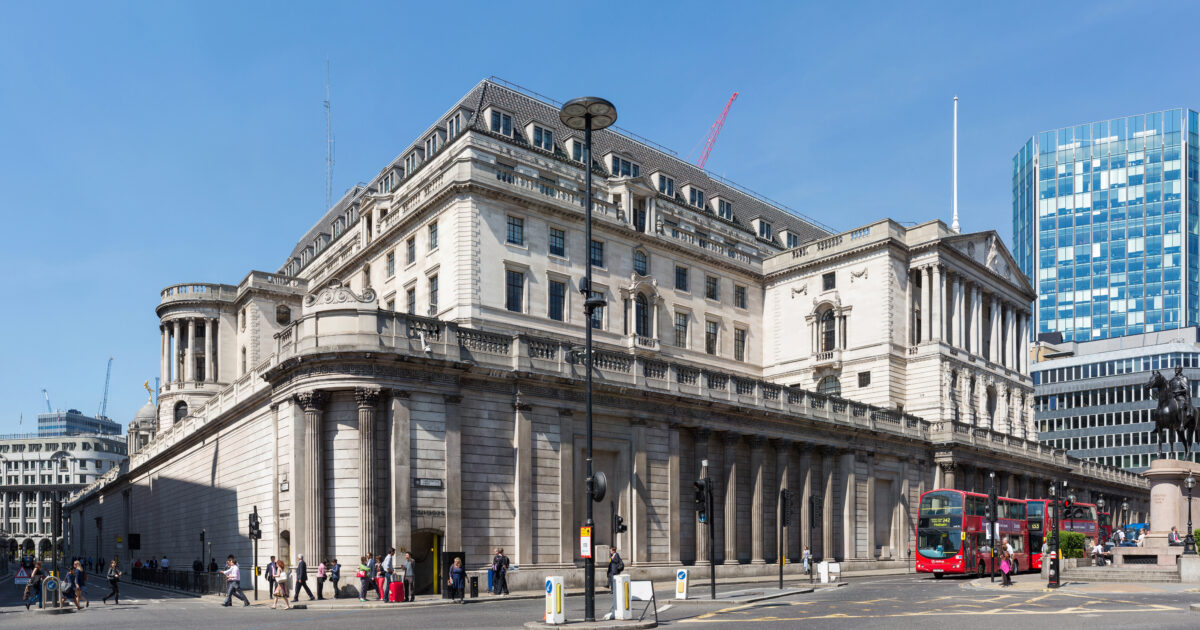
The Bank of England has been answering that question — imperfectly, selectively, and often controversially — for over three centuries. From the Baring crisis of 1890 to the post-2008 landscape of quantitative easing and emergency lending facilities, the Bank has developed something that is not quite a safety net and not quite a rulebook. It is a rescue logic: a set of principles and improvisations for deciding when to act, how much to commit, and who bears the consequences. Understanding that logic is more useful than understanding any single rescue in isolation.
Before the Machine Existed

For most of the nineteenth century, there was no formal guarantee that the Bank of England would intervene in a financial crisis. The Bank was a private institution, founded in 1694 to lend money to the government. It had gradually accumulated the functions of a central bank — holding gold reserves, acting as banker to the government, clearing interbank payments — but its obligation to rescue failing institutions was contested right up to the moment it did it.
Walter Bagehot, writing in Lombard Street in 1873, tried to give the rescue function a theoretical foundation. His argument was practical rather than moral. In a panic, he wrote, the Bank should lend freely, at penalty rates, against good collateral. The goal was not to reward the reckless but to prevent solvent institutions from being dragged down by the illiquidity of their neighbors. The distinction between a solvency crisis and a liquidity crisis was Bagehot’s central contribution, and it remained the organizing concept for rescue debates for the next 150 years.
Bagehot’s framework assumed that central bankers could tell the difference between insolvent banks — which deserved to fail — and illiquid ones — which deserved to be saved. In practice, that distinction is rarely clean during an actual panic, which is why real rescues have always involved judgment calls that the theory cannot fully specify.
The Baring Test

The 1890 Baring crisis was the moment the rescue machine was first assembled under real pressure. Barings Brothers, one of the most prestigious merchant banks in Britain, had overextended itself in Argentine bonds. When Argentine debt stopped performing, Barings faced insolvency on a scale that would have dragged down much of the London financial system with it.
The Bank of England’s Governor, William Lidderdale, did not have a rulebook for what to do. He improvised. He spent several days quietly assessing Barings’ books, determined that the firm was insolvent but that a rescue was worth the cost of systemic contagion, and then organized a private sector guarantee fund — contributions from major British banks — backed by a Bank of England commitment to support the process. The arrangement protected depositors and counterparties without using public money directly, and it worked. Barings was wound down and reconstituted. The panic never fully arrived.
What Lidderdale had demonstrated was something more durable than a single rescue: a template. Assess the systemic risk quietly. Assemble private contributions before making a public commitment. Move fast enough that confidence does not collapse before the rescue is in place. The Bank would return to variations of this template in 1914, in 1974, and in fragmentary ways during the 2008 crisis.
The Logic Behind Selective Support

The most uncomfortable truth about the rescue machine is that it has always been selective. Not every failing institution is rescued. Not every creditor is protected. The Bank of England — like other central banks — makes implicit judgments about which failures are too connected, too large, or too symbolically important to be allowed to run.
J.P. Morgan’s crisis interventions in America followed a similar logic: the goal was never to save everyone, but to prevent the cascade. The same principle governed the Bank’s decisions in 1890. The question was never whether Barings deserved to fail on its own merits. The question was whether a Barings collapse would pull down enough other institutions to constitute a systemic event. When the answer was yes, rescue became a tool for protecting the architecture rather than rewarding the firm.
This selectivity is both the strength and the moral problem of the rescue machine. It protects the financial system efficiently when it works. It also creates what economists call moral hazard: the knowledge that important institutions might be rescued can encourage those institutions to take more risk than they otherwise would. The Bank of England has never fully resolved this tension. Neither has any other central bank.
From Bagehot to Quantitative Easing

The twentieth century industrialized the rescue function. Bank of England interventions became more frequent, more formalized, and eventually more public. The 1974 secondary banking crisis, the 1984 Johnson Matthey rescue, and the 1991 BCCI collapse each added new chapters to the Bank’s institutional memory about how to manage financial failure without triggering broader panic.
The 2008 crisis tested the rescue logic at global scale. Lehman Brothers’ collapse demonstrated what happened when the rescue machine failed to engage in time: cascading failures, frozen credit markets, and an economic contraction that took years to reverse. The Bank of England, coordinating with the Treasury, moved quickly to recapitalize British banks and provide emergency liquidity. The interventions were larger, faster, and more direct than anything in the Bank’s previous history.
What followed — quantitative easing, near-zero interest rates, expanded asset purchase programs — represented a further evolution of the rescue logic. The Bank was no longer just preventing panic. It was actively managing the pace of recovery by altering the price of money across the entire economy. The distance from Bagehot’s “lend freely at penalty rates” to negative real interest rates and trillion-pound asset portfolios is considerable, but the underlying logic — protect confidence, prevent cascade — remained continuous.
The Costs the Machine Accumulates
Every rescue that succeeds creates obligations and precedents. The Lehman lesson — that allowing a systemically important institution to fail produces catastrophic collateral damage — has made future rescues more likely, not less. Institutions that are believed to be “too big to fail” can borrow more cheaply than their actual risk profile would justify, because creditors price in the probability of official support. The rescue machine, in protecting the system, also quietly subsidizes size.
The distributional consequences of quantitative easing added another dimension to the cost calculation. Asset purchases that pushed up equity and property prices disproportionately benefited those who already held assets, while the low interest rate environment compressed returns for savers and pension funds. The Bank of England acted within its mandate, but the mandate itself encoded choices about whose interests the financial system was designed to prioritize.
None of this negates the rescue machine’s value. Financial panics without any rescue function tend to produce prolonged depressions, bank failures in the hundreds, and political instability that causes its own cascading damage. The question is not whether rescue logic is necessary. The question is how to build institutions that can exercise it with enough speed to be effective, enough selectivity to avoid rewarding recklessness, and enough transparency to maintain the public legitimacy that makes intervention possible at all.
Lessons From Two Centuries of Rescue
1. Speed beats fairness in a panic
The Baring rescue worked partly because Lidderdale moved before the market knew there was a problem. Once confidence collapses, the cost of rescue rises faster than the rescue capacity.
2. Private burden-sharing reduces the political cost of public backstops
Requiring private sector contributions before committing public resources — as in 1890 — aligns incentives and reduces moral hazard. It is harder to execute in fast-moving crises, but where it is possible, it tends to produce better-calibrated rescues.
3. The distinction between solvency and liquidity matters even when it cannot be resolved quickly
Rescuing an illiquid but solvent institution is defensible. Rescuing an insolvent one at public expense is a subsidy in disguise. Central banks have often had to make this judgment under severe time pressure; the quality of that judgment shapes the rescue’s long-run consequences.
4. Rescue logic creates expectations that are difficult to reverse
Once the machine exists, markets price in the probability of its use. Withdrawing that expectation without triggering the panic you wanted to prevent is extremely difficult, which is why the rescue function, once established, tends to expand rather than contract.
5. The architecture of the system shapes the cost of the rescue
Banks that are more interconnected, more leveraged, and more opaque are more expensive to rescue. Regulatory choices made in normal times determine the rescue bill in abnormal ones.