When the financial system starts to panic, someone must decide who gets saved, who gets liquidity, and who gets to call the meeting.
For a time, America trusted that role to J.P. Morgan. Paul Warburg thought that trust was dangerous. He believed the country needed a monetary system that did not depend on one aging banker sitting in one library, however brilliant he might be.
That is why this comparison matters. It captures the moment American finance moved from private command toward institutional control.
The World Before the Fortune

The late nineteenth and early twentieth centuries left the United States with a financial system powerful enough to support industrial expansion but fragile enough to produce recurrent panic. Banking reserves were scattered, liquidity could vanish quickly, and crisis management often depended on improvised cooperation among elite houses.
In that environment, personality could become a temporary substitute for institutions. A banker with enough prestige and relationships could gather people, force decisions, and create order in a moment of fear. But a system dependent on personal authority remains vulnerable when the person is absent.
That is the background to Morgan and Warburg. One embodied the power of private confidence. The other diagnosed that dependence as a structural weakness. The Baring Crisis of 1890 had already shown how private bank fragility could threaten entire systems.
The Rise

Morgan rose inside a world where elite reputation could still anchor emergency coordination. When panic struck in 1907, his power came from the city’s belief that he could judge balance sheets, command cooperation, and decide which sacrifices would protect the wider system.
Warburg came from a different intellectual and institutional tradition. He looked at the same instability and saw an outdated architecture. In his view, the problem was not simply panic itself. The problem was a national money system that lacked an institution capable of managing reserves, liquidity, and crisis response with consistency.
By the time the Panic of 1907 exposed the old structure’s fragility, the contrast between the two approaches had become impossible to ignore.
The Expansion of Power

Morgan’s model worked because it was fast, concentrated, and backed by elite trust. In a crisis, that can be a formidable advantage. There is no committee paralysis when one man commands enough fear and respect to make everyone move.
Warburg’s model, however, aimed at durability rather than heroic improvisation. He wanted a central mechanism that could outlast personalities, reduce recurrent instability, and treat crisis management as a standing function rather than a theatrical rescue.
This is what makes the comparison so valuable. Morgan represents a system where power is relational and private. Warburg represents a system where power becomes institutional and rule-bound. Both forms can stabilize panic. They do so through radically different architectures.
The Hidden Strategy Behind the Fortune

The hidden strategy behind the contrast is control over liquidity through different organizational forms.
Morgan controlled panic by controlling trust. If the right bankers believed him, the system could hold. Warburg wanted to control panic by redesigning the structure through which reserves, discounting, and emergency response would operate. One method was aristocratic. The other was administrative.
That distinction reveals a broader Hidden Fortunes pattern. As economies grow larger and more complex, personality-based control becomes harder to scale. The Rothschild information advantage showed the same principle — the real power was always the system, not just the individual.
This is why Warburg’s vision mattered historically. It translated a problem of private finance into a problem of national monetary architecture.
The Cost, Risk, or Collapse

Neither system was morally or politically neutral. Private rescue power concentrates immense authority in unelected hands. Institutional central banking can also become technocratic, opaque, and distant from democratic control.
The shift from Morgan to Warburg therefore did not eliminate power concentration. It changed the form in which that concentration would operate. Crisis decisions remained decisions about winners, losers, and acceptable risk. The question was who would make them and by what legitimacy.
That enduring tension is one reason modern readers still care. Every financial system still chooses between improvisation, institutionalization, and the political consequences of both.
Lessons for Modern Business Readers

1. Heroic operators are not a long-term financial architecture
A brilliant crisis manager can save the day, but a nation cannot rely forever on singular personality.
2. Institutional design is a form of power
The structure that allocates liquidity and manages panic can shape the whole economy from behind the scenes.
3. Trust and rules solve different problems
Trust can move faster in emergencies. Rules and institutions can scale better across time.
4. Crises expose what a system is missing
The Panic of 1907 mattered because it made the old arrangement look too fragile to preserve untouched.
5. Monetary power can shift forms without disappearing
The move from private banker dominance to central banking changes the mechanism, not the importance, of control.
6. Build systems that survive the founder
In business and finance alike, enduring power often depends on making the machine less dependent on one person.
Book Recommendation
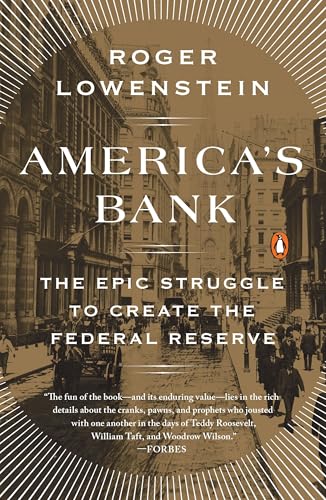
For readers who want the best next step, start with America’s Bank: The Epic Struggle to Create the Federal Reserve by Roger Lowenstein. It is the right follow-up because it explains how crisis politics, Warburg’s ideas, and institutional compromise helped create the Federal Reserve — and why the debate between private and public monetary authority still matters today.