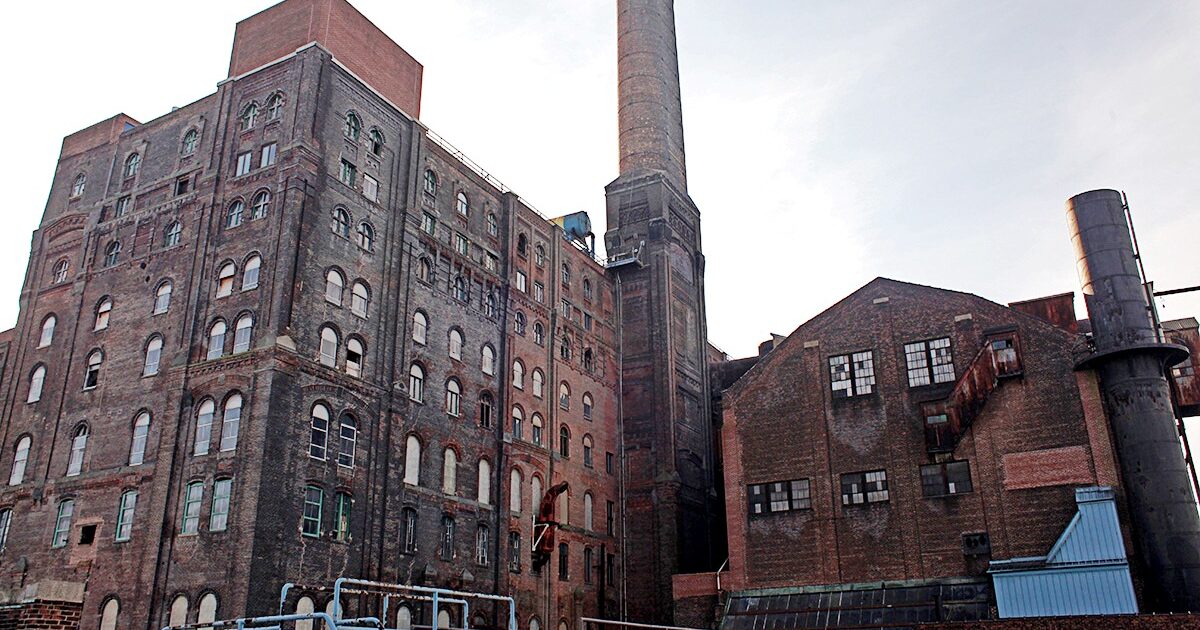
Sugar looked like a household commodity. Henry Havemeyer saw a refining bottleneck that could turn sweetness into industrial power.
In 1887, Havemeyer organized eighteen competing sugar refineries along the East Coast into a single trust — the Sugar Trust, which would eventually become the American Sugar Refining Company. At its peak, the trust controlled approximately ninety-eight percent of U.S. sugar refining capacity. It was one of the most complete monopolies in American history, and it was built not on superior raw materials or unique technology but on the control of the step between raw sugar and the consumer: refining.
The Sugar Trust also produced one of the landmark cases in American antitrust law — and one of the most controversial decisions about how far federal power reached over industrial concentration.
The World Before the Fortune
Sugar in nineteenth-century America was a refined product requiring significant industrial processing. Raw cane sugar arrived at American ports from the Caribbean and South America. It had to be processed through refining plants — facilities that clarified, filtered, crystallized, and packaged sugar for retail sale. Refining required substantial capital investment in equipment and required expertise in industrial chemistry.
By the 1880s, the refining industry faced classic competitive pressure: too many refineries, falling prices, margin compression, and excess capacity. The situation was structurally similar to petroleum refining before Standard Oil — many players competing on thin margins for a commodity product with no significant technological differentiation.
Havemeyer, who had grown up in his family’s sugar refining business, recognized the Standard Oil model’s applicability. If refiners could be consolidated into a single entity — eliminating duplicate capacity and coordinating prices — the margins that competition had destroyed could be restored. The vehicle was the trust structure that Standard Oil had pioneered.
The Rise
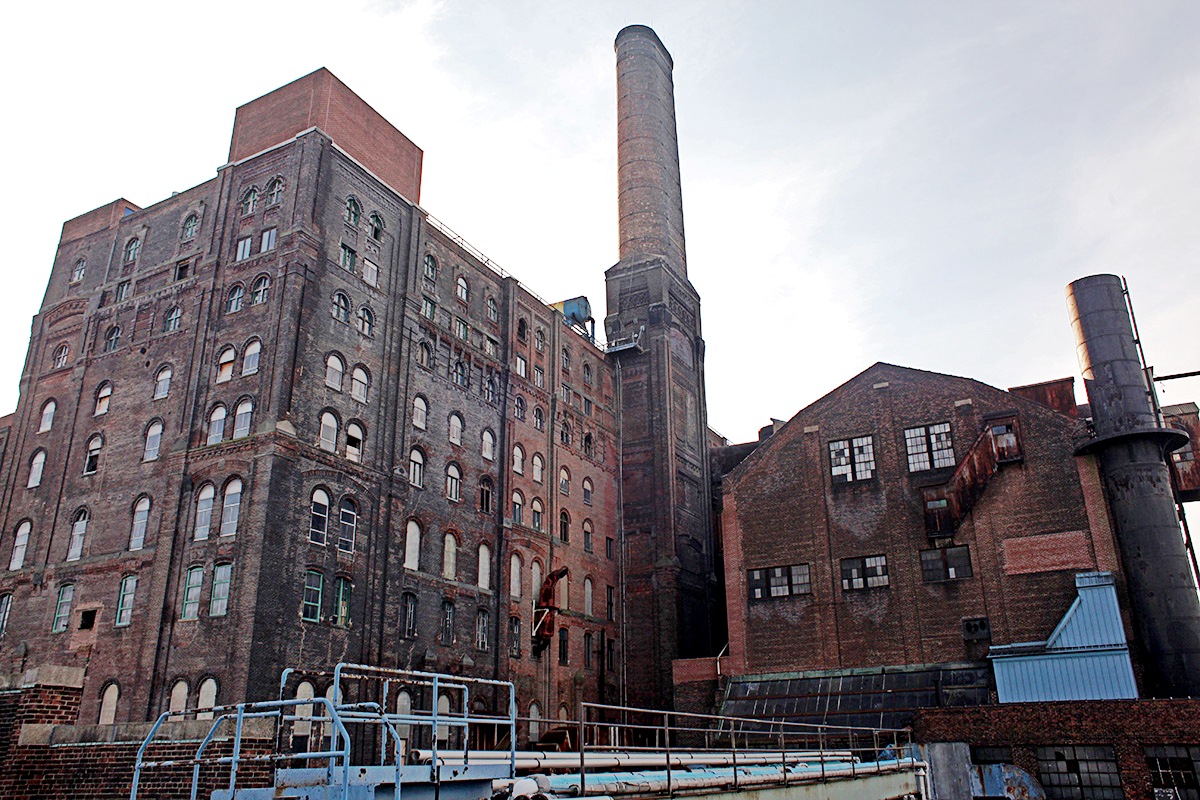
The Sugar Trust was organized in 1887, when Havemeyer persuaded eighteen East Coast refiners to transfer their assets to a trust in exchange for trust certificates. The trust immediately began rationalizing the industry: it closed the least efficient refineries, concentrated production in the most efficient plants, and established pricing coordination across the remaining capacity.
The result was swift and dramatic. The trust’s market share rose to ninety-eight percent within a few years. Sugar prices, which had been falling through the competitive period, stabilized. The margins that individual refiners had been unable to maintain collectively were restored under coordinated management.
The second structural advantage was tariff protection. The federal tariff on refined sugar effectively subsidized domestic refiners at the expense of consumers. Havemeyer, who was deeply involved in tariff lobbying, worked to maintain the tariff differential between raw and refined sugar that kept foreign competition out of the American market. The tariff was not just a revenue issue — it was an essential element of the trust’s competitive moat. Remove the tariff, and cheaper foreign refined sugar could undercut the trust’s pricing.
The Expansion of Power
The American Sugar Refining Company — the corporate successor to the trust after the Sherman Act made trust structures legally precarious — expanded its control through acquisition rather than formal combination.
When independent refiners attempted to compete, the company responded with predatory pricing, cutting prices in the competitor’s market until the rival was driven out or into acquisition. When Pennsylvania’s Spreckels company attempted to build an East Coast refinery, the American Sugar Refining Company acquired it before it opened. Standard Oil had perfected this playbook in petroleum — the Sugar Trust applied it to food.
The company also used its market position to extract favorable terms from suppliers, transportation providers, and retailers. The sheer volume of its purchases gave it leverage over every step in the supply chain, from Caribbean cane growers to New York grocers. Like the nitrate empires that controlled South American agriculture, the Sugar Trust’s power extended far beyond its formal corporate boundaries through the weight of market position.
The Hidden Strategy Behind the Fortune
The hidden strategy of the Sugar Trust was the tariff-refining combination.
The trust did not merely control refining capacity. It controlled the political apparatus that kept the tariff structure favorable to domestic refining. Havemeyer was notorious for his influence over the tariff schedule — he reportedly boasted that the Republican and Democratic parties alike received trust money, and that he could influence tariff legislation accordingly. The tariff was not a background condition for the trust’s success. It was an actively managed competitive advantage.
This combination — market control reinforced by political control of the regulatory environment — is the most durable form of monopoly power. U.S. Steel used the same combination: market share large enough to deter competition, combined with political influence over the tariff policies that kept foreign steel expensive. In both cases, the industrial position and the political position were co-productive — each made the other more valuable.
The Cost, Risk, or Collapse
The Sugar Trust produced one of the most consequential early antitrust cases in American history — and one of the most frustrating for reformers.
In 1895, the Supreme Court decided United States v. E.C. Knight Company, a case brought by the government to break up the American Sugar Refining Company’s control of Pennsylvania refineries. The Court ruled — eight to one — that manufacturing was not “commerce” within the meaning of the Sherman Act. Because the trust’s activities were manufacturing, not interstate trade, federal antitrust law did not reach them.
The Knight decision was a significant setback for antitrust enforcement and effectively gave the Sugar Trust a decade of federal protection from prosecution. It was not until the Progressive Era — and more aggressive antitrust enforcement by the Roosevelt and Taft administrations — that the trust faced serious legal pressure. Consent decrees eventually required divestiture of some competitors, reducing the company’s market share, but it remained a dominant force in American sugar for decades.
The political exposure also created risks. Congressional investigations into the tariff lobbying, combined with publicity about the trust’s methods, made Havemeyer and the Sugar Trust symbols of Gilded Age excess that reformers used to build support for both antitrust and tariff reform.
Lessons for Modern Business Readers
Refining chokepoints are more durable than raw material control. The trust did not control cane sugar fields. It controlled the processing step between raw commodity and consumer product — which turned out to be more strategically durable than upstream control.
Tariff policy is a competitive weapon, not just a tax issue. The differential between raw and refined sugar tariffs was an essential element of the trust’s moat. Companies that treat regulation as a background condition rather than an actively managed competitive advantage leave value on the table.
Political investment has industrial returns. Havemeyer’s tariff lobbying was not separate from his business strategy. It was his business strategy. The same pattern appears in Standard Oil’s railroad lobbying, the railroad trusts’ land grant politics, and the meatpackers’ fight against meat inspection requirements.
Court victories can be temporary advantages. The Knight decision protected the trust for a decade, but it did not permanently resolve the political pressure that eventually produced more aggressive antitrust enforcement. Legal protection is contingent on the political environment that produces it.
Monopoly by attrition requires continuous capital commitment. Predatory pricing to eliminate competitors requires deep pockets and patience. The trust’s ability to sustain below-cost pricing in competitive markets was itself a function of its dominant position elsewhere — a resource advantage that smaller competitors could not match.
How This Fits the Hidden Fortunes System
The Sugar Trust adds the refining bottleneck variant of industrial monopoly to the Hidden Fortunes archive. It sits alongside Standard Oil’s refinery monopoly, U.S. Steel’s manufacturing consolidation, and the Meat Trust’s cold-chain control as variations on the same structural theme: identify the processing step that everything must pass through, own it before competition understands its strategic importance, and use political influence to protect the position once it is established.
Conclusion
The Sugar Trust shows how a commodity with no technological uniqueness can become the foundation of a near-complete monopoly — if the operator controls the processing layer and the political infrastructure that protects it.
Havemeyer’s insight was not about sugar. It was about refining. The commodity was incidental. What mattered was the bottleneck between raw material and consumer product, and the tariff structure that made building around that bottleneck economically irrational for any competitor.
Further Reading
For readers who want to understand the Gilded Age trust system that produced the Sugar Trust alongside Standard Oil and U.S. Steel, the history of American antitrust from the Sherman Act through the Progressive Era reveals how the legal and political environment shaped which consolidations survived and which were dismantled. The Knight decision and its eventual reversal in antitrust doctrine is one of the clearest examples of how law follows — rather than leads — political economy.