
The first billion-dollar corporation was not an accident of scale. It was a deliberate attempt to end a cycle of destructive competition that had battered American steel for a decade — and to replace it with something more durable: institutional control.
In February 1901, J.P. Morgan completed the largest corporate merger the world had ever seen. He combined Carnegie Steel, Federal Steel, American Steel and Wire, National Tube, American Bridge, and several smaller companies into a single entity capitalized at $1.4 billion — roughly 7% of the entire United States GDP. United States Steel Corporation became the first corporation in history to be worth more than a billion dollars. More importantly, it controlled approximately 67% of American steel production on the day it opened.
That number — 67% — is the starting point for understanding U.S. Steel. It is not a story about a monopoly. It is a story about how you design a market structure when you already sit at its center.
The World Before the Fortune

By the 1890s, the American steel industry was in a strange condition. It was the most productive in the world — Carnegie’s facilities at Homestead and Braddock were the technological leaders in global steelmaking — but it was also viciously unstable. As the Homestead conflict of 1892 had shown, the industry ran on a logic of maximum extraction: maximum output, minimum labor costs, and the elimination of any competitor through sustained price pressure.
Carnegie himself was the architect of this logic. He had spent three decades converting scale into cost advantage, using each improvement in productivity to lower prices, undercut rivals, and expand market share. By 1900, Carnegie Steel was producing more steel than the entire United Kingdom. It was also threatening to build its own finished-goods facilities — rails, wire, tubes, bridges — which would have made it a direct competitor to every downstream steel user in the country.
That threat galvanized the banker class. J.P. Morgan had just organized Federal Steel, a major competitor to Carnegie. If Carnegie followed through on his downstream expansion plans, the result would be a price war across the entire American industrial economy. Morgan’s solution was to buy Carnegie out entirely — and to consolidate the fragmented industry around a single institution large enough to stabilize it.
The Rise
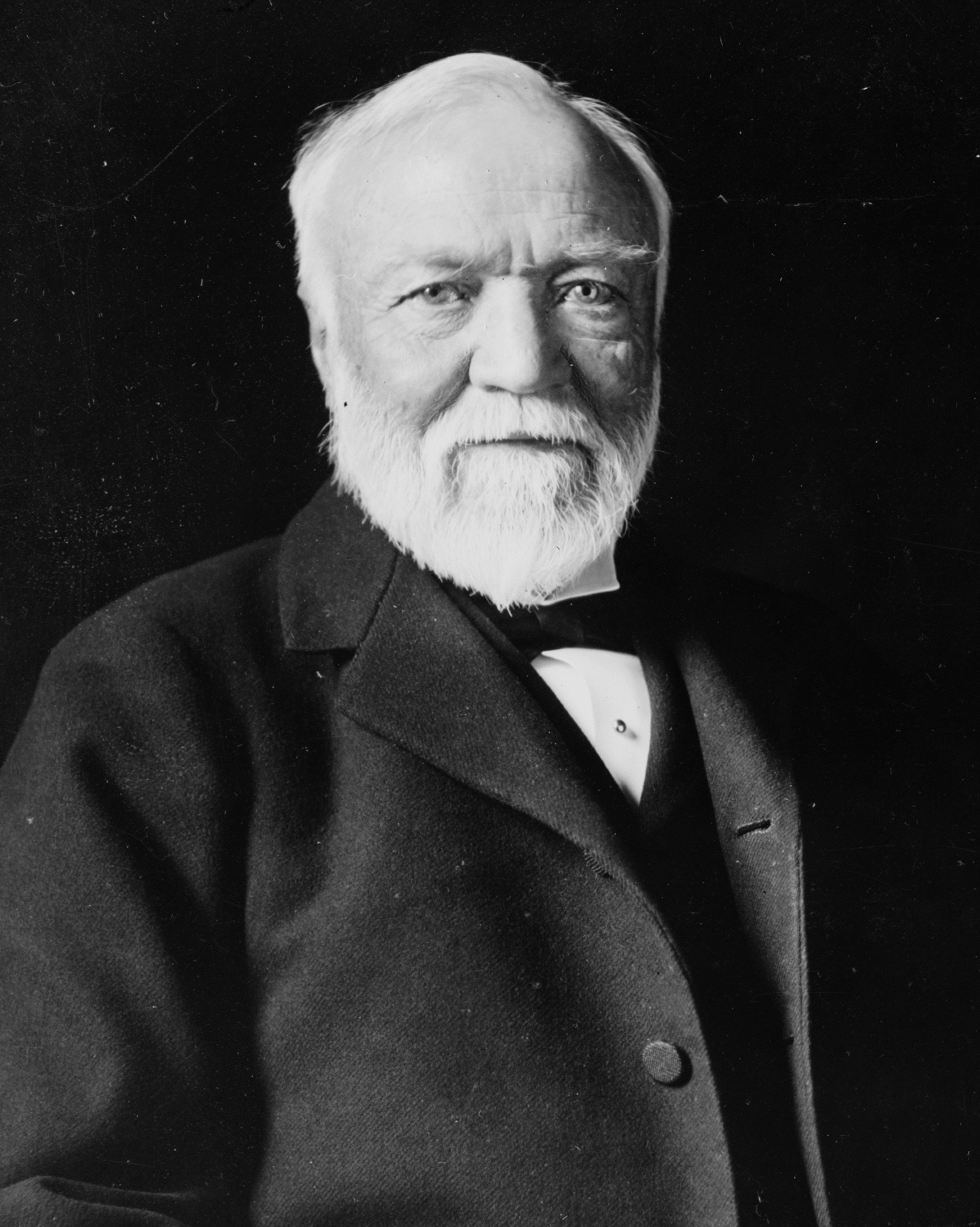
The deal that created U.S. Steel began with a conversation at a golf club in December 1900. Carnegie’s partner Charles Schwab gave a dinner speech laying out the vision of a fully integrated steel company. Morgan was in attendance. He had heard what he needed to hear.
The negotiations were swift by the standards of the era. Carnegie named his price: $480 million for Carnegie Steel, paid in bonds and stock. Morgan agreed without counter-offering. He reportedly said afterward that he should have paid twice as much. Carnegie, who received mostly bonds that he promptly cashed for gold, became the richest private individual in the world — and immediately began giving the money away.
U.S. Steel’s formation in February 1901 assembled not just Carnegie’s operations but the entire downstream chain: National Tube (pipes), American Bridge, American Sheet Steel, American Tin Plate, and Federal Steel. The result was a vertically integrated corporation that could extract ore, produce steel, fabricate finished products, and sell them directly to industrial customers — all within the same organizational structure. Scale had become architecture.
The Expansion of Power
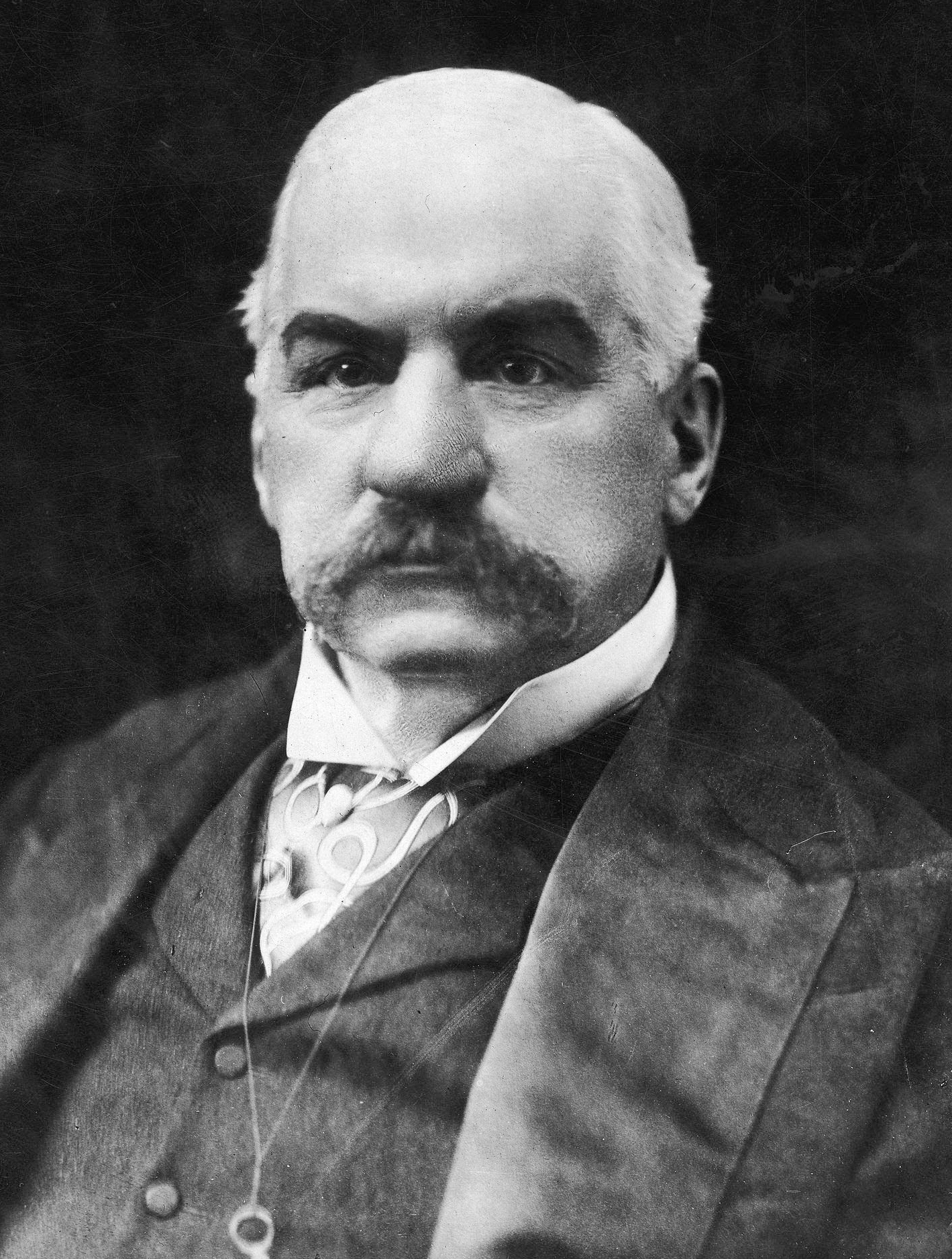
The company’s first chairman was Elbert Gary, a lawyer with a talent for institutional politics. Gary understood that U.S. Steel’s dominant market position was a liability as much as an asset: at 67% market share, the company was a standing target for antitrust prosecution. His strategy was to use the corporation’s dominance to stabilize the industry rather than to crush competitors.
Gary’s most famous innovation was the “Gary Dinners” — periodic gatherings of steel industry executives at which pricing expectations were coordinated. These meetings occupied a legal gray area: they were not formal price-fixing agreements, but they functioned as collective signals about what the market could bear. For nearly a decade, the Gary Dinners kept steel prices stable in a way that benefited every producer, not just U.S. Steel. Market leadership used as a stabilization mechanism rather than a predatory weapon.
This was a fundamentally different model from Standard Oil. Rockefeller had used rebates, secret pipelines, and predatory pricing to destroy rivals. U.S. Steel used its scale to reduce the incentive for competition — making the market large enough, stable enough, and profitable enough that independent producers had little reason to challenge the dominant structure. As the Northern Securities Trust case had demonstrated, outright monopoly invited destruction. Managed dominance invited tolerance.
The Hidden Strategy Behind the Fortune
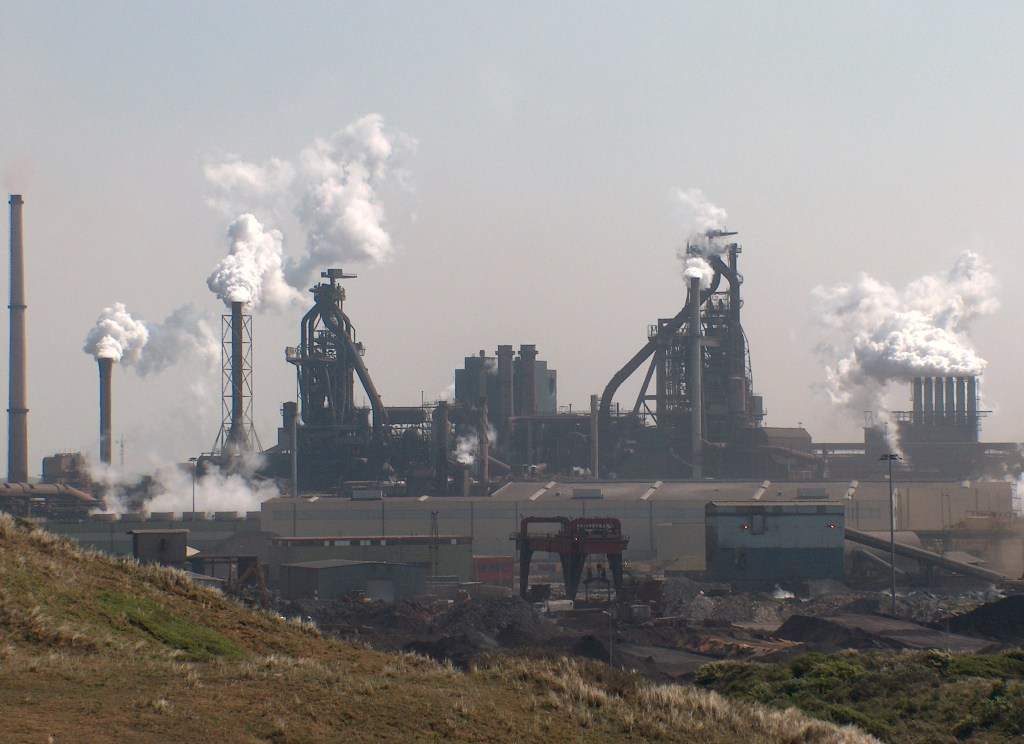
The hidden strategy inside U.S. Steel was not the product. It was the stability guarantee. The corporation’s most valuable offering to the American economy was not cheaper steel — it was predictable steel. Railroads, construction companies, and industrial manufacturers could plan around U.S. Steel prices in a way that would have been impossible during the price-war era of the 1890s.
That predictability had enormous economic value. It reduced the cost of capital for downstream industries, made long-term contracts possible, and created a pricing floor that allowed independent producers to survive alongside the giant. U.S. Steel was, in effect, acting as an informal market regulator — performing a function that governments in other industrialized nations were beginning to assign to formal regulatory agencies.
J.P. Morgan understood this dimension clearly. He had organized U.S. Steel not merely to profit from steel but to stabilize an economy that ran on steel. As his earlier interventions in American financial crises had shown, Morgan’s instinct was always to build the institutional structure that would prevent the next collapse rather than simply profit from the current one. U.S. Steel was the industrial expression of that instinct.
The Cost, Risk, or Collapse
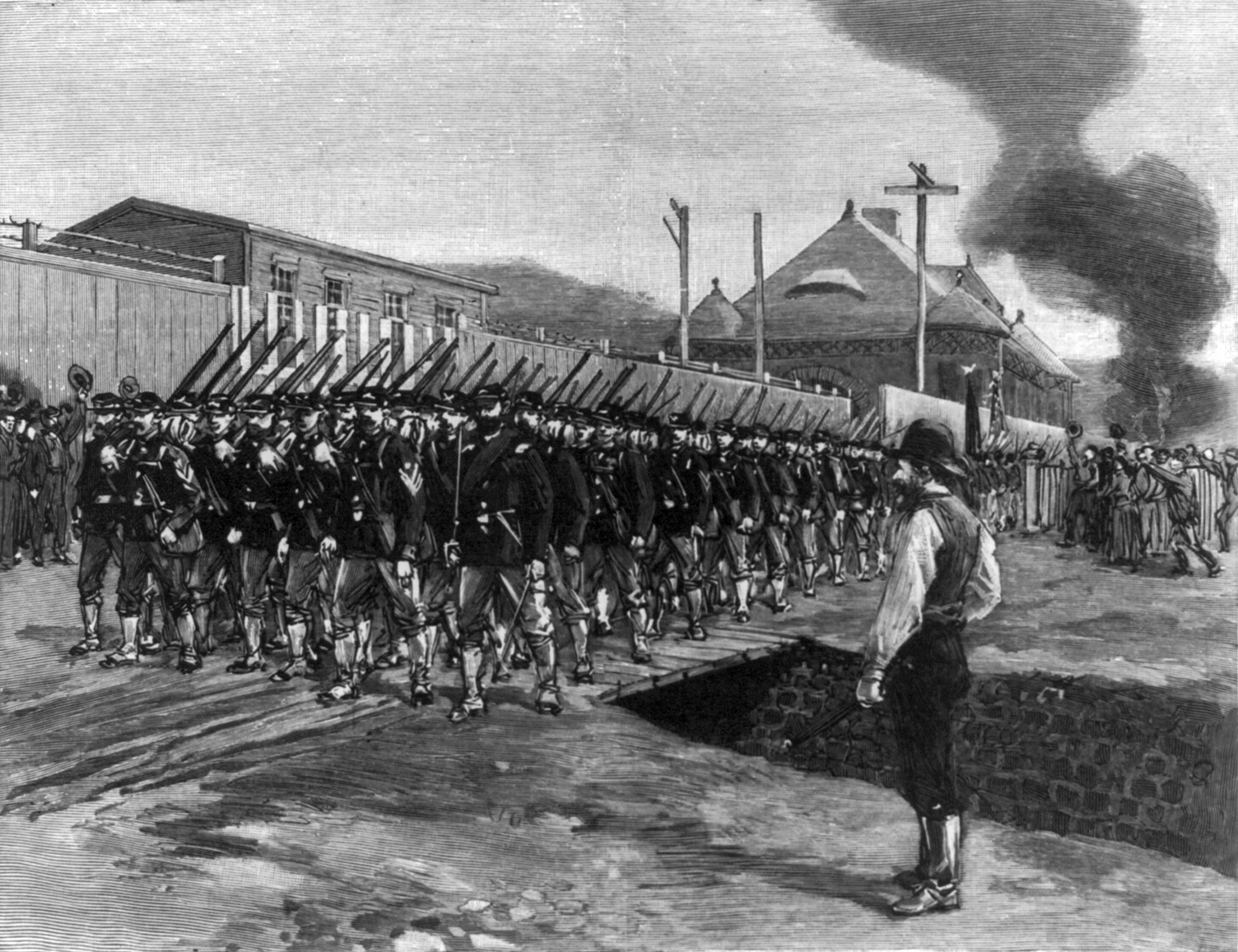
The corporation’s size did not protect it from the structural vulnerabilities that came with scale. U.S. Steel’s workforce was enormous, its labor relations were consistently adversarial, and its political exposure was permanent. The company had been built partly on the back of the broken steelworkers’ union — the Amalgamated Association of Iron and Steel Workers had never recovered from the Homestead defeat of 1892 — and the Gilded Age labor regime it inherited was a source of continuous political friction.
In 1911, the same year that Standard Oil was broken up, the U.S. government filed an antitrust suit against U.S. Steel. The case dragged through the courts for a decade. In 1920, the Supreme Court ruled in U.S. Steel’s favor — not because the corporation was innocent of market dominance, but because the Court concluded that size alone was not illegal under the Sherman Act. U.S. Steel had achieved dominance through legal consolidation, not through predatory tactics.
The irony was that by the time the legal battle ended, U.S. Steel’s actual market share had already declined dramatically. Independent competitors had expanded. New capacity had been built. By the early 1920s, U.S. Steel controlled less than 40% of American steel production. The corporation that had been designed to dominate an industry had instead, inadvertently, helped stabilize one — and in doing so had made its own dominance less necessary.
Lessons for Modern Business Readers
1. Scale can be used to stabilize rather than to destroy
U.S. Steel’s long-term survival came from using its dominant position to reduce destructive competition rather than to eliminate rivals entirely. The Gary Dinners were controversial, but they reflected a genuine insight: a stable market is often more valuable than a monopoly market, because it is more durable and attracts less regulatory intervention.
2. Vertical integration changes bargaining dynamics permanently
When Carnegie built a company that could produce everything from ore to finished steel products, he changed the negotiating position of every customer and every competitor. The ability to threaten downstream expansion was as powerful as actually doing it. Modern platforms, cloud providers, and logistics networks use the same logic.
3. The antitrust threshold is not just market share — it is conduct
Standard Oil was broken up. U.S. Steel was not. The difference was not market share — Standard Oil had less at the time of its dissolution. The difference was conduct. U.S. Steel survived because it had not relied on predatory tactics to achieve dominance. The legal lesson of 1920 shaped American antitrust enforcement for generations.
4. Institutional stability is a product you can sell
The Gary Dinners worked because the downstream economy needed price stability more than it needed lower prices. Any organization large enough to provide credible stability to a volatile market has discovered a product that its competitors cannot easily replicate.
5. Dominance borrowed from one era does not automatically transfer to the next
U.S. Steel’s 67% market share of 1901 had become 30% by the 1930s — not because the company failed, but because the market grew faster than the company. The structural moat of size is durable only as long as growth is concentrated at the center. When growth distributes, so does power.
Seen clearly, U.S. Steel is not just the story of America’s first billion-dollar corporation. It is the story of what happens when a financial mind — Morgan’s — and an industrial logic — Carnegie’s — combine to create something that is neither a simple monopoly nor a simple competitor, but a structural feature of the economy itself. The corporation outlasted its founders, survived antitrust, weathered two World Wars, and remained one of the largest steel producers in the world for the better part of a century. That is what institutional architecture looks like when it is built correctly from the beginning.
Recommended Reading
For readers who want to understand the full competitive logic of the Gilded Age industrial empires — the system that produced both Carnegie’s fortune and Morgan’s U.S. Steel deal — Titan: The Life of John D. Rockefeller, Sr. by Ron Chernow is the essential companion. Chernow’s analysis of Standard Oil applies directly to U.S. Steel: both were attempts to convert industrial scale into structural control, and both reveal the same fundamental dynamic between dominance, stability, and the limits of private power in a democratic system.
