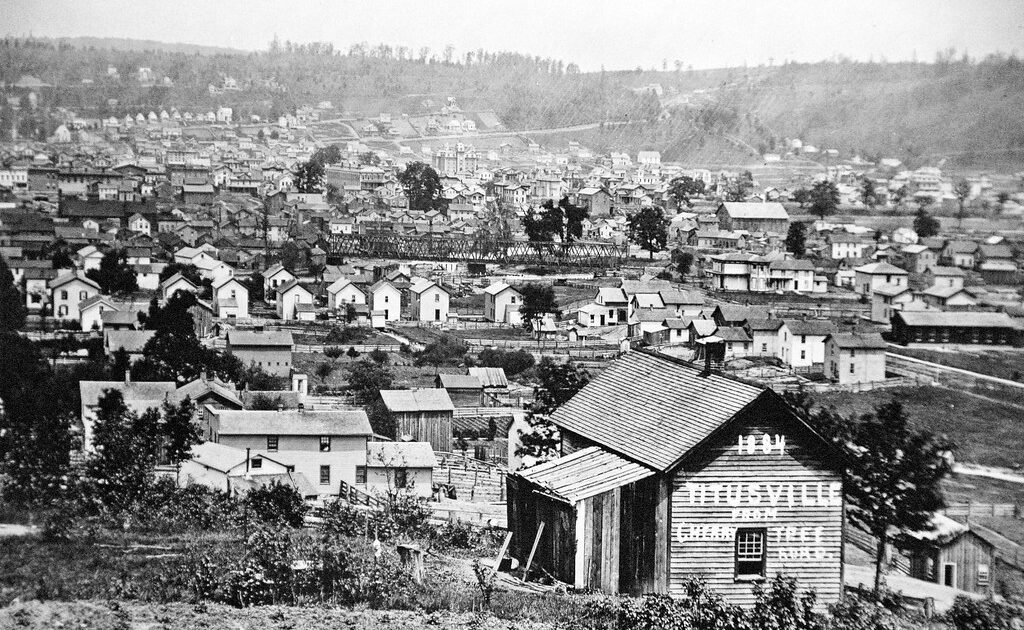
The most unsettling antitrust lesson is sometimes that breaking an empire apart does not always make its owners poorer. When the Supreme Court ordered the dissolution of Standard Oil in May 1911, it was the most consequential antitrust decision in American history — the culmination of years of congressional investigation, muckraking journalism, and progressive political pressure against the most formidable industrial monopoly the country had ever produced. The ruling ordered Standard Oil of New Jersey to divest its thirty-four subsidiary companies within six months. Rockefeller, who had been largely retired from active management for over a decade, received the news reportedly with equanimity. His equanimity turned out to be justified.
Within a year of the breakup, the combined value of Standard Oil’s successor companies had risen sharply above the consolidated value of the old trust. By 1913, Rockefeller was worth roughly twice what he had been worth before the antitrust ruling. The market, freed from the discount that uncertainty and legal risk had imposed on an embattled monopoly, rapidly repriced the underlying assets — many of which were genuinely excellent businesses — at their individual market values. Standard Oil’s legal dissolution turned out to be a financial event that enriched its shareholders even as it satisfied its political opponents.
A monopoly can lose its legal shell and still leave shareholders holding a richer set of parts. This paradox is the real lesson of the Standard Oil breakup — and it is the reason the episode continues to be studied by antitrust lawyers, financial analysts, and corporate historians trying to understand what breakups actually do, as opposed to what they are designed to do.

The World Before the Breakup
John D. Rockefeller’s construction of Standard Oil over the previous forty years had been one of the most systematically efficient exercises in industrial consolidation in American history. Beginning with a small Cleveland refinery in 1863 and expanding through a combination of horizontal acquisition, vertical integration, and aggressive competitive practices, Rockefeller had built a company that controlled roughly 90 percent of American oil refining capacity by the 1880s.
The Standard Oil trust structure that gave the empire its distinctive legal form was itself an innovation: by transferring the stock of Standard Oil’s constituent companies to a board of trustees in exchange for trust certificates, Rockefeller effectively created a holding company with unified management control without running afoul of state laws that prevented corporations in one state from owning stock in corporations in another. When courts began invalidating the trust structure in the early 1890s, Standard reorganized as a holding company under New Jersey’s permissive incorporation laws — a legal evolution that kept the economic substance intact while changing the formal structure.
The railroad rebate system that had given Standard Oil much of its competitive advantage in the 1870s was already a matter of public controversy and legal challenge before the Supreme Court ruling. The Hepburn Act of 1906, passed in the wake of the Interstate Commerce Commission’s investigation of railroad discriminations, had strengthened federal rate regulation and reduced Standard’s ability to use preferential transport pricing as a competitive weapon. The antitrust case itself was initiated by the Theodore Roosevelt administration in 1906 and argued through the courts over five years before reaching the Supreme Court.

What the Ruling Actually Did
The Supreme Court’s 1911 ruling under Chief Justice Edward White affirmed the government’s case but added an interpretive wrinkle that would prove enormously consequential for subsequent antitrust law: the ‘rule of reason’ doctrine, which held that the Sherman Antitrust Act prohibited only unreasonable restraints of trade rather than all monopolies. This was a significant qualification of the government’s position, and it set the precedent that antitrust enforcement would require case-by-case judgment about whether specific conduct was unreasonably anticompetitive.
The structural remedy was dissolution: Standard Oil of New Jersey was ordered to divest its interests in thirty-four subsidiaries, including the companies that would become Exxon, Mobil, Chevron, Amoco, Conoco, Sohio, and a dozen other significant petroleum enterprises. The divestiture was to be completed within six months — an extraordinarily compressed timeline for the disposition of assets that collectively controlled most of the American petroleum industry.
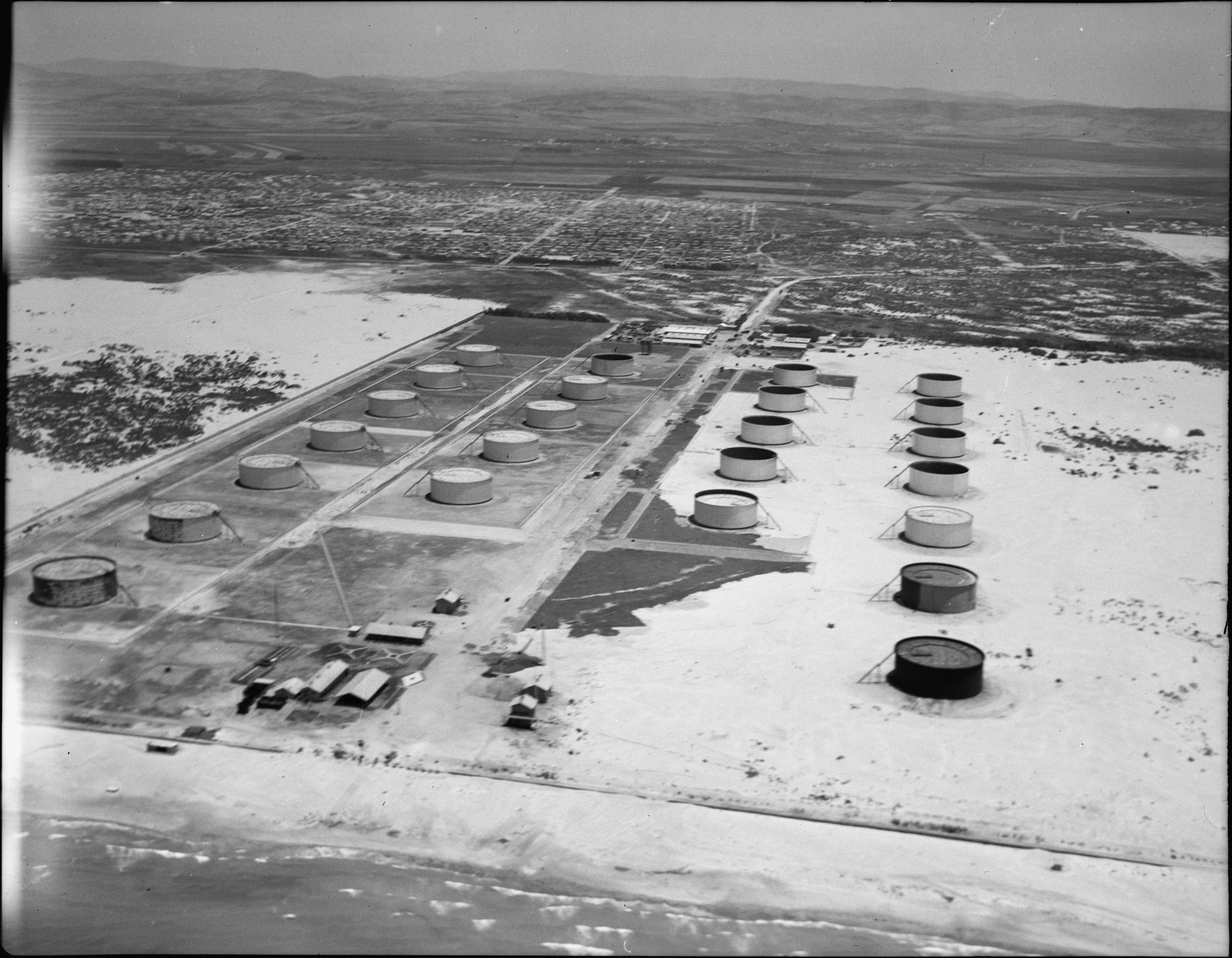
The pipeline infrastructure that Standard Oil had built over decades — the physical network of pipes connecting oil fields to refineries to distribution terminals — remained largely intact within the successor companies, which inherited specific segments of the integrated system. The breakup divided geographic markets and legal entities, but it did not immediately dismantle the physical infrastructure or the operational expertise that made Standard Oil’s businesses valuable in the first place.

Why the Value Increased
The market’s response to the breakup was not what the trust-busters expected. The combined stock prices of Standard Oil’s successor companies rose sharply in the months after the dissolution order was issued, and continued rising through 1912 and 1913. Several explanations have been offered for this counterintuitive outcome, and most of them contain genuine insight.
The most straightforward explanation is that the integrated monopoly had been trading at a discount because of legal and regulatory uncertainty. A company under antitrust assault and facing possible dissolution is harder to value than one operating with clear legal status. Once the uncertainty was resolved — even in the form of an adverse ruling — investors could price the constituent businesses on their actual merits. And those merits were considerable: the successor companies inherited dominant market positions, superior infrastructure, and operational expertise accumulated over decades.
A second explanation involves the unlocking of hidden value through separation. The integrated monopoly, managed to optimize the overall system, may have been suppressing the visible performance of individual units in ways that the market could not easily see. Once the units were separated and required to report independently, their profitability became more legible — and in many cases, the individual businesses turned out to be more valuable on a stand-alone basis than they had appeared as components of an integrated whole. This is the classic conglomerate discount argument applied in reverse: the breakup revealed value that the integration had obscured.
A third factor was the timing of the oil market itself. The rise of the automobile was creating explosive demand growth for gasoline at exactly the moment the Standard Oil successors were beginning their independent existence. The petroleum industry that Rockefeller had dominated through kerosene for lighting was being transformed into a gasoline industry for transportation — and the successor companies were positioned to benefit from this secular demand growth regardless of their antitrust status.

The Hidden Logic of Post-Antitrust Wealth
The deeper lesson of the Standard Oil breakup is about the relationship between legal form and economic substance. Standard Oil’s monopoly power derived from a combination of factors that antitrust dissolution could address only partially: superior refinery technology and operating efficiency, a physical infrastructure network that could not be quickly replicated by competitors, relationships with railroads and distributors built over decades, and the organizational knowledge accumulated in managing a large and complex industrial system. The dissolution changed the legal entity but did not redistribute the operating capabilities.
Rockefeller’s personal wealth increased not because he had outsmarted the antitrust system but because the underlying businesses were genuinely excellent. The trust had been organized to preserve and extend those businesses; the dissolution reorganized them into competing entities that were individually forced to be more transparent about their profitability. Transparency turned out to serve shareholders well, even when it satisfied the political objective of breaking up concentrated control.
For modern antitrust analysis, the Standard Oil case remains the central reference point precisely because it illustrates how complex the relationship is between legal monopoly, economic efficiency, and shareholder value. An antitrust remedy that dissolves a legal structure without dismantling the underlying competitive advantages may change the political economy of an industry without dramatically changing the financial outcomes for the entity’s original owners. The lesson cuts both ways: it suggests that antitrust can achieve structural changes that matter for competition without necessarily destroying the wealth of the regulated party — and it raises questions about whether structural remedies alone are sufficient to address deep competitive advantages.

What Changed and What Didn’t

Over the medium term — five to ten years after dissolution — the competitive dynamics of the American petroleum industry did change meaningfully. The successor companies, forced to compete with each other and operating in regional markets where they had formerly cooperated, began undercutting prices, pursuing different marketing strategies, and developing distinctive competitive positions. The integrated coordination that Standard Oil’s unified management had provided was replaced by market competition, which generally benefited consumers even as it ultimately benefited shareholders through higher asset values.
The geographic fragmentation also created space for new entrants. Independent producers in new fields like Texas and California, who had historically found it difficult to get fair access to Standard Oil’s transportation and refining infrastructure, were able to develop more effectively in the post-dissolution environment. The growth of Gulf Oil, Texaco, and other non-Standard companies in the 1910s and 1920s was partly enabled by the dissolution of Standard’s infrastructure control.
But the personnel who had built Standard Oil — the engineers, managers, landmen, and refinery specialists who carried the operational knowledge of the enterprise — remained employed in the successor companies. The institutional memory and operational capabilities that made Standard Oil efficient were distributed among its successors rather than destroyed. The successor companies competed against each other in market terms while sharing the genetic inheritance of the monopoly that had produced them — which is one reason they continued to be among the most profitable petroleum enterprises in the world for decades after the dissolution.
Lessons for Modern Business Readers
1. Antitrust changes legal form; it cannot always redistribute operational advantage
Standard Oil’s competitive advantages derived from infrastructure, expertise, and relationships that dissolution did not transfer to competitors. Modern platforms that face antitrust pressure can expect similar dynamics: structural remedies can change market architecture without necessarily equalizing the operational capabilities that created dominance in the first place.
2. Legal uncertainty discounts valuable assets
Standard Oil’s stock was trading at a discount before the dissolution because the antitrust uncertainty made it hard to value. Resolution of that uncertainty — even adverse resolution — allowed the market to price the underlying assets more accurately. For companies facing sustained regulatory uncertainty, the resolution of that uncertainty (in almost any direction) often produces a more favorable market response than prolonged ambiguity.
3. Breakups can unlock hidden value
The integrated monopoly suppressed the visibility of individual business unit performance. Dissolution forced transparency, and transparency revealed that the individual businesses were often more valuable on a stand-alone basis than they had appeared as components of an integrated whole. Modern conglomerates facing pressure to break up often contain similar hidden value that transparent reporting would reveal.
4. Infrastructure outlasts the regulatory event
The physical infrastructure Standard Oil had built — pipelines, refineries, distribution networks — remained intact within the successor companies and continued to provide competitive advantage for decades. Infrastructure advantages are more durable than legal monopolies because they cannot be dissolved by court order. Building infrastructure that outlasts the regulatory environment is one of the most effective long-term competitive strategies.
5. Market timing amplifies breakup outcomes
The automobile revolution created explosive petroleum demand at exactly the moment Standard Oil’s successors were being established as independent entities. The combination of inherited operational advantage and secular demand growth produced outcomes far better than either factor alone would have generated. Structural changes and market cycles interact in ways that make predicting breakup outcomes extremely difficult.
6. Competition among successors eventually produces genuine differentiation
The Standard Oil successor companies, which had cooperated as components of an integrated system, eventually developed genuinely different strategies, market positions, and operational philosophies as competitive pressure forced differentiation. Standard Oil’s successors became ExxonMobil, Chevron, BP, and others — distinct enterprises rather than fragmented pieces of a single machine. The differentiation took decades, but it was real and consequential.
Conclusion
The Standard Oil breakup is the most studied antitrust event in American history because it produced outcomes that defied the expectations of both its advocates and its opponents. The trust-busters expected dissolution to punish shareholders and redistribute market power to competitors. The outcome was more complicated: shareholders were enriched, competitors eventually benefited, consumers gained from more transparent pricing, and the petroleum industry was reorganized in ways that served the subsequent century of automotive growth better than the integrated monopoly probably would have.
For modern readers confronting contemporary antitrust debates about technology platforms, the Standard Oil case offers a cautionary note about the gap between legal outcomes and economic outcomes. Breaking up a legal structure does not necessarily break up the underlying competitive advantages that justified the structure in the first place. What it does is force transparency, enable market repricing, and create the conditions under which genuine competition can eventually develop — even if that competition takes longer than antitrust advocates expect and enriches the original owners more than antitrust opponents would prefer.
The most unsettling lesson remains the first one: the most formidable monopoly in American history was dissolved by the Supreme Court, and its primary shareholder became richer in the process. The antitrust system worked as designed. The wealth machine beneath the monopoly shell kept producing returns regardless. Understanding why that happened is more useful than being surprised that it did.
