Some empires are built on a metal or a crop. Others are built on a chemical the world cannot easily replace yet. For roughly half a century — from the 1880s through the First World War — Chile held something close to a monopoly on one of the most strategically important substances in the industrial world: sodium nitrate, the raw material for fertilizer and explosives that fed armies and farms across Europe and North America simultaneously.
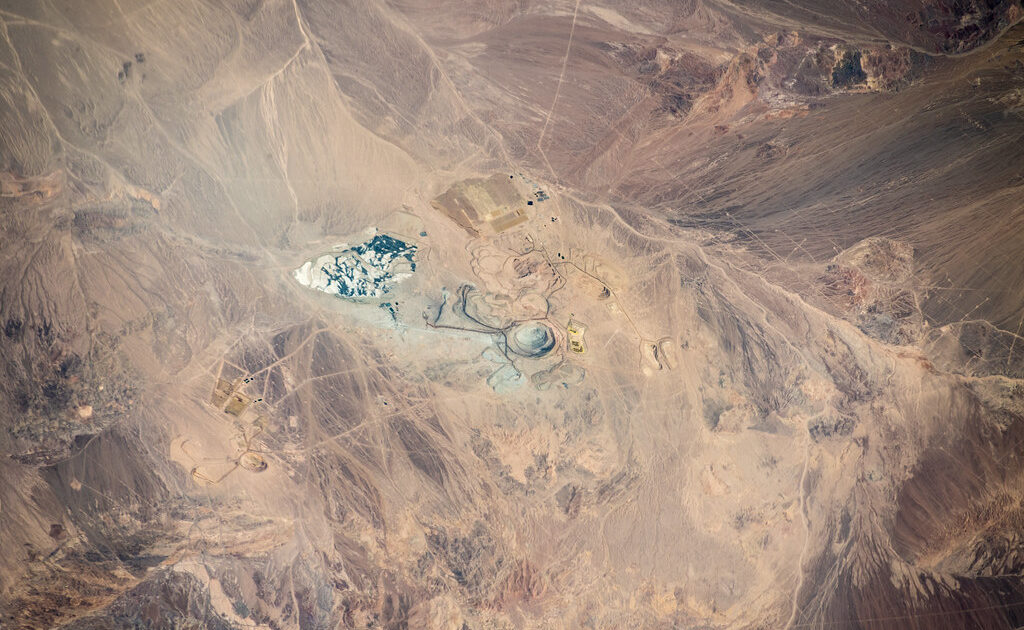
The Atacama Desert, one of the driest places on Earth, contained vast beds of caliche — a mineral layer saturated with sodium nitrate deposited over millions of years. Before Fritz Haber synthesized ammonia from atmospheric nitrogen in 1909, these deposits were essentially irreplaceable. European agriculture depended on Chilean nitrate to maintain soil fertility. European and American militaries depended on it for gunpowder and artillery shells. A single commodity, extracted from a nearly uninhabitable desert, linked food production and destructive force in one supply chain — and Chile sat at its only chokepoint.
This article explains how a remote desert country turned geological luck into durable geopolitical and fiscal power — and why that power collapsed the moment chemistry made the underlying asset obsolete. The Hidden Fortunes lesson is not about mineral deposits. It is about what happens when one actor controls something the rest of the world genuinely cannot live without, and what happens when that necessity disappears overnight.

The World Before the Fortune
Before synthetic fertilizer and modern chemical substitutes, soil fertility in Europe and North America was a genuine strategic constraint. By the mid-nineteenth century, the most productive farmland in Britain, France, and Germany was showing serious signs of nutrient depletion after centuries of intensive cultivation. Guano from Peru provided a temporary solution in the 1840s and 1850s — seabird droppings rich in nitrogen and phosphate that could restore depleted fields. But guano deposits were finite, and the search for a more reliable nitrogen source was already urgent by the time the Atacama’s nitrate beds came under systematic exploitation.
The political geography of the Atacama was itself unstable. The Atacama coastal strip straddled the borders of Chile, Peru, and Bolivia, all of which had overlapping territorial claims and competing interests in the mineral wealth below the surface. Chilean entrepreneurs and British capital were already deeply invested in Atacama mining operations by the 1870s, even in territories nominally controlled by Bolivia. When Bolivia attempted to raise export taxes on Chilean-owned nitrate companies in 1879, Chile went to war — the War of the Pacific — and within four years had seized the entire nitrate-producing coastal zone from both Bolivia and Peru.
The war reoriented South American political geography permanently. Bolivia lost its access to the ocean. Peru lost its richest province. Chile gained control of virtually the entire global supply of the one substance that industrial agriculture could not easily substitute. That control turned the Chilean state’s finances — historically dependent on customs duties — into something approaching a commodity sovereign wealth fund, with nitrate export taxes funding everything from public works to naval expansion to free primary education.

The Rise of the Nitrate Machine
Chile’s nitrate era was never a state monopoly in the formal sense. The mines were privately owned — largely by British companies, with Chilean families and some German capital mixed in — and the state’s role was primarily as taxer rather than producer. But that combination of private operation and aggressive fiscal extraction proved enormously effective. By the 1890s, nitrate export taxes were funding more than half of the Chilean national budget, allowing the government to maintain a modern military and build infrastructure without taxing its domestic population directly.
The explosives industry on both sides of the Atlantic was equally dependent on Chilean supply. DuPont, Nobel, and their European equivalents needed reliable nitrate access to manufacture the propellants and artillery rounds that defined late nineteenth-century warfare. When the Spanish-American War, the Boer War, and then the Russo-Japanese War demonstrated that modern military power required industrial-scale ammunition production, nitrate became a genuine strategic material — the kind that governments were willing to fight over.
The system worked because demand was distributed across multiple large markets simultaneously. European farmers, American industrialists, and military planners on every continent needed Chilean nitrate for different reasons, which meant that even significant price increases were absorbed rather than triggering serious substitution efforts. The same logic had operated in the Spanish silver empire three centuries earlier: control a commodity that multiple large systems need, ensure there is no easy alternative, and extract rents at every point in the supply chain.
Chile’s infrastructure built to serve the mines was also self-reinforcing. Railroads connecting the interior desert to Pacific ports, loading facilities designed for bulk nitrate export, and a class of Chilean merchants and financiers whose wealth was entirely tied to the nitrogen trade all created the kind of institutional lock-in that makes commodity empires harder to dislodge than they might first appear.

The Expansion of Power
At its peak in the early 1900s, the Chilean nitrate industry was producing over 2.5 million tonnes per year, employing tens of thousands of workers in the northern desert in conditions that were brutal even by the standards of the era. The oficinas — nitrate processing towns — were company towns in the most complete sense: the companies owned the housing, the stores, the water supply, and often paid wages in scrip redeemable only at company-controlled outlets. Labor organization was suppressed violently, culminating in the Iquique massacre of 1907, when Chilean army troops killed hundreds of striking workers and their families in a schoolyard.
The same extraction dynamic that had characterized cotton belt labor in the American South operated here at higher altitude: enormous wealth flowing upward while the people doing the physical work lived in systematic precarity. The geopolitical frame of Chilean national interest masked a distribution of gains that was heavily skewed toward British bondholders and Chilean landowners rather than the Atacama workers who made the extraction possible.
Internationally, Chile’s nitrate dominance made it one of the most strategically important small nations in the world. European powers courted Chilean diplomatic favor. British and German capital competed for mining concessions. The Chilean navy, funded by nitrate revenues, became one of the most capable in the Pacific. For roughly three decades, a desert country with fewer than four million people was a genuine player in the geopolitics of global commodity supply — entirely because of what lay beneath its northern desert.
Like the United Fruit Company’s banana infrastructure, the nitrate empire worked not just through commodity extraction but through the structural dependencies it created. Once global agricultural systems, military supply chains, and state revenue structures were organized around Chilean nitrate, the switching costs of any alternative were enormous — until chemistry made switching irrelevant rather than merely expensive.

The Hidden Strategy Behind the Fortune
The hidden strategy was not sophisticated by modern standards. Chile held a geological monopoly and taxed access to it. What made the system durable for as long as it lasted was the combination of irreplaceability with distributed demand. When the world needed one thing for two completely different purposes — feeding crops and firing guns — and you controlled the only reliable supply of that thing, the leverage was structural rather than negotiated. You did not have to be clever. You just had to hold the position.
The British capital that dominated the mining operations understood this implicitly. Investment in Atacama nitrate was not a bet on technological superiority or managerial genius. It was a bet on the world’s inability to find a substitute fast enough to matter. That bet paid off handsomely for roughly thirty years and then was destroyed almost overnight when German chemist Fritz Haber solved the nitrogen-fixation problem in 1909 and Carl Bosch scaled the Haber process to industrial production by 1913.
The lesson embedded in the nitrate empire is not about monopoly confidence. It is about the difference between a competitive moat and a natural chokepoint. A competitive moat — built on brand, network effects, switching costs, or operational excellence — requires continuous maintenance and can be eroded gradually. A natural chokepoint, built on exclusive control of something the world genuinely needs, is more powerful while it lasts but more catastrophic when it ends, because the collapse is sudden rather than gradual. Chilean nitrate went from essential to obsolete in less than a decade.

The Cost, the Risk, and the Collapse

When synthetic nitrogen became industrially viable, the Chilean nitrate market did not decline slowly — it fell off a cliff. European nitrate imports from Chile dropped by more than 60 percent between 1913 and 1921. The desert towns that had housed tens of thousands of workers were abandoned within years. Ghost towns across the Atacama — the oficinas of Maria Elena, Humberstone, and dozens of others — still stand partially preserved as UNESCO World Heritage Sites, monuments to how completely a commodity empire can vanish when the underlying necessity disappears.
Chile’s state finances, which had been sustained by nitrate revenues for four decades, collapsed into chronic instability. The political consequences were severe: the loss of nitrate income contributed directly to the political crises that preceded the 1925 military coup and the instability that characterized Chilean politics for decades afterward. The British capital that had dominated the mining operations absorbed its losses and moved on. Chilean workers, landowners, and state institutions had no equivalent exit option.
The deeper lesson is about single-source dependency — not for the customer, but for the supplier. Chile had allowed its entire fiscal architecture to rest on one commodity, one supply chain, and one geological accident. When that accident was replicated chemically, there was no fallback. The lesson for modern resource economies — from Gulf oil states to rare-earth producers — is the same structural warning: commodity monopoly is powerful until it isn’t, and the transition window is usually much shorter than the comfortable decades that preceded it.
Lessons for Modern Business Readers

1. Irreplaceability is the ultimate leverage
Chilean nitrate held its position not through innovation, branding, or superior operations but through irreplaceability. When global food production and military logistics both depended on the same supply, Chile extracted rents for decades without needing to maintain a competitive advantage. The modern equivalent is any technology, standard, or infrastructure that multiple large systems depend on simultaneously — the leverage is structural rather than earned.
2. Natural chokepoints collapse faster than competitive moats
A position built on geological or regulatory exclusivity is more fragile than one built on continuous operational improvement. When synthetic nitrogen made Chilean supply unnecessary, the collapse was nearly instantaneous. Businesses built on natural chokepoints should invest more aggressively in diversification during their dominant years, because the warning time before irrelevance is shorter than it appears.
3. Distributed demand multiplies leverage
The nitrate empire’s stability came partly from having customers in agriculture, explosives, and state fiscal systems simultaneously. No single buyer was large enough to credibly threaten to find an alternative. Modern platforms that serve multiple distinct customer segments enjoy the same structural protection — demand concentration in any one sector creates vulnerability that diversified demand avoids.
4. State revenue dependency distorts long-term incentives
When Chile’s government funded more than half its budget through nitrate export taxes, it had structural incentives to maximize short-term extraction rather than build the economic diversification that might have cushioned the eventual collapse. Any system where fiscal health is tied to commodity price sustains the wrong set of political incentives for long-run resilience.
5. Labor costs of commodity empires are hidden until they explode
The Iquique massacre of 1907 was not an aberration — it was a predictable outcome of a system that suppressed labor costs to maximize export margins. The social and political instability that followed Chile’s nitrate collapse was also predictable. Commodity empires that externalize their human costs to achieve commodity competitiveness are storing up political and social liabilities that eventually arrive on the balance sheet.
6. Study the mechanism, not the mineral
The specific commodity matters less than the underlying structure: exclusive control, distributed dependency, regulatory or geographical moat, and catastrophic substitution risk. That same structure appears in modern rare-earth mining, critical semiconductor nodes, cloud infrastructure chokepoints, and pharmaceutical patent thickets. Recognizing the pattern early is worth more than mastering any particular case.
Conclusion
The nitrate empire lasted long enough to reshape South American geopolitics, fund a generation of Chilean state building, and make a handful of British merchant banks very wealthy. It ended fast enough that most of the people who had depended on it never recovered. That asymmetry — slow accumulation, sudden collapse — is the defining feature of natural monopoly systems built on irreplaceable inputs rather than durable competitive advantage.
For Hidden Fortunes readers, the practical lesson runs in two directions. If you control something irreplaceable, the rents are real and extractable — but the window is shorter than it looks, and the collapse is faster than history will later make it appear. If you depend on something irreplaceable, the risk is not that your supplier raises prices gradually. It is that the entire category disappears and takes your supply chain architecture with it.
Chile’s nitrate empire is the clearest historical demonstration of commodity chokepoint logic: who controls the essential mineral controls the economics of everyone who needs it — until the day they don’t. Understanding that dynamic before the end arrives is the difference between building resilience and being a ghost town in the Atacama.
