Some empires end in fire. Others end in paperwork.
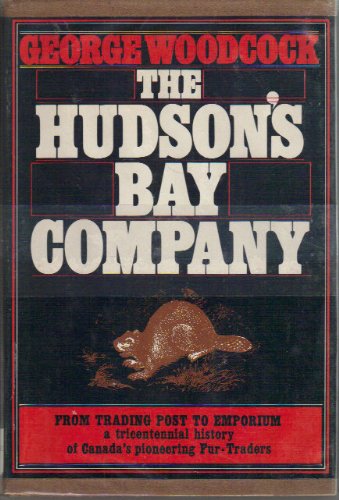
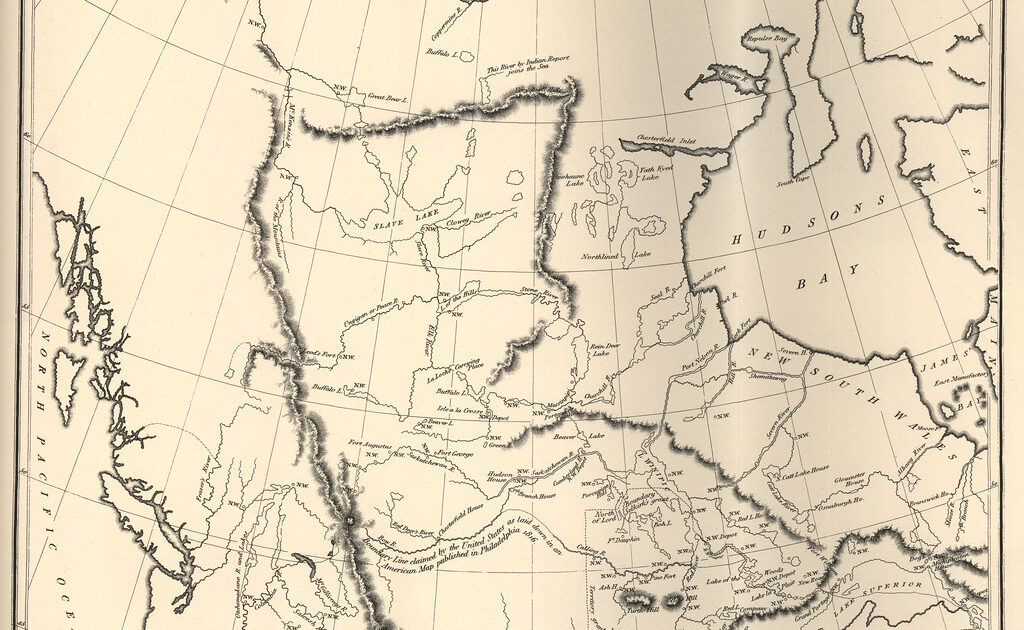
The Hudson’s Bay Company’s sale of Rupert’s Land in 1869 was one of the largest territorial transfers in history conducted almost entirely through contract. A corporation that had held chartered rights over roughly 7.7 million square kilometres of North American territory — an area larger than Western Europe — transferred those rights to the new Canadian Confederation for £300,000 and a set of land reservations. The transaction took less than a year to negotiate. It permanently altered the shape of a continent. And it reveals something about corporate power that most histories of the fur trade underweight: territorial control, once accumulated, can be converted into cash through negotiation rather than through continued extraction.
What Rupert’s Land Actually Was

The Hudson’s Bay Company received its royal charter in 1670, granting it exclusive trading rights over the entire drainage basin of Hudson Bay. The charter was explicit: this was commercial sovereignty, not just commercial license. The company could make war, conclude treaties, administer justice, and exercise governmental functions across territories that no European state had surveyed, mapped, or in any practical sense controlled.
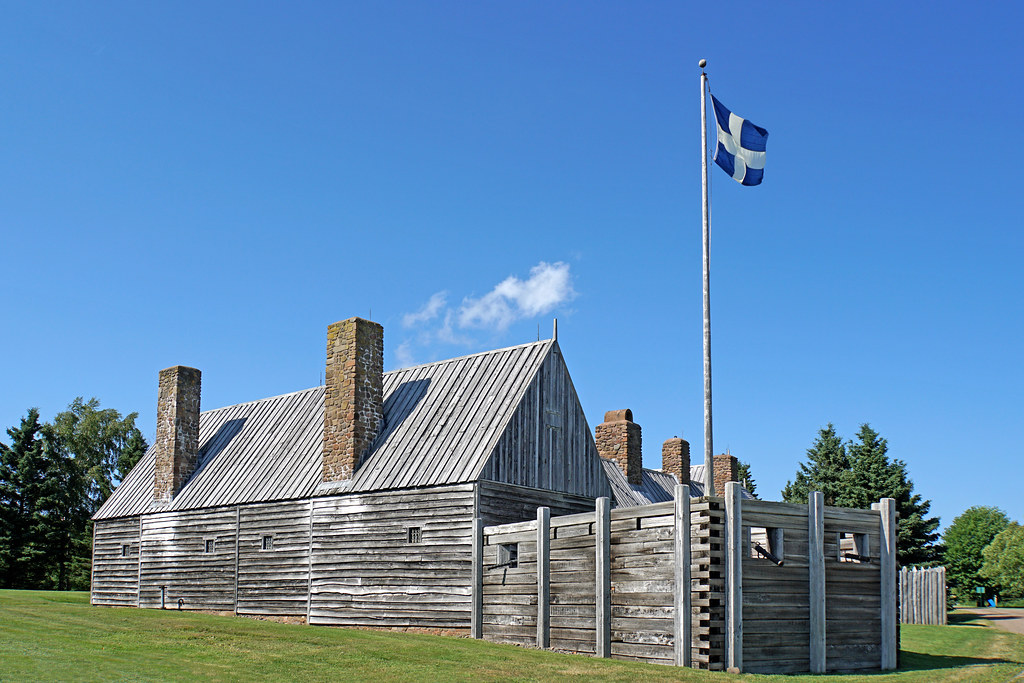
What emerged over the next two centuries was a commercial empire built on fur. The company established trading posts — “factories” in contemporary terminology — along the bay’s southern coast and eventually inland, creating a network of exchange with Indigenous nations that channeled beaver pelts, marten, fox, and other furs toward London markets. The operation was lean by design: large garrisons were expensive, and the company preferred to trade rather than to govern directly.
The comparison with the East India Company is instructive. The EIC built an administrative apparatus that eventually governed hundreds of millions of people. The HBC largely avoided direct governance in favor of commercial control. Both strategies concentrated power, but the HBC’s approach left it with a territorial claim that was commercially thin but legally durable — an asset that could be transferred when the fur trade declined relative to settlement and agriculture.
The Conditions That Made Sale Possible
By the 1860s, the Hudson’s Bay Company faced several converging pressures. The fur trade remained profitable but had matured; the most accessible beaver populations had been trapped out, and the frontier of viable extraction was moving further north and west. Meanwhile, the political landscape of North America was changing rapidly. The American Civil War had demonstrated the consequences of leaving large territories in ambiguous political status, and British imperial strategy was shifting toward encouraging Canadian self-government as a way of reducing imperial costs without abandoning strategic interests.
The creation of the Canadian Confederation in 1867 crystallized the question of what would happen to the HBC’s western territories. Canada wanted them for agricultural settlement and transcontinental expansion. Britain wanted a resolution that reduced imperial liability. And the HBC, whose shareholders included London financiers with sophisticated views on asset valuation, recognized that Rupert’s Land was worth more as a negotiated transfer than as the basis for continued commercial operation.
The transaction that followed was, in financial terms, straightforward: Canada would pay £300,000 to the company, the HBC would retain one-twentieth of the fertile land in the settlement zone (eventually totaling about 6.6 million acres), and the remaining territory would transfer to Canadian sovereignty. The company was also allowed to continue trading operations. What it was selling was not its commercial presence but its sovereign claim — the chartered right to govern, which it had largely never exercised but which Canada needed extinguished before it could organize the territories.
Sovereignty as a Sellable Asset

The deeper insight from the Rupert’s Land transaction is about what corporate charters actually create. A charter granting exclusive commercial rights over a territory also grants a form of property right in that territory’s future — the right to exclude others, to set terms of access, and, crucially, to be bought out when those rights become an obstacle to a third party’s plans. The HBC’s leverage in 1869 came not from its current economic productivity in the territory but from the legal fact that Canada could not proceed with western expansion while the HBC’s charter remained valid.
This pattern has modern parallels. Geographic chokepoints command premium pricing not because of what they produce but because of what others need to do through them. The Canton System’s controlled access created leverage for whoever held the license to admit or exclude. The HBC’s chartered territory was another version of the same structural advantage: control over access created a sellable asset even when direct extraction had become less valuable than it once was.
The land reservations the HBC retained — one-twentieth of the fertile belt — proved prescient. As agricultural settlement expanded across the prairies in the 1870s and 1880s, the value of those retained acres compounded. The company that sold its sovereignty kept a substantial equity stake in the territory’s agricultural future, converting a commercial empire into a real estate portfolio without ever ceasing to operate as a trading company.
The Cost the Transfer Did Not Address
The Rupert’s Land transfer has a moral and political dimension that the financial mechanics cannot absorb. The Indigenous nations who had been the HBC’s commercial partners for two centuries were not parties to the transaction. Their land rights, treaty relationships, and futures were disposed of through an agreement between a London corporation and a Canadian government, with neither consulting them as sovereigns in their own right.
The Métis communities of the Red River Settlement — people of mixed Indigenous and European ancestry who had built their lives within the fur trade economy — responded to the transfer with the Red River Resistance of 1869–1870, led by Louis Riel. Their resistance produced the Manitoba Act of 1870, which created the province of Manitoba and included some protections for Métis land rights, though those protections were subsequently eroded through a combination of legislation and settlement pressure.
The HBC transaction is a reminder that financial elegance and structural cleverness are not the same as justice. The mechanism that converted corporate territorial claims into cash was operationally impressive. The communities whose relationship with that land predated the HBC’s charter by millennia were largely excluded from the negotiation. A complete accounting of the Rupert’s Land sale requires holding both of those facts simultaneously.
Lessons From the Land Sale
1. Corporate territorial claims can outlive the business model that created them
The HBC’s fur trade had matured by the 1860s, but the chartered territory retained value as a legal obstacle to others’ plans. The claim was worth more as a transferable asset than as the basis for continued extraction.
2. The right to exclude creates leverage even without active use
Canada could not proceed with western expansion while the HBC’s charter was valid. That legal fact, not current economic productivity, was what the £300,000 was purchasing.
3. Land retention as equity participation
The one-twentieth land reservation converted the company’s territorial stake into a real estate position in agricultural settlement — a different kind of asset than the fur-trade infrastructure, but one that compounded as settlement expanded.
4. Third-party need is a pricing mechanism
What the buyer urgently requires determines the seller’s leverage more than the seller’s cost structure. Canada urgently needed the chartered rights extinguished. The HBC priced accordingly.
5. Financial mechanics and moral accounting are separate but both necessary
The elegance of the transaction’s financial structure does not resolve the questions it raised about Indigenous sovereignty and Métis rights. A serious analysis holds the mechanism and its consequences in view simultaneously.