Hook
Most companies want market share. Hudson‘s Bay Company was granted something larger and stranger: the chance to turn a vast northern world into a corporate sphere of trade, transport, and authority.
Its chartered rights reached across Rupert’s Land, a territory so large and so loosely bounded that the business opportunity looked almost geographical in scale. This was not simply a merchant enterprise hustling for margin. It was a corporation learning how to behave like a government.
That is what makes the story unmistakably Hidden Fortunes. The hidden strategy was not just buying furs cheaply and selling them dearly. It was using legal privilege and logistical reach to make geography itself part of the fortune.
The World Before the Fortune

The North American fur trade already mattered before Hudson’s Bay Company received its 1670 charter, but the market was fragmented, physically punishing, and dependent on distance more than most European investors could fully grasp. Trade in such an environment favored whoever could secure protected access and reliable transport.
King Charles II’s charter changed the scale of the opportunity. It gave the Governor and Company of Adventurers of England trading into Hudson’s Bay exclusive rights over trade in the lands draining into Hudson Bay. That legal move did not merely bless a merchant enterprise. It drew a monopoly line across enormous space.
This is the first strategic insight. When a company is granted the right to stand between territory and commerce, its real product becomes permission. Everything else, goods, routes, forts, labor, price, sits downstream from that.
The Rise
.jpg)
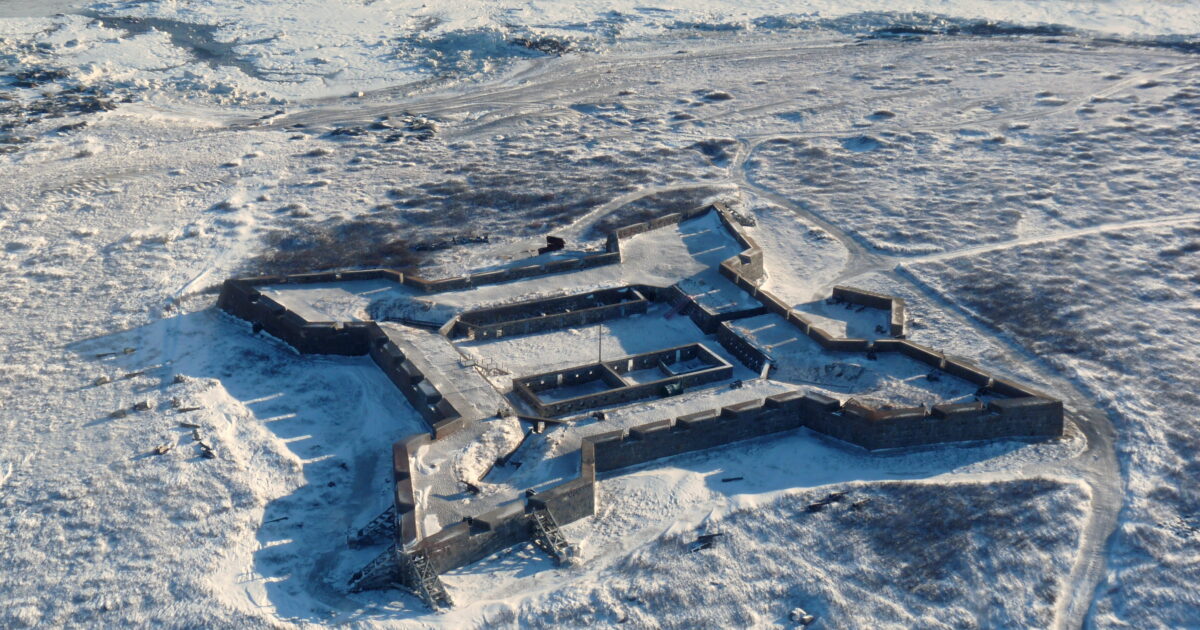
Hudson’s Bay Company built its position through posts, supply lines, and repeated exchange. Bay-side forts allowed the company to receive furs and distribute European goods without immediately pushing inland. Over time, the network became more sophisticated, and geography itself became part of the operating model rather than an obstacle to it.
The company’s trade depended heavily on Indigenous knowledge, movement, and participation. That fact must stay visible. European corporate charters did not create the world they entered. They sought to dominate and reorganize systems already inhabited and understood by others. The company’s power therefore grew through dependency as much as command, even if the colonial structure eventually obscured that dependency.
Conflict with French interests and later rivalry with the North West Company only sharpened the company’s strategic discipline. Competition taught it that monopoly on paper still needed to be defended in practice through logistics, diplomacy, and repeated state support.
That practical defense is what made the company more than a legal fiction. A charter can create rights, but it cannot by itself move supplies across frozen water, maintain outposts, manage seasonal timing, or sustain exchange relationships over immense distances. Hudson’s Bay Company became powerful because it operationalized privilege. It turned paper monopoly into lived infrastructure.
The Expansion of Power
.jpg)
As the company evolved, it ceased to look like an ordinary trading concern. It administered posts, managed transport, negotiated relationships, and operated over a territory so large that commercial authority blurred into political function. This is the point where chartered companies become especially dangerous: profit and governance start using the same roads.
The 1821 merger with the North West Company consolidated that power after decades of intense rivalry. What emerged was a stronger corporate system with wider reach across northern North America. The company’s influence stretched through trade, territorial management, and the practical ability to decide who moved goods through what routes and under what terms.
Even the eventual transfer of Rupert’s Land to the Canadian government in 1870 shows how significant the company had become. It did not simply disappear. It negotiated compensation, retained important land interests, and translated territorial privilege into a later stage of corporate life. That is what corporate sovereignty looks like when it matures: it learns how to convert one era’s monopoly into another era’s asset base.
The Hidden Strategy Behind the Fortune

The hidden strategy behind the fortune was geographic intermediation. Hudson’s Bay Company made itself the legal and logistical gatekeeper between territory and commerce.
That is more powerful than it sounds. In a thinly settled, difficult, and immense environment, the company that controls forts, routes, permissions, and supply timing can convert distance into recurring advantage. The market no longer looks like a collection of trades. It looks like a managed corridor.
This is why the company should be understood as a corporate sovereignty model. It held chartered privilege, moved goods, managed posts, and helped define the terms of access across a region larger than many states. The fortune did not depend on a single brilliant product move. It depended on a system in which geography, law, and trade all reinforced one another.
Competitors struggled because they had to fight three layers at once: legal privilege, physical scale, and network entrenchment. Even when rivals could challenge one layer, they often could not overturn the whole structure. That is how true moats work. They stack.
For modern readers, the lesson is that some of the strongest fortunes emerge when a company stops acting like a seller and starts acting like the compulsory route through which others must pass. That is the real commercial meaning of empire.
What makes the company especially instructive is that it monetized patience. A giant territory, a sparse network, and slow transport might seem like weaknesses to a modern operator trained on speed. Yet in this case, slowness combined with exclusivity created endurance. The company did not need velocity alone. It needed persistence across a route system that others struggled to duplicate.
The Cost, Risk, or Decline
.JPG)
A serious reading also has to confront the human and political cost. Corporate rule in colonial space was never a neutral exercise in logistics. It reshaped land, trade, sovereignty, and the lives of Indigenous peoples whose knowledge and networks were essential to the business but who did not control the chartered power above them.
The company’s later decline as a monopoly does not erase the scale of what it had already done. By the time its exclusive territorial regime weakened, it had already shown how a corporation could act as a quasi-state for generations and then convert that history into later commercial forms.
That darker edge should not be treated as a footnote. It is part of the real anatomy of power. Many wealth systems become most impressive at the exact moment they are also becoming morally brittle, politically exposed, or structurally overconfident.
Lessons for Modern Business Readers

1. Permission can be more valuable than product
Exclusive access rights often create better economics than competing on goods alone.
2. Geography can become a moat
Distance is not always a weakness. In the right system, it becomes a barrier others struggle to cross.
3. Networks of outposts build strategic depth
Distributed infrastructure can turn a huge territory into a manageable commercial machine.
4. State backing multiplies private leverage
A charter or legal privilege can give a company powers that markets alone would never grant.
5. Corporate power can blur into governance
The most dangerous monopolies are often the ones that start performing state-like functions.
6. Historical scale does not erase human cost
A wealth system can be operationally impressive and still depend on displacement, inequality, and colonial extraction.
For business readers, the practical lesson is to look for businesses that control access, not just product. Platforms, logistics networks, distribution layers, and regulatory positions can all function as modern versions of a chartered corridor.
The cautionary lesson is equally important. When a company’s power starts to resemble governance, its profit model is no longer just commercial. It becomes political. Hudson’s Bay Company shows how lucrative that can be and how historically charged it becomes.
Book Recommendation
For readers who want the best next step, start with Company of Adventurers by Peter C. Newman. It is the right Amazon follow-up for this topic because it gives the company the narrative scale it deserves while showing how charter, distance, and trade fused into a private empire.