A shortcut is valuable once. A tolled shortcut is valuable every day.
That distinction is the real reason the Panama Canal belongs in a publication like Hidden Fortunes. The engineering feat was spectacular, but the fortune did not live in the excavation alone. It lived in the system that transformed saved time into recurring revenue and strategic leverage over world trade.
When a route becomes unavoidable enough, pricing the route becomes a form of power. That is the toll machine beneath the canal story.
The World Before the Fortune
Trade routes are often discussed like maps, but for merchants and states they behave more like balance sheets. A shorter route changes insurance, working capital, fleet utilization, spoilage, naval timing, and freight competitiveness. It changes not only how long movement takes, but how valuable movement becomes.
That is why canal history is always also pricing history. Once ships can save enough distance, someone gains the right to ask how much that saved distance is worth. The answer is never purely technical. It is strategic, political, and commercial at the same time.
The Panama Canal inherited this logic from the moment it mattered. It did not simply accelerate trade. It created a point where the savings from acceleration could be measured, negotiated, and collected.
The deeper editorial payoff is that it trains the reader to see how fortunes compound when an operator captures systems, not just headlines. Earlier infrastructure empires like the British East India Company and Hudson’s Bay Company had understood the same principle: control the corridor, and the corridor pays.
The Rise

The canal’s physical success made toll design unavoidable. If a shortcut meaningfully lowered voyage time, fuel use, and route uncertainty, then shippers would accept paying for access as long as the economics remained favorable relative to the alternatives.
This is what transformed the canal from infrastructure into machine. The route was not merely open; it was monetized. Every passage became a decision in which carriers weighed the toll against the cost of distance avoided. That calculation, repeated across years and fleets, turned geography into a recurring pricing right.
The brilliance of the model was that demand did not need to be invented from scratch. The world already wanted to move. The canal simply inserted itself into the economics of movement strongly enough that it could collect from the desire already present.
What contemporaries often missed was the compounding effect of the mechanism itself. Once chokepoints become real fortunes — when route compression is converted into a repeatable pricing system — every later decision became easier to understand. The institution at the center did not need to win every battle dramatically. It needed to make rivals operate on worse terms and make the surrounding market feel natural only after its own structure had already become dominant. The story of how the Panama Canal syndicate first secured the geography makes this logic visible from the beginning.
The Expansion of Power

Once traffic normalized, the toll machine gained broader strategic importance. It influenced fleet planning, route competition, cargo scheduling, and the relative strength of ports linked to canal-optimized trade. A toll is never just a fee; at scale, it becomes a force that shapes behavior across the wider system.
This is why chokepoints can outgrow the physical space they occupy. The canal’s pricing power extended into decisions made far from Panama itself. Shipping companies, traders, insurers, and states all had to account for the corridor in their planning. The result was a layer of influence much larger than the narrow strip of infrastructure might suggest.
That influence also made the canal politically sensitive. Pricing a shortcut in world trade is never a neutral act. Whoever controls the pricing logic has a hand in deciding how cheaply or expensively the rest of the system can move.
The Hidden Strategy Behind the Fortune

The hidden strategy behind the fortune was turning time savings into a rent stream.
The canal did not need to own the cargo. It only needed to own the corridor that made the cargo move more efficiently. Once that position was secured, a toll became the mechanism through which the canal’s geographic advantage could be harvested repeatedly.
This is the deeper reason chokepoint infrastructure can be so profitable. It monetizes dependence indirectly. Ships do not pay because they love canals. They pay because the alternative is slower, costlier, or strategically weaker. The owner’s pricing power therefore rests on the relative pain of the routes outside the gate.
For modern readers, the lesson is wider than maritime history. Any business that reduces friction at scale may eventually discover that the most valuable asset is not the service itself but the right to price the friction removed. The same logic powered the United Fruit Company’s railroad empire in Central America — infrastructure as leverage, not just logistics.
The Cost, Risk, or Collapse

Chokepoint pricing also attracts resentment and contest. The more central the route becomes, the more others will question who benefits, how fees are set, and whether strategic dependence has become too concentrated. This is not a bug in the system. It is one of the system’s defining features.
There is also a fragility problem. If a route is profitable because it is essential, then disruption becomes expensive for everyone. The toll machine therefore sits alongside maintenance burdens, political pressure, and the permanent risk of crisis at a narrow point in a wide world.
Still, that fragility does not weaken the lesson. It strengthens it. The most important infrastructures are often the ones where pricing power and geopolitical exposure become inseparable.
The danger in stories like this is that success can make the system look cleaner than it really was. Fortunes built through chokepoint control still face execution risk, political reaction, and the possibility that the very technique that created power will later attract scrutiny or overreach. That is why disciplined readers should study not only the ascent, but the stress points hidden inside the ascent.
Lessons for Modern Business Readers

1. Saved time is a product
If your system compresses distance or delay at scale, you may have created something people will repeatedly pay for.
2. Tolls are behavior-shaping tools
At enough scale, pricing a route changes how the entire network organizes itself around the route.
3. Chokepoints monetize dependency
The owner of the gate does not need to own the entire market. It only needs to own the corridor the market keeps needing.
4. Route economics are strategic economics
Friction, timing, and infrastructure access can shape profit as powerfully as product quality.
5. Essential systems attract political scrutiny
The more unavoidable the infrastructure becomes, the more contested its ownership and pricing become.
6. Geography can become recurring revenue
The smartest infrastructure fortunes do not merely exploit space. They price the value of moving through it.
Seen that way, this article creates natural bridges across the Hidden Fortunes infrastructure cluster and gives later articles on banking dynasties and empire finance a stronger structural base.
Hidden Fortunes is not trying to collect disconnected stories about famous names. It is trying to show readers how power behaves when money, infrastructure, governance, and timing begin to reinforce one another. Once the reader understands that framework, related pieces stop feeling isolated and start feeling like variations on the same long historical problem: who gets to own the layer everyone else must still pass through.
Book Recommendation
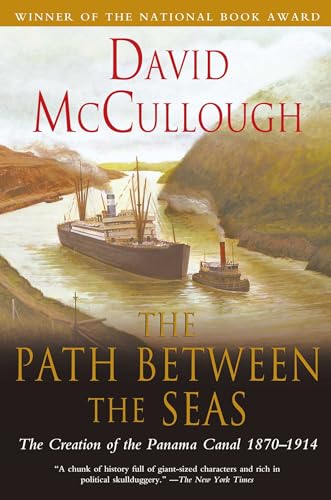
For readers who want the best next step, start with The Path Between the Seas by David McCullough. It is the definitive account of how the canal was built — and why the political and financial battles surrounding its construction were as consequential as the engineering itself.