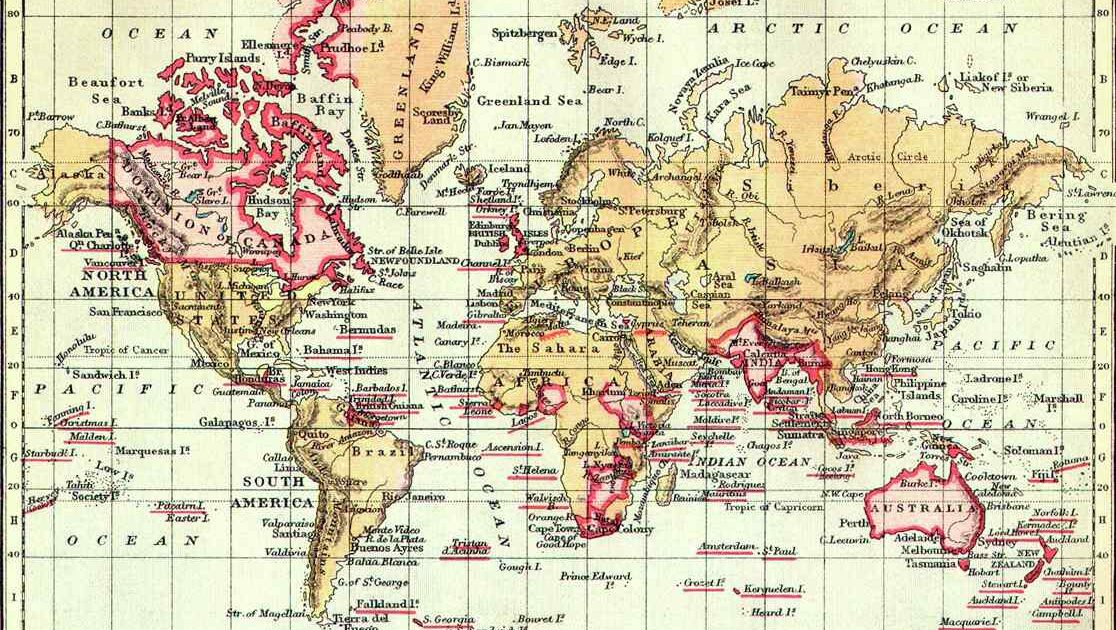
The British Empire did not rely on one corporate playbook. It relied on several. Two of the most revealing were the East India Company and the Hudson Bay Company.
Both held monopoly privileges. Both helped turn private business into imperial machinery. But their wealth systems were not identical, and that difference makes the comparison valuable.
This is a Hidden Fortunes comparison because it shows how corporations adapt empire to terrain.
The World Before the Fortune
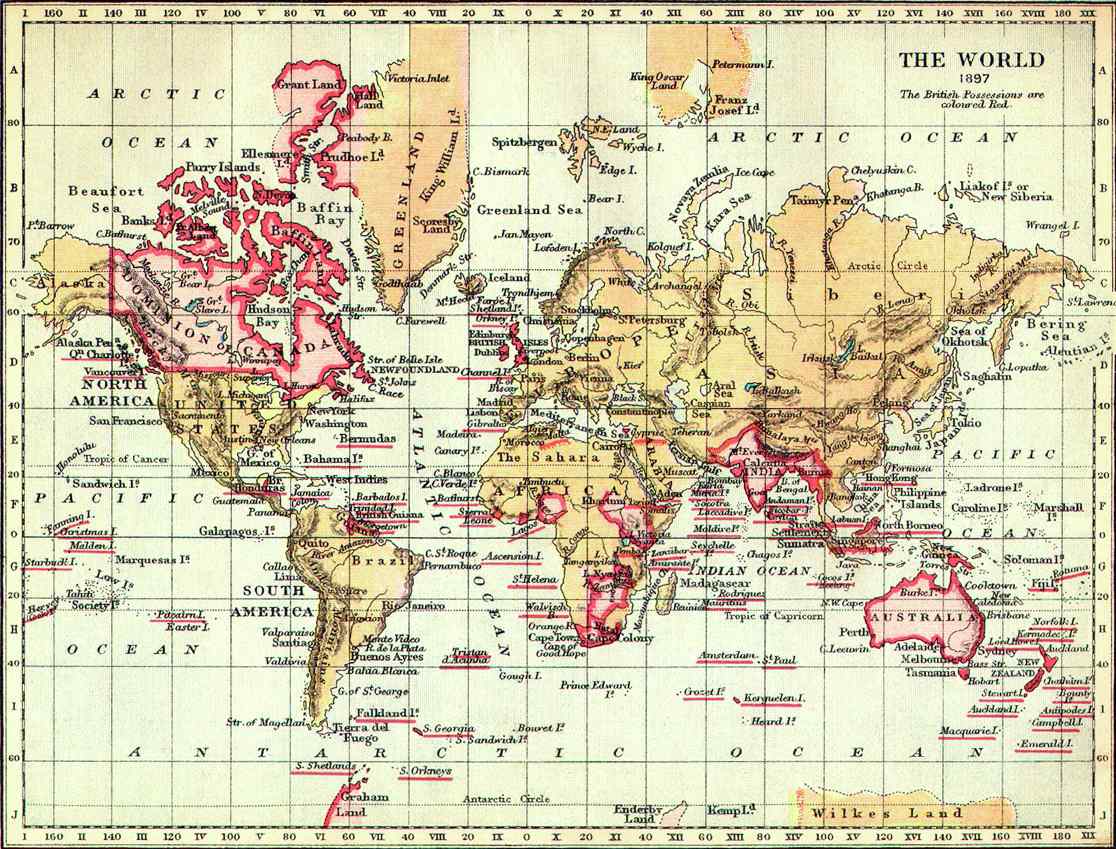
Chartered companies emerged when states lacked the appetite or capacity to manage every distant commercial frontier directly. They outsourced risk and power at the same time.
That made charters one of the most dangerous financial technologies of the early modern world. They turned private firms into semi-public instruments with unusual privileges: the right to trade exclusively, to make treaties, to raise armies, and to govern territory in the crown name.
The East India Company and the Hudson Bay Company both used that tool, but in very different landscapes with very different results.
The Rise

The East India Company entered dense commercial networks in India and eventually built political and military power around them. It was not merely a trading firm. It became a parallel state — collecting taxes, recruiting armies, and administering justice across a subcontinent.
Hudson Bay Company worked across a far colder and more dispersed territory. Its system was less about dense administrative reach and more about controlling routes, posts, and trade access over the vast spaces of what is now Canada.
One company looked like a financial-political engine. The other looked like a territorial gatekeeper. Both were profitable. Both were imperial. But the mechanisms were entirely different.
The Expansion of Power

Each model fit its environment. India offered population density, tax possibilities, and complex political leverage. The East India Company could extract from existing systems once it had secured enough coercive power.
Rupert Land offered scale, distance, and the value of route control. Hudson Bay Company built a chain of trading posts that Indigenous trappers and traders had to pass through to exchange goods. It monetized necessity over geography rather than over population.
This matters because monopoly strategy is never abstract. It always interacts with terrain, institutions, and transport. Understanding that interaction is what separates a deep strategic reading from a surface one.
The Hidden Strategy Behind the Fortune

The hidden strategy behind the comparison is fit. The East India Company built a fortune through denser extraction and state-like administration. Hudson Bay Company built a fortune through slower gatekeeping and geographic intermediation.
Both models relied on access control, but one monetized a crowded imperial-commercial world while the other monetized difficult space itself. The distance and cold that made Rupert Land unattractive to ordinary settlers made it ideal for a company that could staff remote posts and maintain the only reliable supply chain.
For modern readers, this is a systems lesson: the strongest business model is often the one that matches the terrain better than rivals do.
The Cost, Risk, or Decline

Both models carried heavy colonial and human cost. The East India Company enrichment of shareholders came at the expense of Indian populations, economies, and political structures that were systematically subordinated to British commercial interests.
Their decline also reveals that legal privilege eventually meets political limits. The Indian Rebellion of 1857 ended the East India Company as a governing entity. The British Crown absorbed its functions directly. Hudson Bay Company ceded Rupert Land to Canada in 1869, retaining trading rights but losing territorial sovereignty.
The fortunes extracted before that point remained enormous. But both corporations show that even the most powerful legal privilege is temporary when political conditions shift far enough.
Lessons for Modern Business Readers

1. Business models must fit terrain
Strategy that works in one environment may fail in another. The East India Company playbook in the Hudson Bay territories would have been operationally impossible. The HBC model in India would have been competitively too weak.
2. Access control is a portable power principle
Many empires, old and new, get rich by controlling routes into a system. The technology and geography change. The logic of gatekeeping remains.
3. Legal privilege can behave like infrastructure
A charter can become a moat when it shapes who is allowed in. Modern equivalents include spectrum licenses, platform terms, and regulatory frameworks that determine market access.
4. Comparisons reveal architecture
Looking at two empires side by side clarifies what each one was really doing. Reading only the East India Company suggests dense extraction is the universal model. Reading Hudson Bay Company alongside it reveals that patient geographic control is another viable path.
5. Geography is never neutral
Distance, density, and terrain shape the economics of control. A strategy optimized for one geography can fail badly when transplanted.
6. The form of empire changes, but gatekeeping survives
Modern businesses still build fortunes through controlled access. Ports, platforms, pipelines, and networks all create chokepoints that generate returns for whoever controls them.
The comparison matters because it teaches a broader principle: the best fortune-building system is often the one that treats local conditions as strategic design constraints rather than as scenery. That is the premium Hidden Fortunes payoff.
Recommended reading: The Anarchy by William Dalrymple — the larger chartered-company frame needed to understand corporate empire as a wealth machine.