A financial crisis becomes more dangerous when the thing being sold is not only debt, but faith in a future that has not earned itself yet.
Jay Cooke did not simply sell railroad bonds. He industrialized the distribution of belief. By connecting Northern Pacific Railroad financing to a national narrative of westward expansion and American destiny, he turned a speculative infrastructure project into something that felt less like an investment and more like participation in a historical inevitability. Railway Mania in Britain had shown how infrastructure narratives could pull capital faster than economic reality could absorb it. Cooke’s innovation was to apply that same dynamic to the American retail market at unprecedented scale.
The Panic of 1873 had multiple causes, but the collapse of Jay Cooke & Company on September 18, 1873, was the trigger that converted a market correction into a full financial crisis. Understanding why requires looking at the bond distribution machine Cooke had built — and why the machine’s very success made the failure so severe.
Morgan’s later response to railroad distress was to impose governance discipline through restructuring. Cooke’s earlier approach was to prevent distress from appearing in the first place by maintaining investor confidence through continuous marketing. These two methods represent complementary poles of the same underlying problem: how do you finance infrastructure that has not yet proven its cash flow?
The World Before the Fortune

Nineteenth-century America needed capital for expansion, and railroads offered one of the most persuasive growth stories in the market. The real question was not whether infrastructure mattered. It was whether finance could stay disciplined while monetizing the story.
Jay Cooke had established his reputation during the Civil War by distributing Union government bonds to ordinary Americans through an unprecedented network of agents, subagents, and newspaper advertisements. The strategy worked: Cooke raised hundreds of millions of dollars by making government bonds accessible and desirable to a much broader investor base than had previously participated in the bond market.
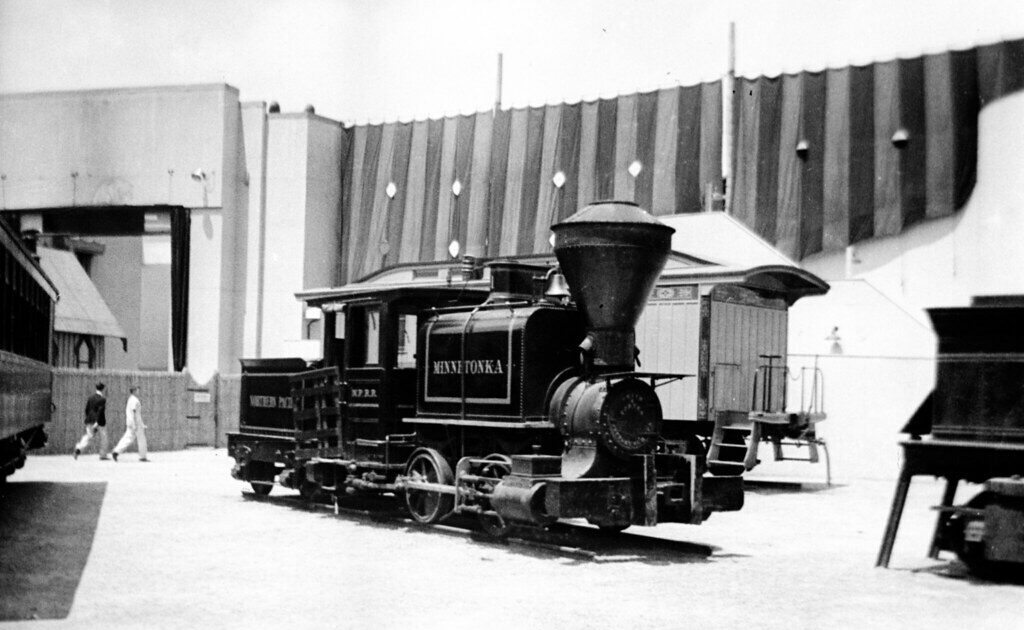
This success created both a model and a business problem. The war ended, and Cooke needed a new vehicle for his distribution capabilities. The Northern Pacific Railroad — a transcontinental line planned to run from Lake Superior to Puget Sound — offered the opportunity. Cooke became the railroad’s exclusive financial agent and began applying his wartime distribution techniques to railroad bond sales in 1869.
The environment favored anyone who could organize bond distribution, retail investor confidence, and projected infrastructure cash flow more effectively than rivals. The northern route to the Pacific was a genuine strategic prize — but proving its economic viability required building through territories where demand was speculative rather than demonstrated.
The Rise

Cooke’s edge came from making debt saleable at scale. He helped turn financing into persuasion, connecting national ambition, investor appetite, and railroad bonds in a way that felt almost patriotic.
The Northern Pacific bond campaign was a marketing operation as much as a financial one. Cooke published promotional materials, engaged newspapers, and deployed an agent network across the country to sell bonds to retail investors who had never previously purchased railroad securities. The Northern Pacific was presented not as a speculative investment but as a participation in the inevitable development of the American West — “Jay Cooke’s Banana Belt,” critics called the territory, mocking the promotional rhetoric.
The bond distribution worked well enough in the initial years. But it depended on a continuous inflow of new capital to service existing obligations and fund construction. The railroad was spending money faster than the territory it was crossing could generate traffic. Bond sales had to keep growing simply to prevent the financing structure from stalling.
Once that shift happened — when bond distribution success started getting mistaken for proof of project viability — the machine became structurally fragile. The visible momentum of the bond campaign concealed the underlying weakness of a railroad whose traffic projections were aspirational rather than demonstrated.
The Expansion of Power

That is why Cooke deserves a satellite article. He turns a broad crisis into a more exact Hidden Fortunes lesson about what happens when capital markets start pricing aspiration as if it were already operating cash flow.
By 1872, Cooke’s firm was deeply committed to the Northern Pacific in ways that made it difficult to change course. The firm had lent money to the railroad, held unsold bonds on its own account, and had publicly committed its reputation to the project’s success. Backing away would destroy confidence and trigger exactly the crisis it was trying to avoid.
The broader capital market environment made the situation worse. European investors, who had been important purchasers of American railroad bonds, became more cautious after the Credit Mobilier scandal — a separate railroad financing fraud that revealed how extensively American railroad construction had been manipulated. The supply of new capital available for Northern Pacific bonds tightened precisely when Cooke’s firm needed it most.
Railroad promoters of the era understood that railroad finance required narrative as well as economics. But there is a critical difference between a narrative that accurately describes a company’s trajectory and one that substitutes for a trajectory that has not yet materialized. Cooke’s Northern Pacific campaign crossed that line — and the collapse when it came was severe precisely because so many investors had believed the narrative.
The Hidden Strategy Behind the Fortune

The hidden strategy behind the fortune was selling infrastructure dreams to the public before the cash flows existed, turning railroad bonds into a national confidence machine.
Cooke’s genuine innovation — the retail distribution of investment securities — was real and lasting. The techniques he developed for reaching ordinary investors, the use of agent networks and newspaper advertising, and the framing of investment as civic participation all prefigured methods that would become standard in twentieth-century financial markets.
The problem was that these distribution techniques worked regardless of whether the underlying project was financially sound. A compelling narrative and a well-organized distribution network can sell bonds even when the project they represent cannot generate the cash flows required to service them. This is the hidden danger of financial marketing: the better the distribution system, the more important the underlying discipline needs to be.
The lasting lesson is about how bond distribution, retail investor confidence, and projected infrastructure cash flow became a lever strong enough to outlive one cycle but dangerous enough to trigger a decade of economic contraction when the underlying projections proved wrong.
The Cost, Risk, or Collapse
Once belief breaks inside a financing machine like this, the damage runs beyond one promoter. Trust falls, liquidity disappears, and the broader growth story starts looking suspicious even where parts of it were real.
Jay Cooke & Company closed its doors on September 18, 1873, after failing to sell a large block of Northern Pacific bonds that had accumulated on its books. The closure was immediate and its effects cascading. The New York Stock Exchange closed for ten days — the first such closure since the market’s founding. Banks that had lent to Cooke and to the railroads it financed found their own positions weakened.
The depression that followed the Panic of 1873 lasted until approximately 1879 — six years of contracting economic activity, falling prices, and high unemployment. The railroads themselves continued to be built, and many eventually proved economically viable. But the investors who had purchased bonds at the height of Cooke’s marketing campaign often received far less than face value in the reorganizations that followed.
The Bank of England’s eventual response to the Baring Crisis of 1890 showed one model for managing the fallout from overexposed financial intermediaries. In 1873, no such coordinating mechanism existed in the United States — which is partly why the crisis was so damaging and so prolonged.
Lessons for Modern Business Readers

1. Distribution capability is not the same as project viability
Cooke’s ability to sell bonds was genuine and remarkable. It was not, however, evidence that the Northern Pacific could generate the cash flows required to service those bonds. The lesson: the quality of a distribution system does not validate the quality of the asset being distributed. These are separate questions that require separate analysis.
2. Narrative momentum creates structural fragility
A project that requires continuous investor confidence to remain solvent is vulnerable in a way that a project with demonstrable cash flows is not. The Northern Pacific bond machine needed new buyers constantly — when that flow slowed, the structure could not absorb the shock. Modern equivalents include any business model that requires continuous capital infusion before reaching self-sufficiency.
3. Distribution concentration increases systemic risk
Because Cooke’s firm was the dominant financial agent for Northern Pacific bonds, its failure removed the key intermediary from the market at exactly the moment when the market most needed orderly functioning. Concentration in critical financial functions creates systemic risk that extends far beyond the individual firm.
4. The gap between aspiration and cash flow is the risk
Infrastructure projects that require capital long before they generate revenue are inherently dependent on investor confidence during the construction period. Managing that dependence — with realistic projections, conservative debt structures, and contingency plans for slower-than-expected ramp-up — is the discipline that Cooke’s Northern Pacific campaign lacked.
5. Retail distribution democratizes both opportunity and damage
Cooke’s innovation in reaching ordinary investors was genuine and positive in its long-term effects on financial market access. But it also meant that the damage from the Northern Pacific collapse was widely distributed among small investors who had trusted the marketing and lacked the information to evaluate the underlying project independently.
Conclusion
Seen clearly, this is not just a story about Jay Cooke’s railroad bond machine. It is a story about the gap between the promise of infrastructure finance and the discipline required to make that promise good — and about what happens when the distribution machine works better than the underlying project.
That is why the article belongs inside the Hidden Fortunes ecosystem. It deepens the Panic of 1873 with a precise account of the financing mechanism that made the crisis possible — and gives readers a framework for recognizing when narrative-driven capital formation is substituting for demonstrable cash flow.
Book Recommendation
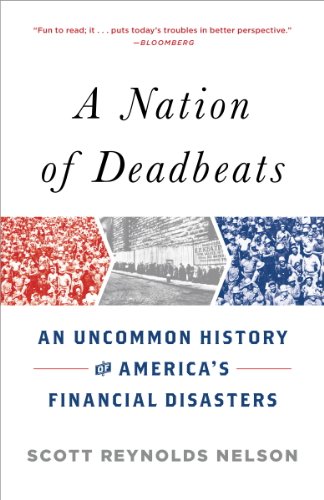
For readers who want the strongest next step, start with A Nation of Deadbeats by Scott Reynolds Nelson. It is the right follow-up because it situates the Panic of 1873 within a broader history of American financial crises — showing how the mechanisms that Cooke exemplified recurred across different eras and different instruments, always with the same basic dynamic at their core.