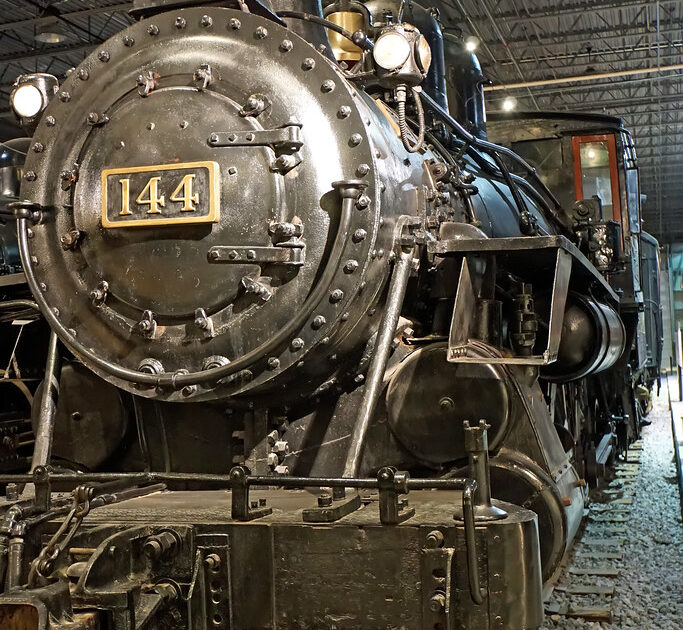
A broken empire can be more useful to a financier than a healthy one — if the financier knows how to redesign the terms of survival.
By the 1880s and 1890s, American railroads had built the physical infrastructure of a continental economy and then proceeded to nearly destroy its own financial foundations. Overbuilding, rate wars, and reckless bonding had left dozens of major lines insolvent or near collapse. The Morgan syndicate machine was already well developed, but Morganization was something more specific: a system for converting distressed railroad systems into instruments of stable financial control.
Carnegie and Morgan operated in the same Gilded Age economy with very different approaches to power. Carnegie built steel from the ground up — a maker of things. Morgan operated through financial architecture — a maker of terms. Morganization was the purest expression of Morgan’s method: not creating industries but redesigning the governance of broken ones.
Morgan’s reputation was itself a financial instrument. When he stepped into a restructuring, the signal to markets was immediate: the reorganization would be disciplined, the creditors would be treated fairly by established norms, and the resulting entity would be governed in ways that protected bondholder interests. That signal reduced the cost of the restructuring and made the post-crisis capital structure more credible.
The World Before the Fortune

Railroads were too important to disappear easily, but too unstable to run forever under undisciplined competition and weak balance sheets. That tension created an opening for financiers who could stabilize the system while expanding their own influence over it.
American railroad construction in the decades after the Civil War was spectacular in scale and chaotic in financing. Lines were built through territories that could not support the traffic required to service the bonds issued to fund construction. Rate wars between competing lines drove revenues below the level needed to cover fixed costs. By the 1880s, receivership had become almost routine in the industry.
The legal and institutional framework for handling railroad insolvency was still being developed. Courts appointed receivers who operated lines under judicial supervision, but the process of converting a bankrupt railroad into a viable reorganized entity required coordination among dozens of classes of creditors with competing interests — bondholders, stockholders, equipment lenders, and trade creditors — each of whom could block a reorganization plan they found unacceptable.
The environment favored anyone who could organize debt restructuring, creditor coordination, board influence, and crisis-time credibility more effectively than rivals. Morgan understood that the scarcest resource in a railroad reorganization was not capital — it was trust among parties who had every incentive to fight each other rather than cooperate.
The Rise

Morgan’s edge came from being able to impose order that others believed in. He could coordinate creditors, shape governance, and turn rescue into long-term leverage rather than one-time charity.
The Morganization process had a recognizable pattern. Morgan’s firm would form a protective committee that pooled the voting rights of bondholders, effectively giving the committee — and through it, Morgan — control over the reorganization process. The committee would then negotiate with other creditor classes to develop a reorganization plan that reduced total debt, extended maturities, and converted some fixed obligations into equity.
In exchange for orchestrating this process, Morgan’s firm received substantial fees, typically extracted significant equity stakes in the reorganized company, and almost always secured board representation for Morgan-aligned directors — often Morgan himself. These board seats were the key to Morganization’s durability: they gave Morgan ongoing visibility into the company’s operations and the ability to prevent the financial indiscipline that had caused the original collapse.
Once that shift happened, later victories became easier to understand because the structure itself kept amplifying the original advantage. A Morgan-reorganized railroad had lower debt, aligned governance, and a credible financial structure — which made it easier to raise future capital, which strengthened the Morgan relationship further.
The Expansion of Power

That is why Morganization deserves its own systems article. It shows how financial power deepens after collapse, when survival itself becomes negotiable and the actor who can make markets trust again becomes the hidden architect of the rebuild.
By the mid-1890s, Morgan had reorganized some of the largest railroad systems in America — including the Erie, the Reading, the Baltimore and Ohio, and the Southern Railway. The cumulative effect was to bring a substantial fraction of American railroad capacity under governance structures that Morgan and his allies influenced through board representation and ongoing financing relationships.
This created something that looked, to contemporary observers and to later antitrust investigators, like a private system of railroad coordination operating through financial channels. Railroads that competed on rates found themselves with overlapping ownership in their bond structures and shared directors who saw stabilized rates as preferable to destructive competition. Rate stability was good for bondholders. It was also good for Morgan, who had exposure to both lines.
The Northern Securities case eventually brought antitrust action against the Morgan railroad system — but the mechanism that Morganization created had already demonstrated how financial restructuring could be used to build coordination without explicit cartel agreements.
The Hidden Strategy Behind the Fortune

The hidden strategy behind the fortune was turning distress into influence through restructuring, board seats, syndicates, and credibility rather than simply buying assets outright.
What made Morganization distinctive was its method of acquiring influence without the capital cost of ownership. Morgan did not purchase railroads. He reorganized them — and in doing so, acquired governance rights, information advantages, and ongoing financing relationships that were more durable than direct ownership and required far less capital to maintain.
The Baring model had shown how intermediary position could become institutional power through trusted placement. Morganization showed how crisis intermediation — the specific task of coordinating parties who cannot otherwise cooperate — could produce durable control rights. The mechanism was different. The logic was the same: make yourself indispensable to a process others cannot complete without you.
The lasting lesson is about how debt restructuring, creditor coordination, board influence, and crisis-time credibility became a lever strong enough to outlive one cycle, one product, or one charismatic figure.
The Cost, Risk, or Collapse
Restoring order can still concentrate private power. A rescue mechanism may stabilize a system while narrowing who gets to govern it afterward.
The political reaction to Morganization was substantial. The concentration of railroad governance in the hands of a small number of interconnected financiers produced exactly the kind of private coordination that antitrust law was designed to address. The Pujo Committee hearings of 1912-1913 examined Morgan’s network of board seats and financial relationships and concluded that a money trust — a small group of financiers exercising coordinated influence over American banking, railroads, and industry — had formed.
Morgan died in 1913, shortly after the Pujo hearings concluded. The Federal Reserve Act of the same year shifted some of the functions that private financiers had previously performed toward public institutions. The era of Morganization as a systemic railroad governance mechanism was largely over, replaced by regulated utilities, the Interstate Commerce Commission, and eventually federal bankruptcy law.
The mechanism did not disappear. The private equity and distressed-debt industries of the late twentieth and early twenty-first century operate on recognizable variations of the Morganization logic: acquire governance rights through distressed situations, impose financial discipline, and exit at a profit once stability has been restored.
Lessons for Modern Business Readers

1. Crisis intermediation is a path to governance
Morganization shows that the actor who coordinates parties in a crisis can extract governance rights as part of the reorganization fee. This logic remains current. Private equity firms, distressed-debt investors, and restructuring advisors all operate on variations of this principle: the right to shape post-crisis governance is more valuable than any single fee.
2. Influence through governance is cheaper than ownership
Morgan did not buy railroads. He restructured them and acquired board seats. Board representation gave him information, ongoing access, and the ability to prevent future financial mismanagement — at a fraction of the capital cost of outright ownership. The lesson: governance rights and ownership rights are different assets with different price tags.
3. Credibility is the infrastructure of restructuring
Morganization worked because both creditors and management believed that a Morgan-led reorganization would be conducted competently and fairly. That belief reduced transaction costs, made cooperation possible among parties with competing interests, and produced outcomes that validated the belief — which made the next restructuring easier. Credibility compounds.
4. Financial discipline is a condition, not an assumption
The railroads that Morgan restructured had failed partly because their governance allowed financial indiscipline to accumulate unchecked. Morganization’s signature contribution was embedding financial discipline into the post-reorganization governance structure — not assuming it would emerge naturally. Board seats, reporting requirements, and ongoing financial relationships were all mechanisms for maintaining discipline after the crisis was resolved.
5. Private coordination attracts regulatory response
The Pujo hearings were a predictable consequence of Morganization’s success. When a small number of private actors gain coordinated influence over a large share of a critical industry’s governance, political and regulatory response follows. The lesson for modern readers: the concentration that follows a successful restructuring strategy may eventually attract the same scrutiny that Morganization did.
Conclusion
Seen clearly, this is not just a story about Morganization as a control mechanism. It is a story about how financial power can be acquired through the governance of distress — and how that power, once accumulated, can compound in ways that are more durable and more politically significant than ordinary capital ownership.
That is why the article belongs inside the Hidden Fortunes ecosystem. It deepens the Banking Dynasties cluster with a precise account of how Morgan’s reputation and syndicate capabilities translated into governance control over American industry.
Book Recommendation
For readers who want the strongest next step, start with The House of Morgan by Ron Chernow. It is the definitive account of the Morgan firm’s history — showing how the Morganization mechanism fit within a broader century-long strategy of using financial intermediation to build institutional influence over American and international capitalism.
![House of Morgan (REV 10) by Chernow, Ron [Paperback (2010)]](https://m.media-amazon.com/images/I/31SI3uU1S-L.jpg)