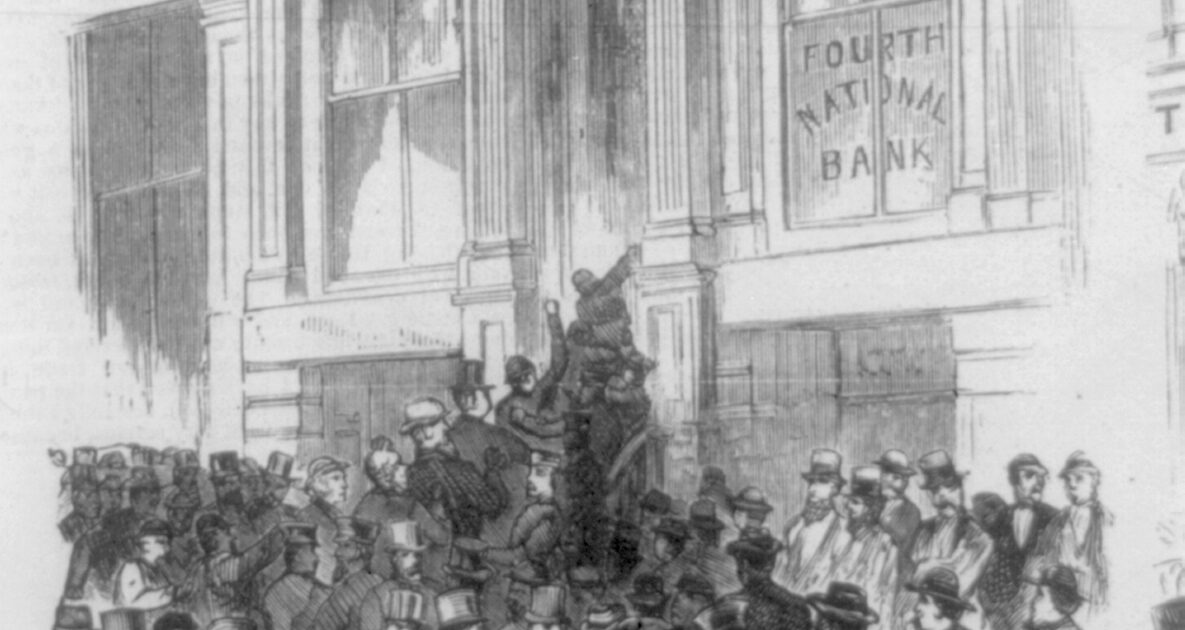
The first global depression did not begin with a mystery. It began with a promise that capital would outrun risk forever.
On the surface, the Panic of 1873 is sometimes taught as a dated banking panic with names and bond markets that feel remote from modern readers. But Hidden Fortunes is not interested in the surface alone. It is interested in the system beneath the spectacle — the layer where railroad debt, speculative finance, and cash-flow fragility inside infrastructure booms quietly becomes the real source of power.
That is why this story matters now. It is not only about the railroad-finance mechanism behind 1873. It is about how any infrastructure boom becomes a crisis machine when the debt structure expands faster than the underlying cash flows can support. Readers who followed the railway mania of the 1840s will recognize the architecture immediately — the timescale was different, the geography was wider, and the damage ran deeper.
The World Before the Fortune
Industrializing economies in the nineteenth century treated railroads as arteries of future growth. That made them irresistible not only to builders and politicians, but to bond buyers, underwriters, and speculative capital looking for the next transformational story.
The United States emerged from the Civil War with enormous appetite for expansion. The transcontinental railroad was complete, and a second wave of lines — especially in the American West and across Central Europe — was being promoted with the same confidence. Jay Cooke and Company, the most powerful banking house in America, was underwriting bonds for the Northern Pacific Railroad with the same national authority it had used to finance the Union during the war.
That credibility created a dangerous feedback loop. When Jay Cooke endorsed a bond, smaller investors followed. When smaller investors followed, the financing seemed validated. The system rewarded anyone who could organize railroad debt, speculative finance, and cash-flow fragility inside infrastructure booms — and it punished the moment that validation disappeared.
The Rise
The problem was not that the railroads being built in the early 1870s were economically worthless. Many of them were eventually valuable. The problem was that the financing machine around them invited assumptions about demand, timing, and repayment that could become unstable long before the steel reached full productivity.
Jay Cooke’s Northern Pacific venture required settlers to populate the land before the railroad could generate freight revenue. The railroad needed revenue before it could service its bonds. The bonds needed demand before Cooke’s firm could sell them. Each link in that chain depended on the previous one moving faster than it actually moved.
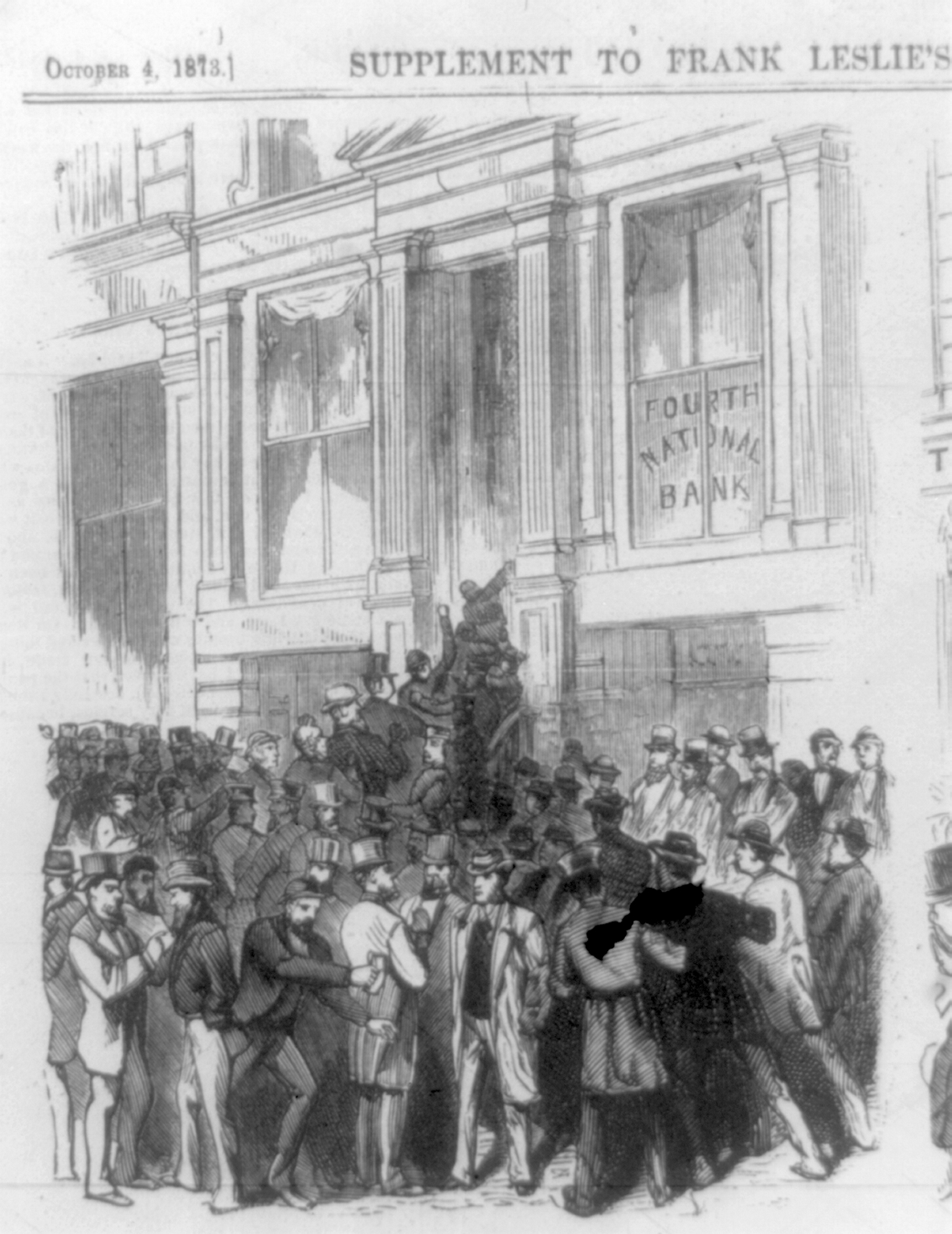
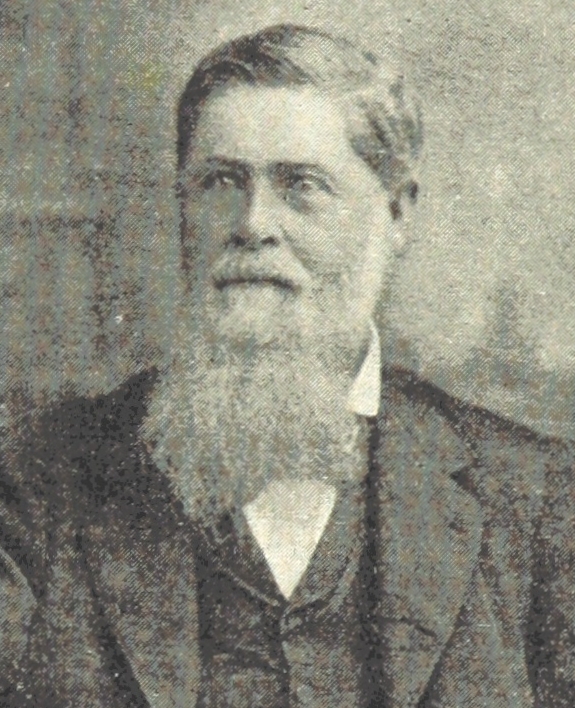
In September 1873, Jay Cooke and Company ran out of time. The bonds were not selling. The firm was carrying too much paper with too little cash. On September 18, 1873, it closed its doors — and in doing so, it announced to every creditor in the United States that the infrastructure story had been priced ahead of reality.
The Expansion of Power
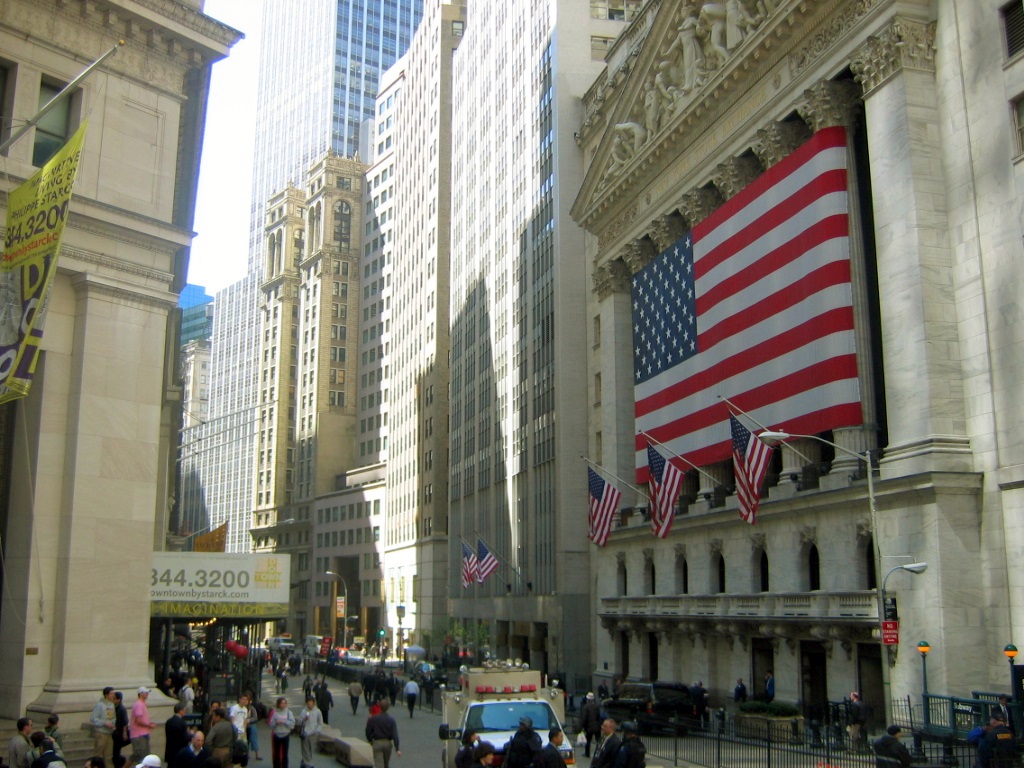
The panic spread with remarkable speed. Within two days of Cooke’s failure, the New York Stock Exchange closed for ten days — the first closure in its history. Banks across the country began calling in loans. Railroads stopped construction. Workers were laid off. The contraction that began in a Philadelphia counting house had become a national economic event within a week.
What made the Panic of 1873 genuinely different from earlier crises was its international dimension. The same speculative optimism that had fueled American railroad bonds had simultaneously driven a construction boom in Germany and Austria following the Franco-Prussian War. The Vienna Stock Exchange had crashed in May 1873, months before Cooke’s failure. When American credit markets froze, the damage became transatlantic.
That is why the panic is still useful. It helps modern readers understand how infrastructure stories can be economically right in the long run and financially disastrous in the short run if capital structure loses discipline. The Credit Mobilier scandal had already shown how public infrastructure could be privately extracted. The Panic of 1873 showed what happened when the extraction machine ran out of solvent buyers.
The Hidden Strategy Behind the Fortune
The hidden strategy — if the panic can be said to have one — was the structural logic that turned infrastructure promise into debt dependency. Bond markets do not lend against completed assets. They lend against projected future earnings. In a railroad boom, that means lending against population growth, freight volumes, and land values that do not yet exist.
That gap between present debt and future cash flow is where the fragility lives. As long as new capital keeps flowing — new investors buying bonds, new lines being promoted, new stories generating confidence — the gap remains invisible. The moment new capital slows, the gap opens.
The deeper lesson, which applies equally to banking crises a generation later and the gold standard constraints that made monetary adjustment difficult, is that infrastructure booms concentrate risk invisibly. The visible story is progress. The invisible story is leverage accumulating inside the most trusted institutions in the system.
The Cost, Risk, or Collapse
The Long Depression that followed the Panic of 1873 lasted, by most estimates, until 1879 in the United States and longer in parts of Europe. Unemployment rose sharply. Wages fell. Railroad construction contracted. Banks that had extended credit against railroad bonds were forced to write down assets and restrict new lending.
Once trust breaks in a debt-driven buildout, the damage spreads far beyond investors. Jay Cooke lost his fortune. The Northern Pacific was thrown into receivership. Thousands of small investors who had purchased bonds on the strength of Cooke’s reputation lost their savings. The politics shifted: labor unrest increased, the Greenback movement grew, and the debate over monetary policy — hard money versus expanded currency — became one of the defining conflicts of the next two decades.
But the deeper vulnerability was structural, not personal. Any financing mechanism that depends on perpetual optimism carries the risk that optimism withdraws. The same bond markets that had celebrated Jay Cooke as a national hero in 1865 treated his firm’s closure as proof that the entire railroad edifice had been built on assumptions that reality refused to honor.
Lessons for Modern Business Readers
1. The gap between debt issuance and cash flow is the hidden risk
Infrastructure booms look solid until the financing machine needs repayment. The Northern Pacific’s problem was not that railroads were bad investments — it was that the bond schedule demanded payments before the railroad could generate them. Modern infrastructure debates, from data center financing to renewable energy buildouts, carry the same structural tension.
2. Credibility can accelerate fragility
Jay Cooke’s reputation was an asset that worked as long as confidence held. The moment it cracked, every institution associated with him became suspect. In any system where trust functions as collateral, the most credible actors carry the greatest systemic risk when they fail.
3. Geographic spread does not reduce correlation
The Panic of 1873 was both American and European because the same speculative logic — infrastructure bonds, projected land values, deferred cash flows — had been applied simultaneously across different markets. Diversification by geography does not help when the underlying mechanism is identical.
4. The crisis is not the cause — it is the revelation
Jay Cooke’s closure did not create the problem. It revealed a problem that had been accumulating for years inside the bond markets and railroad promotions. Modern readers should look at crises not as sudden events but as the visible moment when an invisible accumulation becomes undeniable.
5. Monetary constraints amplify real-economy shocks
The Long Depression was extended by the political and monetary constraints of the era. The gold standard limited the Federal government’s ability to expand credit. Debates about hard versus soft money paralyzed policy for years. The structural setting in which a crisis occurs determines how long and how deep the damage runs.
6. Pattern recognition is the compounding asset
The Panic of 1873 follows the same logic as the railway mania of the 1840s and anticipates the same logic of later boom-bust cycles. Readers who internalize the mechanism — not just the dates and names — can recognize modern versions before they become obvious.
Conclusion
Seen clearly, the Panic of 1873 is not just a story about Jay Cooke or the Northern Pacific. It is a story about how infrastructure enthusiasm, when combined with debt that outpaces cash flow, creates a fragility that feels invisible until it becomes irreversible.
The railroad got built — eventually. The country got its transcontinental network — eventually. But the capital structure around the buildout extracted enormous social costs: years of depression, widespread unemployment, and political upheaval that lasted a generation. That is why the article exists inside the Hidden Fortunes ecosystem. It reinforces Financial Crises and Industrial Empires, connects forward to railroad comparisons and modern debt structures, and gives readers a framework they will use to analyze the next infrastructure boom before the crisis arrives.
Recommended Reading
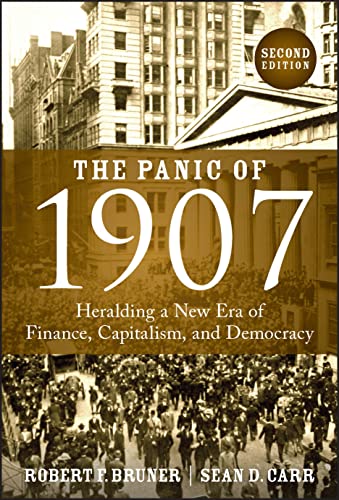
For readers who want to go deeper into the mechanics of financial panic — how confidence collapses, why contagion spreads, and how institutions fail in sequence — The Panic of 1907: Lessons Learned from the Market’s Perfect Storm by Robert F. Bruner and Sean D. Carr is the essential companion read. The 1907 crisis followed the same structural logic as 1873: overextended finance, fragile trust, and a financial system with no lender of last resort.