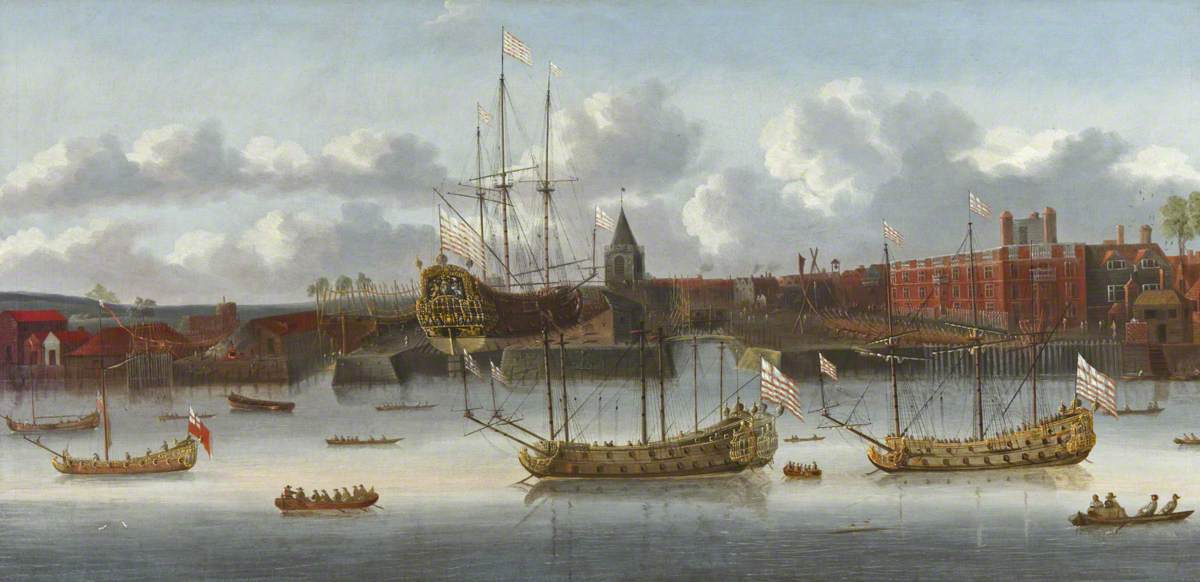
It started as a company, not a kingdom. There was no crown on its letterhead, no ancient dynasty behind its seal, and no grand imperial mythology at the beginning. There was only a charter, a group of investors, and the promise that trade in Asia could produce magnificent returns.
Then the machine changed. In India, commerce became coercion, coercion became taxation, and taxation became rule. By the late eighteenth century, the British East India Company was no longer just buying and selling across oceans. It was commanding armies, extracting land revenue, and deciding the fate of territories that held millions of people.
That is what makes the Company so disturbing and so useful for Hidden Fortunes. It reveals a wealth strategy that still feels modern: if you can capture the system behind the market, the market itself becomes secondary.
The World Before the Fortune

Before the East India Company became a territorial power, the Indian Ocean world was already one of the richest commercial theaters on earth. Indian textiles, spices, and regional trading networks mattered deeply to European merchants because Asia produced goods Europe wanted but could not easily rival. The original corporate dream was not to govern India. It was to insert British capital into an already thriving exchange system.
That first context matters because the Company did not invent wealth in the region. It attached itself to wealth that already existed. Mughal institutions, local merchants, port cities, and agricultural revenue systems had created a dense economic landscape long before British shareholders imagined turning it into a return on investment.
For decades, the Company behaved mostly like a privileged trader. But its structure contained a latent temptation. If military force could protect commerce, perhaps military force could also improve terms. Once that logic appeared, the distance between merchant and ruler began to collapse.
The Rise

The critical turning point came in Bengal. The Battle of Plassey in 1757 did more than reshape a local balance of power. It showed that a corporation with soldiers, allies, and financial ambition could intervene directly in succession struggles and then monetize the outcome. Victory was not simply a battlefield event. It was a boardroom event with territorial consequences.
The deeper breakthrough came in 1765, when the Company gained revenue-collecting rights in Bengal, Bihar, and Orissa. Trade income rises and falls with prices and shipping risk. Tax income, by contrast, can become predictable, enforceable, and scalable if backed by administrative power. The Company had found a way to turn land revenue into corporate cash flow.
Once that happened, the entire logic of the institution hardened. Armies could be funded by revenue. Revenue could be enlarged by political leverage. Political leverage could be defended by more armies. This is how a merchant body becomes a governing machine without ever admitting that empire has become the real business.
The Expansion of Power

The Company expanded because it understood that territory was valuable not only for prestige but for recurring extraction. It could dictate commercial access, influence legal conditions, and treat fiscal rights as the foundation beneath every other form of power. Shareholders in London saw returns. People in India increasingly felt the presence of a private state.
But the machine was messy from the beginning. Officials on the ground pursued fortunes of their own, corruption scandals grew, and Parliament realized that a profit-seeking corporation with military and administrative power was too consequential to ignore.
Even under tighter supervision, the East India Company’s achievement remained extraordinary in structural terms. It had fused capital markets, coercive force, and taxation into one engine. That engine survived crisis after crisis until the revolt of 1857 shattered the remaining illusion that a corporation could indefinitely govern a subcontinent.
The Hidden Strategy Behind the Fortune

The hidden strategy behind the fortune was not trade alone. It was conversion. The Company converted privileged access into political leverage, political leverage into tax rights, and tax rights into self-financing control. Each layer funded the next.
That conversion strategy is the key lesson. Most businesses compete inside a market. The East India Company learned to reposition itself above the market. Once it could influence who enforced rules, who paid revenue, and who moved armed force, margins from buying and selling were almost beside the point. The real prize was governance capacity.
It also understood the difference between one-time gain and recurring extraction. The durable fortune came from recurring fiscal rights. A company that can collect revenue does not need to wait for customers in the normal sense. It has inserted itself into the economy at the level of obligation.
For modern readers, the comparison is not literal empire but platform control. The richest institutions often stop behaving like simple vendors. They try to own the rails, set the terms, and become too embedded to ignore.
The Cost, Risk, or Decline

The same design that built the Company’s fortune eventually exposed its limits. A structure optimized for extraction could produce immense wealth, but it also generated resentment, fragility, and moral rot. Famine, scandal, administrative abuse, and recurring criticism made it harder to pretend that shareholder governance and imperial rule could coexist cleanly.
After the upheaval of 1857, the British state absorbed what the Company had built. The corporation disappeared, but the template did not. Its decline is a reminder that a system can be financially brilliant and still create political conditions that destroy its legitimacy.
Many wealth systems become most impressive at the exact moment they are also becoming morally brittle, politically exposed, or structurally overconfident.
Lessons for Modern Business Readers

1. Capture recurring revenue, not just transactions
The Company became truly powerful when it moved from trade profits to recurring tax flows. Modern firms should ask whether they are living on one-time sales or building durable economic rights.
2. Control over the system beats competition inside the system
Its biggest leap came when it stopped acting like one trader among many and started shaping the environment itself. The modern equivalent is owning the infrastructure layer rather than fighting over scraps at the edge.
3. Scale without governance becomes a liability
The Company grew faster than its ethics and oversight. That is a timeless warning for any institution that centralizes power before it builds accountability.
4. Crisis can hide structural risk
For a long time, profits obscured how unstable the model really was. A business can look invincible while quietly accumulating political and reputational danger.
5. The strongest strategy is not always the most sustainable
The East India Company mastered extraction, but extraction alone cannot buy legitimacy forever. Enduring power needs more than coercive advantage.
6. Never confuse financial success with moral neutrality
The Company was brilliantly designed for profit and deeply costly for the people under its rule. Hidden Fortunes works best when it keeps both truths visible at the same time.
Book Recommendation
For readers who want the best next step, start with The Anarchy by William Dalrymple. It gives the wider historical context behind the fortune, the machinery of power, and the strategic logic that made the story endure.