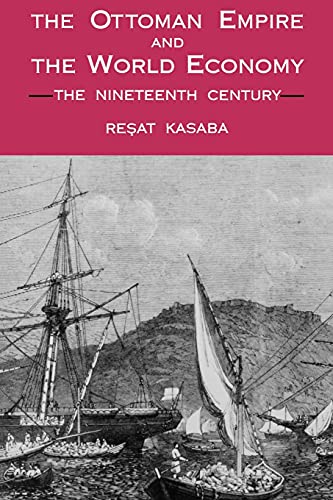
Empires do not always lose power through invasion. Sometimes they lose it through accounting.
The Ottoman Public Debt Administration, established in 1881, is one of the most instructive case studies in the history of sovereign finance. It shows how a state that borrowed heavily from foreign creditors could find, over time, that the creditors’ claim on revenue had grown into something that looked less like a loan arrangement and more like a parallel fiscal authority. The empire remained nominally sovereign. But significant portions of its revenue — tobacco taxes, salt revenues, silk duties, stamp taxes — flowed first to a body controlled by foreign bondholders before the imperial treasury could decide how to spend them.
The Road to Default

The Ottoman state had been borrowing from European markets since the 1850s, when the Crimean War created fiscal pressures that the existing tax-farming system could not cover through acceleration alone. Early loans carried reasonable terms, but the pattern that followed was familiar in the history of sovereign debt: each new loan was partly used to service the previous one, the principal outstanding grew faster than the tax base could absorb, and the creditors who provided the financing developed increasing leverage over the terms of the next round.
By 1875, the Ottoman government could no longer service its external debt and suspended payments. This was not merely a financial crisis. It was a signal to European powers — Britain, France, Germany, and others with capital at stake — that the informal arrangements governing Ottoman creditworthiness had broken down and something more formal was required. The result, after several years of negotiation, was the Decree of Muharrem in 1881 and the creation of the Ottoman Public Debt Administration.
What the Debt Administration Actually Was

The OPDA was formally a body of European creditors — primarily British, French, German, Austrian, Italian, and Ottoman bondholder representatives — given direct administrative control over designated revenue streams. It was not merely an advisory body or a monitoring mechanism. It collected taxes. It ran monopolies. At its peak it employed around five thousand people and administered revenues covering tobacco, salt, silk, spirits, fish, and the tribute from Bulgaria.
The revenues assigned to the OPDA were collected before they reached the imperial treasury. This inversion of the normal fiscal flow was the Administration’s defining feature. The Ottoman government had, in effect, ceded the first claim on significant portions of its own income in exchange for creditor consent to resume debt service on restructured terms. What looked like a compromise on paper was, in practice, a permanent alteration of the state’s fiscal architecture.
The comparison with earlier Ottoman fiscal mechanisms is instructive. Tax farming had already delegated revenue collection to private contractors, accepting some loss of control in exchange for upfront payment and administrative simplicity. The OPDA operated on a different logic: it did not pay upfront, and the revenues it controlled did not return to general imperial use. They flowed to bondholders in Europe. The delegation was not temporary but structural.
Sovereignty Rerouted

The political implications of the OPDA were significant and understood by Ottoman officials at the time. The arrangement created a body with legal authority over Ottoman fiscal flows, staffed partly by foreigners, reporting partly to foreign investors, and operating with a degree of independence from imperial oversight that would have been inconceivable in a state with strong creditworthiness.
The parallel with the Qing dynasty’s confrontation with foreign commercial power is revealing. In China, the mechanism of foreign penetration was commercial access — the Canton System’s controlled gates were eventually forced open by military pressure. In the Ottoman case, the mechanism was fiscal. Foreign capital entered through the debt market, and when the debt became unserviceable, the creditors converted their financial claim into an administrative one. The result in both cases was a reduction of sovereign control over the institutions that mediated between the state and its economy.
The OPDA’s operations were, by most accounts, technically competent. It improved tobacco administration, rationalized salt collection, and brought greater consistency to the revenues it controlled. This is precisely what makes it useful as a case study: the loss of sovereignty it represented was not the product of obvious mismanagement or corruption on the creditors’ part. It was the logical outcome of a debt structure that, once defaulted upon, gave creditors legitimate grounds to demand more direct control as the price of restructuring.
Expansion and Entrenchment

The OPDA’s scope grew over time rather than shrinking. As additional revenues were pledged to cover new borrowing needs, the Administration’s reach extended into areas that had initially been outside its mandate. By the early twentieth century, it had become one of the largest employers in the empire and a significant actor in sectors — tobacco most prominently — that had commercial as well as fiscal importance.
The tobacco monopoly administered by the OPDA is particularly illustrative. Regie des Tabacs, a joint company operating under the Administration’s umbrella, controlled tobacco cultivation, processing, and sale across Ottoman territories. It employed a large workforce, maintained its own inspection and enforcement apparatus, and operated with considerable independence from Ottoman commercial regulation. Foreign capital had followed the debt claim into the productive economy itself.
This pattern — debt leading to revenue assignment, revenue assignment leading to administrative presence, administrative presence extending into commercial operations — has recurred in different forms across the history of sovereign debt. The specific institutions change. The underlying logic, in which creditors use fiscal weakness to convert financial claims into governance claims, remains recognizable.
The End of the System
The Ottoman Public Debt Administration operated until the First World War, when the empire’s alignment with the Central Powers effectively suspended the relationship with French and British bondholders. The OPDA’s operations were wound down after the war. The successor Turkish Republic negotiated a final settlement of Ottoman debt obligations in the 1920s that substantially reduced the outstanding claims.
The OPDA’s legacy was largely negative in Turkish historical memory, unsurprisingly. It represented a period in which fiscal weakness had translated into governance loss in ways that felt, from the imperial side, like a form of financial colonialism operating through debt contracts rather than military occupation. Whether that framing is entirely fair depends on how one weighs the Ottoman state’s role in creating the conditions for default against the creditors’ role in structuring arrangements that maximized their leverage.
Lessons From the Ottoman Debt Machine
1. Debt restructuring terms reflect power, not just finance
The creditors who negotiated the Decree of Muharrem were not only calculating interest coverage. They were extracting governance concessions from a state that had no alternative. The financial terms and the political terms were inseparable.
2. Revenue assignments are more durable than promises
A promise to repay from future revenues can be renegotiated. A body with direct collection authority over designated taxes is much harder to dislodge without outright confrontation. The OPDA persisted for three decades because dismantling it would have required the Ottoman state to default again.
3. Administrative presence follows financial claims
The transition from debt instrument to revenue administrator to commercial operator followed a logic that was not inevitable but was consistent. Each step gave creditors more information, more leverage, and more sunk cost in the arrangement’s continuation.
4. Competent management of captured revenue does not make capture legitimate
The OPDA’s operational effectiveness — better tobacco administration, more consistent salt revenues — is sometimes cited as a mitigating factor. But technical competence and structural legitimacy are different questions. The arrangement worked financially while constraining Ottoman fiscal sovereignty in ways that compounded over time.
5. Sovereign fiscal weakness invites structural solutions that outlast the crisis
The OPDA was created to resolve a specific debt crisis. It lasted forty years and extended into economic sectors well beyond the original restructuring terms. Structural solutions to fiscal weakness tend to persist long after the immediate crisis that justified them.