A state that needs money quickly does not always send more bureaucrats. Sometimes it sells the right to collect.
That was one of the great fiscal insights of the Ottoman Empire. Tax farming gave the center immediate resources and reduced administrative strain, but it also created local revenue entrepreneurs whose power could grow inside the very system meant to serve the empire.
This makes Ottoman tax farming a perfect Hidden Fortunes story. The mechanism looked efficient. The deeper consequences were political.
The World Before the Fortune

Large empires face a permanent revenue problem. They must fund armies, administration, and legitimacy across huge territories without collecting every levy personally. Direct collection is expensive and often impractical. Delegation becomes tempting.
But delegation is never free. The more a state outsources extraction, the more it risks empowering the intermediary layer doing the work. Those actors may remain loyal, become indispensable, or quietly turn imperial necessity into local autonomy.
The Roman Empire faced the same dilemma — and so did every other large power that needed to govern more territory than its central bureaucracy could handle. The Ottoman Empire wrestled with that tradeoff through tax farming, a system that converted collection rights into fiscal assets.
The Rise

Tax farming worked because it solved an immediate imperial problem. The center needed resources and administrative reach. Local collectors often had better knowledge of conditions on the ground and stronger ability to pressure compliance. By granting them collection rights, the state could turn local capacity into imperial revenue.
The arrangement also changed the economics of power. The right to collect taxes became something that could be valued, granted, and profited from. Fiscal authority thus moved through a market-like logic even while remaining embedded in imperial politics.
This is why the system mattered. It was not just a technical revenue fix. It reorganized relationships between center, province, and local elite. The East India Company later used a similar logic when it took over revenue collection in Bengal.
The Expansion of Power

Once the model spread, it gave the empire flexibility. The center could receive immediate funds or predictable payments without building an enormous direct administrative apparatus in every locale. That improved liquidity and reduced some collection burdens.
But the intermediaries collecting the taxes were not neutral clerks. They had incentives to extract aggressively, negotiate politically, and entrench themselves. Over time, this could make the local collector more than a servant of the state. He could become a node of local power in his own right.
That is the strategic tension at the core of the Ottoman fiscal system. Short-term convenience strengthened long-term complexity.
The Hidden Strategy Behind the Fortune

The hidden strategy behind the fortune was liquidity through delegated extraction.
The empire effectively monetized the future right to collect revenue by transferring collection privileges to intermediaries willing to pay for them. That solved an immediate financing problem, but it also meant the state was building a revenue machine partly owned by others.
This is a lesson many modern organizations still ignore. Outsourcing a difficult function can stabilize the center quickly, yet each outsourced layer acquires knowledge, leverage, and bargaining power. In the Ottoman case, those dynamics were embedded inside empire itself.
Tax farming therefore was not simply about taxes. It was about how a large power converts administrative weakness into financial adaptability without fully losing command.
The Cost, Risk, or Collapse

The costs were visible in local pressure, uneven extraction, and the political empowerment of intermediaries whose interests did not always align perfectly with the center. A state can gain cash today and discover tomorrow that it has strengthened the wrong hands.
Fiscal systems like this also create opacity. When collection is delegated, accountability can become blurred, making abuse easier to rationalize or harder to trace back to the imperial center.
Rome confronted the same problem with its own tax publicani — private contractors who collected provincial revenue and sometimes extracted far more than the state intended. The pattern recurs because the incentive structure is always the same: the collector profits from the gap between what he pays the center and what he can take from the province.
That does not make tax farming irrational. It makes it revealing. The system solved real problems, but it did so by redistributing power in ways the state could never control perfectly.
Lessons for Modern Business Readers

1. Liquidity today can create leverage for others tomorrow
Short-term cash solutions often come with long-term bargaining consequences.
2. Outsourcing critical functions changes power, not just cost
The external operator gains knowledge and influence that may later matter strategically.
3. Administrative efficiency can hide political drift
A system can look financially clever while quietly shifting authority away from the center.
4. Revenue systems always shape social order
Who collects the money often matters as much as who receives it.
5. Delegation reduces burden but weakens direct control
Every large organization must decide how much control it is willing to surrender for operational convenience.
6. The hidden economy of empire lives in intermediaries
Empires are rarely run only from the palace. They are run through layers of delegated power.
Book Recommendation
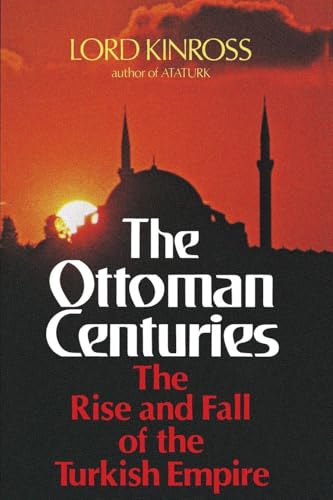
For readers who want the best next step, start with Ottoman Centuries: The Rise and Fall of the Turkish Empire by Lord Kinross. It is the right follow-up because it gives readers a comprehensive entry into the Ottoman world — the fiscal systems, the court politics, and the long arc of imperial power from rise to decline.