Empires often imagine themselves as self-contained. Money is one of the things that proves they are not.
The Qing world looked vast, administratively formidable, and culturally confident. Yet beneath that surface sat a monetary dependence on silver whose flows were shaped by mines, merchants, and imperial networks stretching far beyond China. That dependence did not erase Qing strength, but it complicated it.
This is where Hidden Fortunes finds the real story. A great empire can become wealthy and vulnerable through the same monetary channel at once.
The World Before the Fortune

Silver mattered because money systems matter. Taxes, trade, land transactions, and state credibility all become more fragile when the medium underpinning them is unstable, scarce, or externally exposed. In early modern Eurasia, silver was not just a precious metal. It was a global connector.
The Qing Empire operated inside a world where foreign silver inflows had serious domestic consequences. Monetary order did not end at the border. It arrived through trade, merchant networks, and the broader global movement of metal shaped by extraction elsewhere.
This is what makes Qing history especially relevant to Hidden Fortunes. The empire’s internal strength cannot be understood fully without the external monetary pipeline feeding part of that strength.
The deeper payoff is that it trains the reader to see how fortunes compound when an operator captures systems, not just headlines. Just as Rome built its fiscal machine through territorial control, Qing power rested on a monetary architecture that reached far beyond its own borders.
The Rise

As silver flowed into China through global trade, it helped support a system in which economic activity, taxation, and commercial exchange could operate with greater depth and confidence. That inflow mattered because it reinforced the monetary fabric of a large empire.
But reinforcement is not the same thing as sovereignty. The more central silver became, the more the empire’s stability was tied to conditions it did not fully command. Mines in the Americas, imperial shipping circuits, external trade balances, and global demand all became part of the Chinese monetary story whether the court wanted them there or not.
This is the crucial shift. Monetary support can become monetary dependency when the flow arrives from outside your own base of control.
What contemporaries often missed was the compounding effect of the mechanism itself. The silver flowing into Qing China came largely from the Spanish Empire’s American mines — the same metal that had already destabilized European inflation as it moved through global commerce. The Qing received the benefits and the exposure simultaneously.
The Expansion of Power

The expansion of Qing power was therefore entangled with a world economy rather than isolated from it. Silver made transactions easier, improved confidence, and helped sustain administrative and commercial life. Yet the same system also exposed the empire to disruptions in inflow, changing trade dynamics, and the politics of foreign exchange.
This is why empire economics can never be reduced to tax rates and territorial size alone. A state may look strong internally while relying on external channels for monetary stability. Those channels can amplify prosperity in one era and stress in another.
The deeper Hidden Fortunes lesson is that imperial money systems often create hidden dependencies. The broader story of the Qing economy shows how this logic played out across the dynasty’s arc — prosperity and exposure moving together through the same channels.
The Hidden Strategy Behind the Fortune

The hidden strategy behind the fortune was monetary order sustained through foreign metal.
That sounds paradoxical, but it captures the real structure. Qing power benefited from a silver-linked monetary environment that helped keep economic and fiscal life running. Yet because so much of the metal moved through global trade, the empire’s own stability remained tied to conditions beyond its direct command.
This is one of the most useful patterns in historical strategy. Dependence does not always look weak at first. Sometimes it looks like expansion, liquidity, and commercial vitality. The danger becomes visible later, when the system has grown accustomed to a support it cannot guarantee.
For modern readers, the analogy is clear. Nations and companies alike can confuse access with control if the resource making their system work is sourced elsewhere. The distinction between using a system and owning a system is often invisible until the system becomes less reliable.
The Cost, Risk, or Collapse

Monetary dependency carries delayed risk. When inflows slow, trade balances shift, or the wider global system becomes unstable, the dependent state may discover that internal order rested partly on external conditions. At that point, the problem is not simply shortage. It is structural exposure.
There is also a narrative cost. Great powers often tell stories of civilizational self-sufficiency, yet their economic foundations are frequently more entangled with foreign networks than those stories admit. That tension can distort policy and dull strategic realism.
This is why the silver story matters. It is not a footnote to Qing power. It is one of the clearest ways to see how a mighty empire could be woven into global systems deeper than its self-image suggested.
The danger in stories like this is that success can make the system look cleaner than it really was. Fortunes built through empire-economics logic still face execution risk, political reaction, and the possibility that the technique that created power will later attract scrutiny or overreach. That is why disciplined readers should study not only the ascent, but the stress points hidden inside the ascent.
Lessons for Modern Business Readers

1. Monetary strength can conceal external dependence
A system can look internally stable while relying on flows it does not fully control.
2. Access is not the same as sovereignty
Using a resource successfully is not the same as owning the conditions that keep the resource available.
3. Global trade rewires domestic power
Foreign inputs can quietly become part of a state’s internal order even when the state sees itself as autonomous.
4. Empires are often financially more entangled than they admit
The larger the system, the more likely it is tied into hidden external supports.
5. Windfalls and inflows shape political judgment
When money arrives consistently, leaders may underestimate how dependent the system has become on that continuity.
6. Hidden dependencies matter most in stress
The true strength of a monetary system is often revealed only when the supporting flow becomes less reliable.
Seen that way, this article creates natural bridges across the Hidden Fortunes empire-economics cluster and gives later articles on banking dynasties and financial crises a stronger structural base.
Hidden Fortunes is not trying to collect disconnected stories about famous names. It is trying to show readers how power behaves when money, infrastructure, governance, and timing begin to reinforce one another. Once the reader understands that framework, related pieces stop feeling isolated and start feeling like variations on the same long historical problem: who gets to own the layer everyone else must still pass through.
Book Recommendation
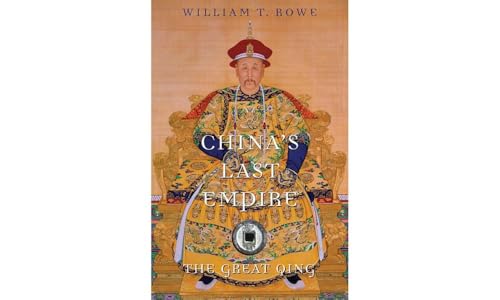
For readers who want the best next step, start with China’s Last Empire: The Great Qing by William T. Rowe. It is the definitive English-language account of how the Qing state functioned — and why its monetary and commercial arrangements made it both powerful and fragile at the same time.