Google did not just win search by being useful. It reinforced its power by paying to occupy the gateways where modern attention begins.
The most important choice in modern search often happened before the user touched a keyboard.
It happened when a phone arrived with one engine already installed in the favored slot. It happened when a browser opened with one search bar already pointed in a single direction. It happened in the invisible architecture of defaults, where convenience, habit, and distribution quietly fused into market power. That is where Google’s empire became more than a product story. It became a gateway story.
For years, the popular defense was simple: Google won because it was better. Sometimes that was true. But monopoly power rarely rests on one truth alone. The deeper Hidden Fortunes question is not whether the product was strong. It is whether Google reinforced that strength by paying to control the starting line.
The World Before the Fortune

Before Google dominated search, the internet was still open enough to feel unstable. Yahoo, AltaVista, Ask Jeeves, Microsoft, and a shifting cast of portals, browsers, and operating systems all competed to shape where users started and where advertisers followed. Search was not only about relevance. It was about distribution. Whoever sat closest to the user at the beginning of the journey had an enormous advantage.
That older internet looked messy, but its strategic lesson was already clear. A superior tool does not always win on its own. It wins faster when it becomes the easiest option, the preloaded option, the option that costs nothing to choose because the decision was made in advance.
This is one of the oldest tricks in business history. John D. Rockefeller and Standard Oil did not simply sell oil. He shaped the routes, rebates, and industrial relationships around oil. The De Beers diamond monopoly did not merely own diamonds. It shaped scarcity, supply, and the story consumers told themselves about value. Modern platforms operate through software, but the same strategic instinct survives. Control the bottleneck. Own the gate. Make the market come through you.
Search was especially vulnerable to that logic because scale compounds. More queries produce more behavioral data. More data can improve ranking, ad performance, and monetization. More monetization can finance more distribution agreements. That loop matters because it turns the default position from a convenience feature into a feedback machine.
The Rise

Google’s rise began with a real product advantage. Its search results felt cleaner, faster, and more useful than many rivals. That part of the story should not be erased. Serious analysis becomes weak when it pretends monopoly cases are built on nothing. The more interesting issue is what happened after product strength created momentum.
Instead of relying only on users to choose Google repeatedly in an open field, the company helped harden its advantage through distribution agreements. The basic logic was simple enough for any empire builder to admire. If users begin their search journey on devices, browsers, and operating systems that already privilege your service, you reduce the number of competitive decisions the market ever makes.
This was not a dramatic public spectacle. No mobs stormed a warehouse. No railroad baron bribed a legislature under candlelight. The machinery was quieter than that. Google entered agreements that made its engine the preset default on major consumer gateways, including enormously important positions in Apple’s Safari ecosystem and across other devices and browsers. The user could still switch, but in most markets the default has its own gravity. Human beings accept the path of least resistance with astonishing regularity.
The genius of the move was that it looked ordinary. Companies pay for distribution all the time. Shelf space, carriage agreements, app-store positioning, and referral fees are not strange by themselves. But when one company already sits near the top of the market and keeps paying to secure the default lane on billions of entry points, the line between distribution and foreclosure becomes much darker.
The Expansion of Power

Once distribution control and scale began feeding each other, Google’s position stopped looking like a normal lead and started looking like a system. This is the part of the story that matters most for Hidden Fortunes readers. Fortunes become empires when they stop depending on one advantage and start converting that advantage into a self-reinforcing architecture.
In Google’s case, the architecture had several layers. First came query flow. Default status funneled enormous volumes of searches toward Google before rivals could make their case. Second came data. More searches meant more signals about language, intent, click behavior, and advertiser value. Third came monetization. Search advertising remained one of the most powerful cash machines in modern capitalism, which meant Google could keep financing distribution deals from its own profits. Fourth came market perception. When one engine appears to dominate everywhere, advertisers, publishers, and consumers begin treating that dominance as natural.
That last point matters more than it seems. Every enduring empire eventually rewrites the story of its own power. It persuades the public that its position is simply the obvious result of merit, efficiency, or destiny. Once that psychological shift happens, resistance weakens. Competitors appear smaller than they are. Regulators look late. Customers stop imagining alternatives.
This is why default placement is not a side detail. It is an empire tool. A browser homepage or preset search box can play the same strategic role that pipelines, rail junctions, or port concessions once played. It sits upstream from the transaction. It decides who gets first access to demand.
The antitrust case brought that logic into public view. DOJ and state plaintiffs argued that Google’s exclusionary agreements locked up the primary avenues by which users access general search. In other words, the company did not merely outperform competitors in the marketplace. It helped shape the marketplace so that competitors faced a harder starting position before any direct contest even began.
The Hidden Strategy Behind the Fortune

The hidden strategy behind the fortune was not simply search quality. It was distribution capture disguised as consumer convenience.
Google understood that the most durable monopoly in a scale business is often built at the beginning of the customer journey, not at the point of final purchase. If the company could rent the gateways where users begin searching, it could collect the traffic that would later become data, ad inventory, cash flow, and still more distribution power. The default was not an accessory to the business. It was part of the machine.
This is why the story feels so contemporary and so ancient at the same time. Ancient empires fought for chokepoints because traffic creates leverage. Industrial monopolists fought for routes because movement creates dependency. Digital monopolies fight for defaults because attention creates markets. The vocabulary changes, but the strategic structure survives. This same pattern runs through Nvidia versus Wall Street in the AI infrastructure race, where controlling the infrastructure layer may matter more than winning any individual product race.
Google’s real achievement was to turn that structure into something millions of users barely noticed. The company did not need every consumer to love antitrust law, understand browser economics, or think deeply about preinstallation. It needed them to accept the opening screen. From there, scale could do the rest.
The legal significance of the case lies in the argument that these agreements were not just aggressive business tactics but exclusionary mechanisms that helped maintain monopoly power. The business significance is even broader. In any industry where user behavior compounds, controlling the default gateway can be more powerful than owning a slightly better product. That is the lesson modern operators, investors, and executives should not miss. The distribution slot is sometimes the fortune.
The Cost, Risk, or Collapse

Every empire built on hidden machinery eventually faces a visibility problem. The more the public understands how the machine works, the more politically vulnerable it becomes.
That is what happened to Google. Antitrust scrutiny turned the supposedly mundane business of default contracts into a public contest over monopoly power. The company still has enormous resources, extraordinary technical capacity, and deep product legitimacy. But it can no longer pretend that distribution control is an invisible footnote.
As of May 2026, the case remains a living institutional struggle rather than a closed historical chapter. The court had already issued a final judgment in late 2025, and public records showed follow-up fights over compliance, data-sharing remedies, and appeal timing. Reporting also indicated that the judge declined to immediately pause part of the remedy structure while the appeal continued. Those details matter because they show the same thing every empire story shows: once the system is challenged, the battle shifts from accumulation to preservation.
There is also a reputational cost. Monopoly arguments change the way the market remembers a winner. Instead of looking only brilliant, the winner begins to look protected. Instead of appearing inevitable, the position begins to look engineered. That shift can alter how regulators, partners, and the next generation of competitors approach the business. But decline is not guaranteed. Hidden Fortunes is not in the business of wishful anti-monopoly storytelling. Many empires survive challenges by adapting, settling, narrowing their exposure, or inventing a new strategic layer. The point is not that the machine is dead. The point is that the machine is now visible.
Lessons for Modern Business Readers

1. The gateway is often more valuable than the product
If you control where the customer journey begins, you shape the economics that follow. That is true in software, retail, logistics, media, and finance.
2. Convenience can hide power
Many dominant systems look harmless because they arrive in the language of ease. The strategic operator should always ask who benefits when the choice is made before the customer actively chooses.
3. Distribution compounds into data, and data compounds into power
Query flow gave Google more than traffic. It gave feedback loops. In modern markets, those loops can become more valuable than a single transaction.
4. Monopoly structures often look boring at first
The visible drama arrives late. The real mechanism often begins in contracts, defaults, rebates, or positioning deals that seem routine until they scale.
5. Legal risk rises when hidden mechanisms become legible
A business can live comfortably with aggressive tactics for years, but once courts and regulators describe those tactics in structural terms, the company enters a different political era.
6. Modern empires still follow old rules
Rockefeller used routes. De Beers used scarcity. Google used defaults. The method changes with the medium, but the fortune still flows to whoever controls the bottleneck. For American readers, that may be the most useful payoff of all. The next great fortunes will not always be built by inventing the most glamorous product. Some will be built by quietly securing the place where everyone else must begin.
Book Recommendation
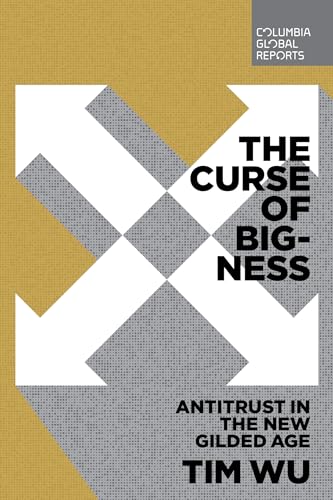
For readers who want the best next step, start with The Curse of Bigness by Tim Wu. It explains why modern monopoly power often hides inside distribution systems, platform economics, and legal structures that look ordinary until they become overwhelming.