A diamond is one of the strangest products in modern capitalism. It is physically real, chemically simple, and in many cases less scarce than its mythology suggests. Yet for generations it has carried the emotional weight of permanence, status, marriage, and proof of devotion.
That did not happen by accident. De Beers spent decades making sure the stone and the story supported each other. It worked to manage supply, shape distribution, and then persuade millions of people that buying a diamond was not a luxury preference but a social obligation.
That is why this story belongs in Hidden Fortunes. The real fortune was not only in the mine. It was in controlling how a commodity entered the imagination.
The World Before the Fortune

Before De Beers became synonymous with diamonds, gemstones were valuable but far less standardized as universal emotional necessities. Luxury existed, of course, but many luxury markets remain unstable until someone finds a way to make desire feel socially compulsory rather than personally optional.
Diamonds were also vulnerable to a basic problem of commodities: if too much supply reaches the market too quickly, prices suffer and exclusivity weakens. A stone can be beautiful and still make mediocre money if the market does not believe in its rarity strongly enough.
That created the opening De Beers exploited. If supply could be disciplined and the meaning of the product could be elevated, the company would not have to rely on ordinary commodity economics. It could build something much more powerful.
What matters for modern readers is that the early advantage rarely looks glamorous. In every era, the future fortune begins inside disorder, partial information, and assets that seem too dull for the headline economy. The winner is usually the operator who sees which hidden layer will still matter after the visible excitement burns off.
The Rise

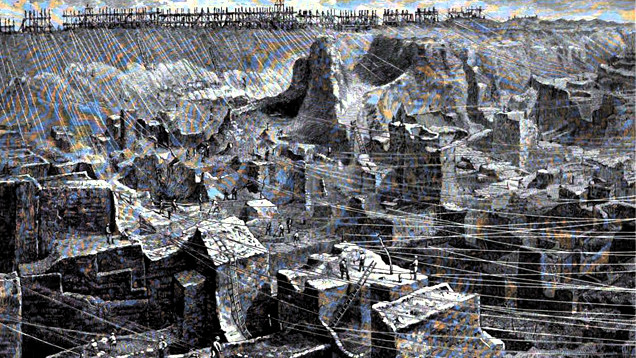
De Beers emerged from the South African diamond fields during an era when consolidation could turn fragmented extraction into concentrated market power. Incorporation in 1888 and the subsequent development of distribution control mattered because they pushed the company beyond mining and toward market architecture.
That architectural ambition is crucial. Hidden Fortunes stories get interesting when a firm stops acting like a producer and starts acting like the system. De Beers wanted more than output. It wanted influence over how diamonds entered the market, how much reached buyers, and under what conditions prices could remain elevated.
This made the business more resilient, but it also left a major challenge unresolved: supply discipline could help prices, yet durable greatness required stronger demand. The company still needed millions of people to feel that diamonds were worth what the system said they were worth.
The temptation in stories like this is to make the rise look automatic once the first decisive move is made. History is harsher than that. The rise matters because it shows a sequence of disciplined choices, each one widening the moat until rivals start confusing deliberate structure with inevitability.
The Expansion of Power

The answer came through advertising and cultural engineering. During the 1930s and after, the company and its agency partners worked to tie diamonds to romance, commitment, and social recognition. The famous 1947 slogan did not create the whole machine by itself, but it became the cleanest expression of a larger achievement: turning a gemstone into a ritual obligation.
That is what made the fortune so formidable. De Beers was not merely controlling inventory. It was shaping life scripts. Engagement culture in the United States became one of the most profitable emotional channels in consumer history because the purchase could be framed not as indulgence, but as proof of seriousness and love.
Once culture and commodity aligned, prices gained a powerful defense. A buyer who thinks a product is socially necessary behaves differently from a buyer who sees it as one luxury among many. De Beers understood that transformation better than almost any modern marketer.
From an American business perspective, this is where the story becomes more than history. Expansion at this level is never just hustle. It is the conversion of one good position into a reinforcing network of positions, so that the system itself becomes harder to challenge than any single product, trade, or asset inside it.
The Hidden Strategy Behind the Fortune

The hidden strategy behind the fortune was dual control: manage supply and manage meaning. Commodity firms usually specialize in one side of that equation. De Beers pursued both. It sought enough control of the physical market to support scarcity and enough influence over consumer psychology to make scarcity emotionally valuable.
That is why the company became more than a mining business. It became a meaning business. Once a consumer associates a product with identity, commitment, and social legitimacy, pricing becomes more defensible because comparison itself becomes difficult. You are no longer buying only a stone. You are buying what the stone is supposed to say.
This is one of the great Hidden Fortunes patterns. The richest firms often win when they stop selling an object and start governing the script around the object. De Beers did not invent romance, but it learned to monetize it through ritual and repetition.
For modern readers, the lesson is sharp: if you can shape both the economics of supply and the psychology of demand, you can turn an ordinary market into a power system. That is what De Beers accomplished.
The premium lesson is restraint. Great fortunes often look dramatic from the outside, but internally they are usually built on cold sequencing. One advantage leads to another. One layer of control finances the next layer of control. The people who build enduring wealth are often the people who understand that timing, structure, and recurring leverage matter more than theatrical motion.
The brilliance of the strategy is that it made consumers defend the price on the company’s behalf. Once people believe a diamond symbolizes seriousness, permanence, and proper commitment, the social pressure itself helps protect demand. That is far more durable than simple advertising awareness.
That is why De Beers remains such a powerful case study in American consumer culture. The company did not only persuade people to buy a luxury object. It taught them to experience the refusal to buy that object as a social and emotional failure. When a market reaches that point, price resistance weakens because the purchase feels less like indulgence and more like compliance with a cultural rule.
A commodity can survive competition. A ritual can survive even longer, because people police rituals themselves. That was the hidden brilliance of the De Beers machine.
The Cost, Risk, or Decline
No control system remains untouched forever. New diamond supply, antitrust pressure, changing distribution channels, and later competition from alternatives weakened the old monopoly structure over time. The company could still matter enormously without retaining the same degree of command.
That evolution does not reduce the brilliance of the original strategy. If anything, it clarifies it. De Beers became historically important because it demonstrated how commodity control becomes vastly more powerful when fused with cultural engineering.
That darker edge should not be treated as a footnote. It is part of the real anatomy of power. Many wealth systems become most impressive at the exact moment they are also becoming morally brittle, politically exposed, or structurally overconfident. Hidden Fortunes works only when the strategy remains visible without pretending the costs were imaginary.
Lessons for Modern Business Readers

1. A commodity becomes elite when meaning is engineered around it
De Beers made demand durable by attaching diamonds to emotional ritual rather than leaving them as optional luxury goods.
2. Supply control matters more when demand is disciplined too
Scarcity is stronger when consumers already believe the product is socially necessary.
3. The script around a product can be worth more than the product
Meaning can defend pricing in ways raw utility never can.
4. Repetition builds cultural inevitability
Once a message enters life milestones and social expectations, it becomes much harder to dislodge.
5. Control is strongest when it works on both markets and minds
De Beers shaped distribution and desire at the same time.
6. Luxury often depends on invisible management
What feels timeless to consumers is often the result of highly deliberate commercial design.
The darker lesson underneath all of this is that fortune rarely comes from surface activity alone. In almost every era, the decisive wealth goes to the people who control the terms, not just the transaction. Hidden Fortunes exists to make that layer visible, and this story does exactly that.
For founders, investors, and operators in the United States and other English-speaking markets, the practical value of this history is not imitation at the surface level. It is pattern recognition. Every modern industry has its own version of routes, chokepoints, permissions, and recurring flows. The challenge is to identify them early, reach them before the market fully prices them in, and build enough discipline around them that success compounds instead of dispersing.
Book Recommendation
For readers who want the best next step, start with The Rise and Fall of Diamonds by Edward Jay Epstein. It is the right Amazon follow-up for this topic because it gives the wider historical context behind the fortune, the machinery of power, and the strategic logic that made the story endure.