Empire becomes much more scalable once you can sell it to investors.
That is one of the deepest truths behind the VOC. It was not simply a trading company with ships and cannon. It was a financial machine that let distant commerce, coercion, and uncertainty be packaged into returns for shareholders willing to own a slice of the venture.
This is why dividends matter. They turned empire from a state project or merchant gamble into a more regular claim on future profit.
The World Before the Fortune
_(5821431193).jpg)
Long-distance trade in the early modern world was expensive, dangerous, and slow. Ships could be lost, wars could intervene, and returns often took time to materialize. Financing such ventures on a one-off basis limited how large and persistent the system could become.
The joint-stock company changed that. By pooling capital and spreading exposure across many investors, it became possible to support larger, more continuous operations than many individual merchants could manage alone.
The VOC pushed this logic further than most. It helped show that empire, trade, and military-commercial strategy could be tied to a capital-markets framework rather than to isolated voyages.
For Hidden Fortunes readers, that broader setting matters because it helps explain why this subject belongs in a larger map of power. The deeper editorial payoff is that it trains the reader to see how fortunes compound when an operator captures systems, not just headlines.
The Rise
.JPG)
The company’s investor logic mattered because it created patience and scale. Capital pooled through a share structure could fund fleets, administration, fortifications, and commercial networks more durably than ad hoc financing models.
Dividends gave the arrangement a crucial emotional and economic anchor. Investors were not only holding abstract claims on imperial trade. They were receiving evidence that the machine could return value. That made the company more legible as a financial asset and strengthened the social acceptance of risk pooled at scale.
In effect, the VOC helped teach the market that empire could be held like paper and paid like income.
What contemporaries often missed was the compounding effect of the mechanism itself. Joint-stock finance let the VOC scale empire by distributing risk across investors while concentrating strategy and force in the corporate center. Every later decision became easier to understand once that structure was in place. The institution did not need to win every battle dramatically. It needed to make rivals operate on worse terms, make allies depend on its system, and make the surrounding market feel natural only after its own structure had already become dominant.
The Expansion of Power
.jpg)
Once the system matured, capital-markets logic reinforced imperial logic. More pooled capital supported bigger fleets and stronger infrastructure. Bigger operations supported more trade and coercive presence. Greater presence strengthened the company’s ability to defend or expand its commercial privileges. That, in turn, supported the financial proposition to shareholders.
This is one of the great hidden mechanisms of early corporate empire. Investors did not need to command a cannon personally. They needed a structure that translated distant operations into credible returns. The dividend system helped perform that translation.
That made the VOC far more than a trading concern. It became a capital system that linked investors in Europe to power projection abroad through an increasingly recognizable financial language. The same logic later appeared in the British East India Company, which replicated many of the VOC’s structures for its own imperial expansion.
The Hidden Strategy Behind the Fortune
.jpg)
The hidden strategy behind the fortune was scaling empire through transferable claims on risk.
The VOC did not solve distance by eliminating danger. It solved distance by making danger financeable. Once the risks and returns of trade and coercion could be pooled and distributed, the company gained access to a deeper reservoir of capital than many older commercial structures could reach.
This is why the dividend story matters so much. It reveals that one of the earliest empires of capital was also an empire of narrative. Investors had to believe that distant force, extraction, and trade could become a sensible return stream. The company gave them a mechanism to believe it.
For modern readers, the pattern is strikingly familiar. Many large systems become unstoppable only after someone figures out how to transform messy operational risk into something investors can buy with confidence. The same logic that powered the East India Company’s tax collection system appears today in securitized assets, infrastructure funds, and platform businesses that separate operational complexity from investor-facing returns.
The Cost, Risk, or Collapse
.jpg)
The costs were borne far from Amsterdam. The same machinery that made returns attractive also linked investors to extraction, coercion, and imperial violence that could be abstracted away by distance and paperwork.
Financial innovation therefore did not neutralize the moral problem of empire. In some ways it intensified it, because it allowed more people to benefit economically without directly seeing the coercive mechanisms sustaining the system.
That is the darker Hidden Fortunes lesson. Capital markets can make power more efficient not only by funding good systems, but by making exploitative systems easier to own. The South Sea Bubble later showed what happened when the same speculative logic was stretched past what underlying operations could sustain.
The danger in stories like this is that success can make the system look cleaner than it really was. Fortunes built through capital-markets logic still face execution risk, political reaction, and the possibility that the very technique that created power will later attract scrutiny. That is why disciplined readers should study not only the ascent, but the stress points hidden inside the ascent.
Lessons for Modern Business Readers
.jpg)
1. Risk becomes scalable when it becomes ownable
Pooling exposure through shares allows larger systems to operate than one-off funding ever could.
2. Dividends build belief
Regular returns make distant and complicated ventures easier for investors to accept.
3. Capital markets can industrialize empire
Once coercion and trade are legible as a return stream, expansion becomes easier to finance.
4. Abstraction can hide moral cost
The farther investors sit from the operating reality, the easier it becomes to treat empire like paper income.
5. The structure matters as much as the venture
The genius of the VOC was not only what it traded, but how it financed and packaged the trade.
6. Financial language changes political possibility
A state or company that can mobilize capital through markets can act with a scale and continuity others may struggle to match. This principle has never stopped being relevant—from 17th-century Amsterdam to modern private equity and sovereign wealth funds.
Hidden Fortunes is not trying to collect disconnected stories about famous names. It is trying to show readers how power behaves when money, infrastructure, governance, and timing begin to reinforce one another. This article helps do that by translating VOC dividend history into a reusable framework. Once the reader understands that framework, related pieces across Trade Systems and Capital Systems stop feeling isolated and start feeling like variations on the same long historical problem: who gets to own the layer everyone else must still pass through.
Book Recommendation
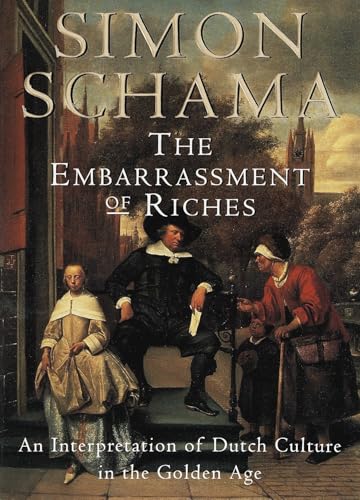
For readers who want the best next step, start with The Embarrassment of Riches by Simon Schama. It is the right follow-up because it helps extend the strategic logic behind this Hidden Fortunes article without flattening the historical complexity.