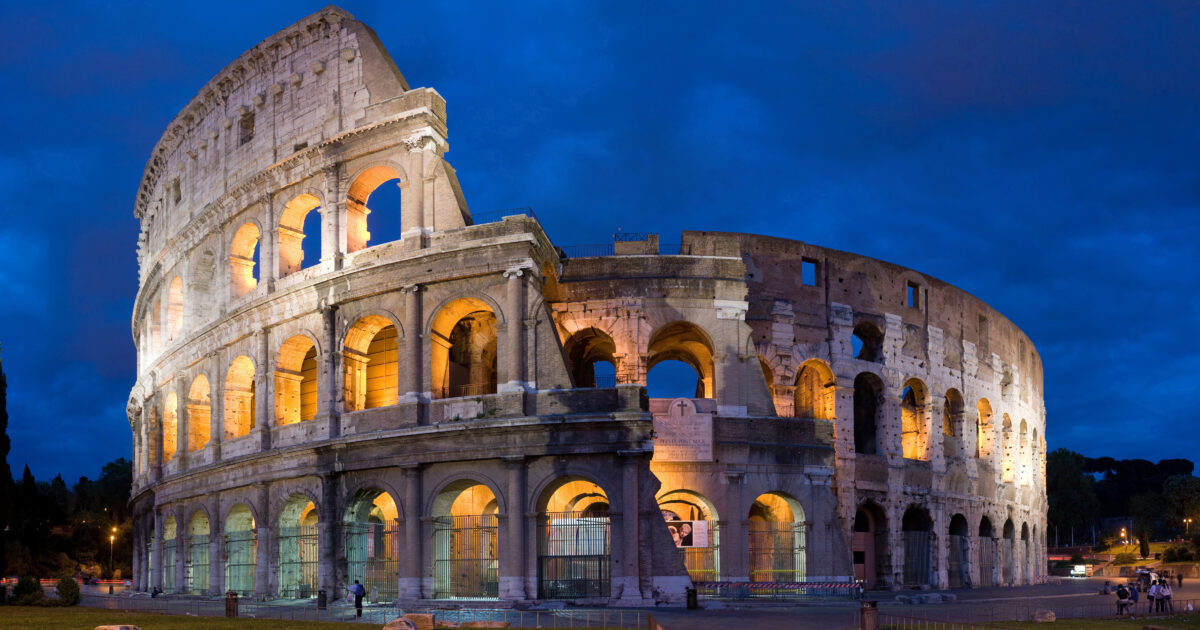
Rome is often remembered in stone: arches, roads, legions, emperors, and the vast theater of imperial spectacle. But empires do not survive on spectacle. They survive on food, taxes, transport, and the ability to pull wealth out of distant provinces again and again.
That is the financial truth behind Roman power. Military conquest gave Rome scale, but conquest alone is expensive theater if it cannot be converted into a working system. The Roman achievement was not merely to defeat enemies. It was to build an administrative structure that turned victory into revenue.
This is why Rome belongs in Hidden Fortunes. Its real fortune was not hidden in buried treasure. It was hidden in the machinery that made a giant territory pay.
The World Before the Fortune

Before Rome ruled the Mediterranean, wealth in the ancient world was fragmented across rival powers, city-states, and regional kingdoms. Trade existed, of course, but long-distance coordination was difficult, insecurity was common, and political authority was frequently local or contested. Scale was possible, but it was hard to stabilize.
Roman expansion changed that environment over time. The republic’s wars and later the empire’s consolidation did not create prosperity out of nothing, but they did alter the terms under which wealth moved. Once Rome controlled enough coastline, roads, and administrative centers, it could lower friction for itself while raising obligations for others.
That dual dynamic sits at the heart of the Roman economy. Order and extraction were not opposites. They were partners. Provinces often experienced Roman rule as both integration and burden. That tension is exactly what made the empire so rich and so feared.
What makes this opening stage so important for modern readers is that early opportunity almost never looks polished. In every age, the future fortune begins inside disorder, partial information, and a market that still looks too unstable for cautious outsiders. The eventual winner is often the operator who can look past the noise and identify which layer of the system will still matter after the frenzy burns off.
The Rise

Conquest supplied the initial surge. Rome acquired tribute, spoils, labor, and access to some of the most productive regions in the Mediterranean world. But early expansion also created a problem: victories produce windfalls, not automatically stable revenue. If Rome wanted enduring power, it had to turn episodic military success into a governed system.
The transition from republic to principate was crucial here. Augustus and the early imperial order helped regularize the state at a scale the old republican improvisation could not sustain forever. Tax collection, provincial management, military pay, and the symbolic authority of the emperor all became parts of a tighter structure. The state grew more coherent because it had to.
Once that coherence improved, the empire could rely less on spectacular plunder and more on recurring flows. Grain shipments, customs duties, provincial taxes, rents, and commerce under imperial peace became more important than one dramatic haul after another. The machine had matured.
The emotional temptation in stories like this is to treat the rise as inevitable once the first decisive move is made. History is rarely that generous. The rise matters because it shows a sequence of disciplined choices, each one building on the last until competitors begin to mistake structure for destiny.
The Expansion of Power

Roman power expanded economically because infrastructure and coercion reinforced each other. Roads moved armies, but they also moved goods. Ports served imperial strategy, but they also connected merchants to wider markets. Law protected property for some, enforced obligations on others, and made commercial life more legible across distance. In empire, administration is often the invisible half of force.
Egypt’s grain, provincial taxation, and the sheer scale of Mediterranean connectivity all mattered because they fed the center. Rome could sustain urban populations, fund armies, and reward elites because the provinces were tied into a system that continuously transferred value upward and outward. What looks like civilization in marble often begins as extraction in paperwork.
This was not frictionless. Corruption, resistance, and uneven burden were constant risks. But the Roman system was impressive because it could absorb a great deal of imperfection and still keep functioning. That is one mark of true strategic power: not perfection, but durable throughput.
From an American business perspective, this is where the story stops being a historical curiosity and starts becoming a strategic case study. Expansion at this level does not come from hustle alone. It comes from turning one good position into a network of reinforcing positions, so that the system itself becomes harder to challenge than any single product, trade, or asset inside it.
The Hidden Strategy Behind the Fortune
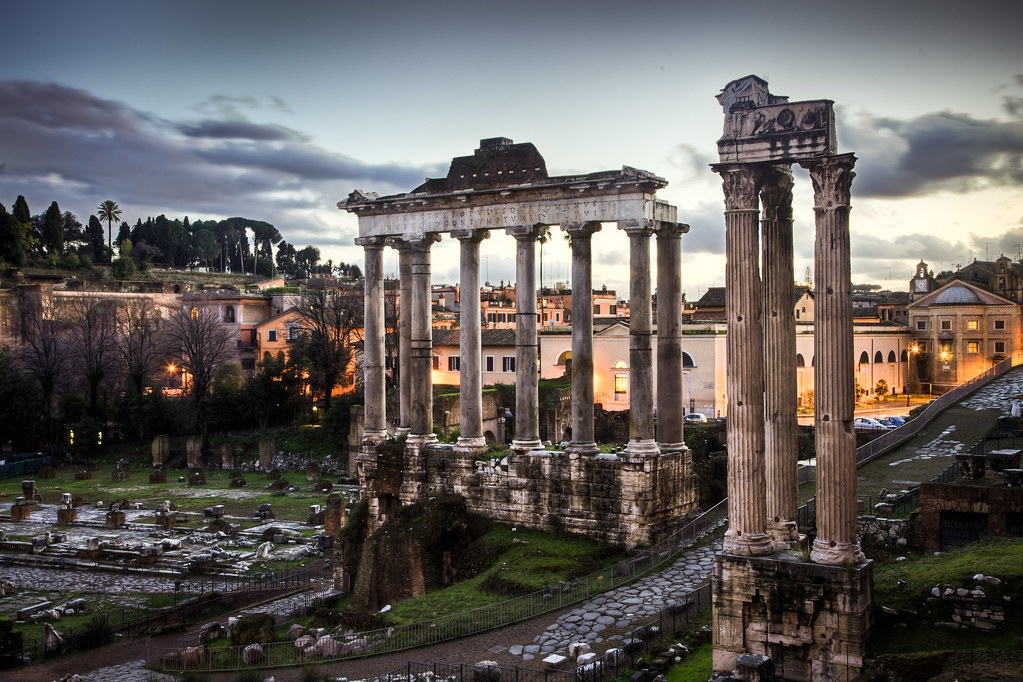
The hidden strategy behind Rome’s fortune was institutional conversion. Military victory opened the gate, but administration built the fortune. Rome repeatedly asked the same question after conquest: how do we make this territory legible, taxable, and useful to the wider imperial machine? The answer was roads, governors, records, law, garrisons, and a political order capable of recurring collection.
This is why Rome should not be romanticized as a pile of spoils. Spoils fade. Systems endure. The empire became wealthy because it reduced distance across its own domain while preserving hierarchy inside that domain. Provinces could trade more easily inside the Roman world, but they also paid to remain inside it. Integration and extraction moved together.
There is also a lesson here about logistics. Ancient states could not rely on instant communication or modern finance. Rome compensated with administrative repetition and physical infrastructure. That meant the empire’s true assets were not only land and soldiers, but routes, storage, records, and obligations. In modern language, Rome built a governing platform.
For Hidden Fortunes readers, that is the central point: if you can make a giant system repeatedly measurable and collectible, scale stops being a burden and starts becoming an engine. Rome’s genius was not winning once. It was turning victory into routine.
The premium lesson is restraint. Great fortunes often look dramatic from the outside, but internally they are usually built on cold sequencing. One advantage leads to another. One layer of control finances the next layer of control. The people who build enduring wealth are often the people who understand that timing, structure, and recurring leverage matter more than theatrical motion.
Rome also demonstrates that financial power is often hiding inside boredom. Records, road maintenance, grain management, provincial routines, and tax collection can look dull beside conquest, but that dullness is exactly what makes the system formidable. Empires endure when extraordinary victories are translated into ordinary collection.
The Cost, Risk, or Decline

The Roman system was powerful, but it was not immune to cost. Armies were expensive, politics could become violent, and a structure this large required constant coordination. As fiscal pressure, military instability, and political fragmentation intensified, the same scale that once enriched Rome became harder to manage.
That is the dark symmetry of empire. The larger the machine, the more revenue it can extract when healthy and the more strain it imposes when the system begins to fail. Rome’s decline does not erase its strategic brilliance. It reveals the price of maintaining a structure so vast for so long.
That darker edge should not be treated as a footnote. It is part of the real anatomy of power. Many wealth systems become most impressive at the exact moment they are also becoming morally brittle, politically exposed, or structurally overconfident. Hidden Fortunes works only when the strategy remains visible without pretending the costs were imaginary.
Lessons for Modern Business Readers

1. Scale becomes valuable only when it is administrable
Rome teaches that winning territory, customers, or market share means little if you cannot repeatedly govern what you have won.
2. Logistics is strategy
Roads, ports, storage, and movement were not background details. They were the machinery of wealth.
3. Recurring revenue beats one-time windfalls
Rome moved from plunder toward taxation and structured collection. Enduring systems always prefer repeatable flows.
4. Order can be monetized
Imperial peace lowered friction for Rome’s economy while preserving Rome’s control. Businesses still profit when they create order others depend on.
5. Integration and extraction often come together
The same system that creates convenience for one group can impose heavy burden on another. Serious strategy analysis should account for both.
6. Large systems eventually face maintenance costs
A great engine can become expensive to keep running. Expansion is only half the story; upkeep is the rest.
The darker lesson underneath all of this is that fortune rarely comes from surface activity alone. In almost every era, the decisive wealth goes to the people who control the terms, not just the transaction. Hidden Fortunes exists to make that layer visible, and this story does exactly that.
For founders, investors, and operators in the United States and other English-speaking markets, the practical value of this history is not imitation at the surface level. It is pattern recognition. Every modern industry has its own version of routes, chokepoints, permissions, and recurring flows. The challenge is to identify them early, reach them before the market fully prices them in, and build enough discipline around them that success compounds instead of dispersing.
Book Recommendation
For readers who want the best next step, start with The Rise of Rome by Anthony Everitt. It is the right Amazon follow-up for this topic because it gives the wider historical context behind the fortune, the machinery of power, and the strategic logic that made the story endure.