Essential infrastructure becomes especially powerful when users cannot easily leave and investors can keep refinancing the necessity itself.
The history of American electrical utilities between roughly 1880 and 1935 is one of the most instructive case studies in how necessary infrastructure can be converted into layered financial machines. The story is not primarily about electricity as technology. It is about how private capital organized territorial control over an indispensable service, built holding company structures that extracted returns at multiple levels simultaneously, and created the template for infrastructure financialization that later appeared in telecommunications, cable, and other network industries.
The emerging AI power cartel is replicating this logic in the modern context — large technology companies securing exclusive access to power generation capacity in ways that may give them structural advantages over competitors who must pay market rates for electricity. The mechanism is familiar: control over the power input to a necessary service creates leverage that extends upward through the entire value chain.
The Bell System Monopoly showed how network effects and regulatory legitimacy could sustain a communication infrastructure monopoly for nearly a century. The electricity trusts achieved something similar in the power sector — using the natural monopoly characteristics of distribution networks, the recurring nature of electricity demand, and the holding company structure to create financial positions that persisted through decades of technological and regulatory change.
The World Before the Fortune

Power systems rewarded scale because distribution networks, local monopolies, and high fixed costs favored concentrated ownership. Once that concentration existed, finance naturally looked for ways to layer recurring investor claims on top of a service consumers could not easily stop using.
The early development of American electrical infrastructure was chaotic. In the 1880s and 1890s, multiple competing electrical systems often operated in the same city — Edison’s direct current systems competing with alternating current systems from Westinghouse and others. The inefficiency of this competition, combined with the high fixed costs of electrical distribution infrastructure, created powerful economic pressure toward consolidation.
Samuel Insull, a protégé of Thomas Edison who became the dominant figure in American utility finance, understood the financial logic of utility consolidation earlier and more clearly than most. His insight was that the operating leverage of electrical utilities — high fixed costs, but relatively low marginal costs for additional electricity delivered to existing customers — meant that scale was extraordinarily valuable. A larger utility serving a larger customer base could spread its fixed costs over more units of electricity sold, dramatically reducing average costs and increasing profits.
The technology that enabled large-scale utility finance was not only electrical engineering but also the holding company structure. A holding company could own the securities of multiple operating utilities, paying for those securities with its own securities — bonds, preferred stock, and common stock — that it sold to investors. This structure allowed a relatively small amount of investment capital at the top of the holding company pyramid to control very large amounts of operating utility assets at the bottom.
The Rise

The real importance of the electricity trusts was not only the spread of power. It was the conversion of necessity into a repeatable financial structure that could support debt, rates, holding companies, and territorial monopolies.
The holding company pyramid was the financial mechanism that made utility empire-building possible at scale. In a typical pyramid structure, the top holding company owned controlling interests in intermediate holding companies, which in turn owned controlling interests in operating utilities. By purchasing controlling interests (often as little as 10-20% of common equity, given the leverage in capital structures that included large amounts of debt and preferred stock), the top holding company could control and extract returns from operating utilities many times larger than the capital it had directly invested.
Insull’s Middle West Utilities empire at its peak in the late 1920s controlled electrical utilities serving millions of customers across more than thirty states, with total assets of several billion dollars, controlled by a top holding company whose own capitalization was a fraction of the total system it commanded. The leverage was extraordinary — and fragile in ways that were not immediately visible in the prosperity of the 1920s.
The regulatory framework that sustained private utility monopolies was the territorial franchise — the grant of exclusive rights to serve a defined geographic area in exchange for rate regulation by a public utility commission. This framework gave utilities market protection (no competitor could legally enter their territory without a franchise) in exchange for accepting rate oversight. The regulated return, typically set as a percentage of invested capital, gave utilities strong incentives to invest in infrastructure expansion — more invested capital meant more revenue at the allowed rate of return.
The Expansion of Power

That is why this article matters for Hidden Fortunes. It connects old utility logic to modern AI power stories by showing that the financialization of essential infrastructure long predates the current compute boom.
The rate-base logic of utility regulation created incentives that private utilities exploited systematically. Rates were set to allow utilities to earn a regulated return on their “rate base” — the value of their invested assets. This meant that utilities could increase their revenue by increasing their rate base — investing in more assets, whether or not those assets were economically necessary. The incentive to over-invest in regulated assets, known as the Averch-Johnson effect in regulatory economics, was embedded in the structure from the beginning.
The intercompany transactions that occurred within holding company systems were a systematic mechanism for extracting value from operating utilities — and from their customers and public investors. Parent companies charged operating subsidiaries for management services, engineering assistance, and capital. These charges reduced the regulated earnings of the operating utilities (and thus the returns their local investors received) while increasing the income of the holding company above.
The modern challenge of grid-responsive compute illustrates how the relationship between electricity infrastructure and large customers continues to evolve — with large data center operators seeking not merely to consume electricity at utility-set rates but to participate actively in electricity markets in ways that reduce their cost and potentially generate revenue. The electricity trusts of the early twentieth century established the terms of the relationship between utilities and large customers that modern data centers are now negotiating around.
The Hidden Strategy Behind the Fortune

The hidden strategy behind the fortune was showing how private utilities converted essential grids into layered financial machines through holding companies, rate structures, capital raises, and territorial control.
The collapse of the utility holding company system in the early 1930s was one of the most spectacular failures of financial engineering in American history. When the Depression reduced electricity demand and made it impossible for the leveraged holding company pyramids to service their debt, the entire financial structure collapsed from the top down. Insull’s Middle West Utilities empire filed for bankruptcy in 1932, wiping out the investments of hundreds of thousands of small investors who had purchased the securities of the holding companies throughout the 1920s.
The political response was comprehensive. The Public Utility Holding Company Act of 1935 required utility holding companies to break up their pyramids, limit their operations to geographically and operationally integrated systems, and register with the Securities and Exchange Commission. The Act effectively destroyed the holding company system that had dominated utility finance since the 1890s, requiring the divestiture of thousands of utility properties and the simplification of hundreds of holding company structures.
The TVA, established in 1933, created a federal power authority in the Tennessee Valley that provided direct competition to private utilities and established a “yardstick” for measuring whether private utility rates were reasonable. The combination of holding company regulation and federal power competition fundamentally reshaped the structure of American electricity markets for the next generation.
The Cost, Risk, or Collapse
Utility systems can create enormous social benefit while still concentrating private financial power in ways that later provoke backlash, reform, or stricter regulation.
The human cost of the utility holding company collapse was significant. Hundreds of thousands of small investors — the very customers whose electricity bills had funded the holding company dividends — lost their savings when the pyramid structures collapsed. The utility securities that had been aggressively marketed to middle-class investors throughout the 1920s as safe, income-producing investments became worthless as the underlying operating companies could not generate enough cash to service the holding company debt above them.
The rate impacts of the holding company system were also controversial. Critics argued — and congressional investigations confirmed — that intercompany transactions within holding company systems inflated the rate bases of operating utilities, increasing the returns that regulators allowed utilities to earn and therefore the rates that customers paid. A customer of a utility subsidiary in an Insull holding company was in some measure paying rates that funded the financial engineering above her in the corporate structure.
The regulatory response to the holding company collapse also had lasting costs. The fragmentation of the electricity system into regulated regional utilities with limited ability to coordinate across their territories contributed to the physical fragility of the American grid that later analysts have documented. A system designed around the regulatory structures of 1935 was ill-adapted to the integration of large amounts of variable renewable generation, the emergence of large new loads, and the potential of real-time electricity markets.
Lessons for Modern Business Readers

1. Recurring revenue from indispensable services is the foundation of sustainable leverage
The electricity trusts built their financial structures on the most durable possible revenue base: customers who could not stop using electricity and who faced no realistic competitive alternative. The leverage was sustainable as long as the underlying revenue stream was stable — and it collapsed when the Depression disrupted that stability. The lesson is that leverage structures built on utility-like recurring revenue are powerful but not immune to macroeconomic disruption.
2. Holding company structures extract value upward through multiple financial layers
The intercompany transactions, management fees, and engineering charges that flowed upward through utility holding company pyramids were financial extraction mechanisms dressed as arm’s length services. Identifying the financial flows within complex holding company structures — asking who is paying whom, for what, at what price, relative to what market benchmark — is essential for understanding where value is actually being created and where it is being transferred.
3. Regulatory capture can sustain financial structures but also expose them to political backlash
The utility holding companies were experts at working within the regulatory framework — influencing rate cases, managing commission relationships, and using the regulatory structure to their advantage. But this close relationship with regulators also made them visible political targets when the financial structure collapsed. Regulatory legitimacy is a two-edged sword: it protects market position during normal times but creates political accountability during crises.
4. Infrastructure financialization generates systemic risk that individual actors do not internalize
Each individual holding company acted rationally in building leveraged pyramids over utility assets — the financial logic was compelling and the risks seemed manageable during the 1920s expansion. The systemic risk — that the entire structure was fragile to a sustained reduction in electricity demand — was not visible at the individual firm level and was not priced into the securities markets that funded the expansion. Infrastructure financialization creates systemic risks that individual market participants systematically underestimate.
5. The structure reappears — it does not disappear
The Public Utility Holding Company Act of 1935 dismantled the specific holding company structures of the 1920s, but it did not eliminate the logic that produced them. Infrastructure financialization returned in telecommunications, cable, and broadband. It has returned in data centers, power purchase agreements, and AI infrastructure finance. Recognizing the structural pattern — necessary service, territorial control, holding company finance, leverage, recurring returns — is recognizing a machine that gets rebuilt in each infrastructure cycle.
Conclusion
Seen clearly, this is not just a story about private electricity trusts as financial machines. It is a story about how the logic of infrastructure financialization — layering financial claims on top of necessary services that customers cannot easily stop using — creates both extraordinary returns and systemic risks that surface only when the underlying economics turn adverse.
That is why the article belongs inside the Hidden Fortunes ecosystem. It bridges the Industrial Empires / Infrastructure cluster by providing the historical framework for understanding how essential infrastructure becomes a financial machine — creating clean bridges to the AI power cartel, grid-responsive compute, and the Bell System monopoly as connected examples of the same structural pattern across different infrastructure categories and different eras.
Book Recommendation
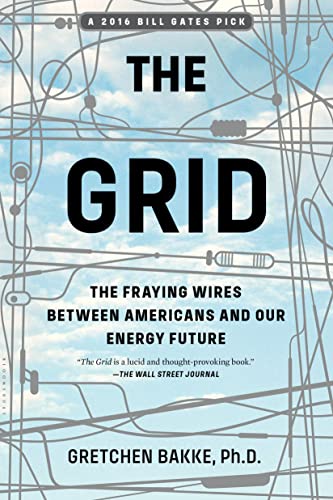
For readers who want the strongest next step, start with The Grid by Gretchen Bakke. The cultural anthropologist’s account of the American electrical grid — its history, its physical vulnerabilities, and its struggle to adapt to the demands of the twenty-first century — is the most readable single-volume treatment of how the infrastructure decisions of the electricity trust era continue to shape the grid that AI data centers and renewable energy projects are now straining.