Some empires conquer land. Others discover that the map itself can be turned into revenue.
On the surface, Suez and Panama are often discussed as engineering marvels that simply made trade faster. But Hidden Fortunes is not interested in the surface alone. It is interested in the system beneath the spectacle — the layer where route compression, toll extraction, imperial backing, and geography as monetizable infrastructure quietly becomes the real source of power.
That is why this story matters now. Both canals shortened the same kind of distance. But each created a different kind of machine for monetizing that geography — and those differences compounded over decades into entirely different geopolitical positions.
Like the chartered companies that came before them, the canal operators who understood their route as a system rather than an asset tended to build more durable leverage. The canal is the chokepoint. The question is who controls it, who finances it, and who defends it.
The World Before the Fortune

Canals matter because they reduce time, risk, and cost — but their real power comes from concentrating movement through a route that can be priced, protected, and politically defended. Once enough trade depends on the passage, geography itself starts behaving like a business model.
The Suez Canal was financed through French engineering and Egyptian labor, then secured when Britain purchased a controlling stake using a loan arranged by the Rothschilds. That sequence — build the route, then buy the route — compressed a decade of financial maneuvering into one of the cleanest demonstrations of how imperial capital acquires infrastructure.
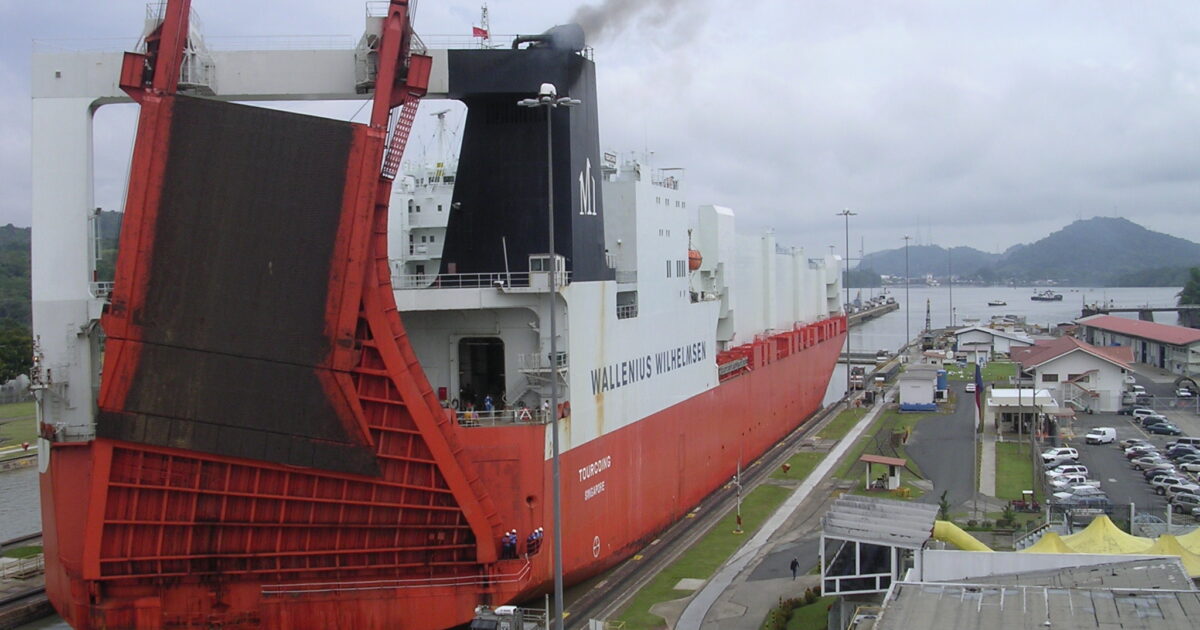
Panama followed a different path. The French tried first and failed catastrophically, losing thousands of workers to yellow fever and hemorrhaging capital until the effort collapsed. The United States stepped in, resolved the disease problem, completed the canal, and established what would become one of the most consequential infrastructure agreements in the Western Hemisphere.
The Rise

Suez monetized the bridge between Europe and Asia in a world where imperial trade and maritime speed mattered enormously. The canal cut the voyage from London to Bombay by roughly 40 percent, making it immediately indispensable to British imperial logistics.
Panama monetized the bridge between oceans. It rewired strategic movement in the Western Hemisphere, enabling the United States to move its naval fleet from Atlantic to Pacific without rounding Cape Horn — a shift with direct consequences for American military and commercial strategy well into the twentieth century.
The Panama Canal toll machine became one of the most sophisticated route-pricing systems in modern infrastructure — charging by vessel tonnage and continuously adjusting fees to balance traffic volume against revenue maximization. That pricing discipline turned a one-time engineering project into a perpetual income stream.
The Expansion of Power
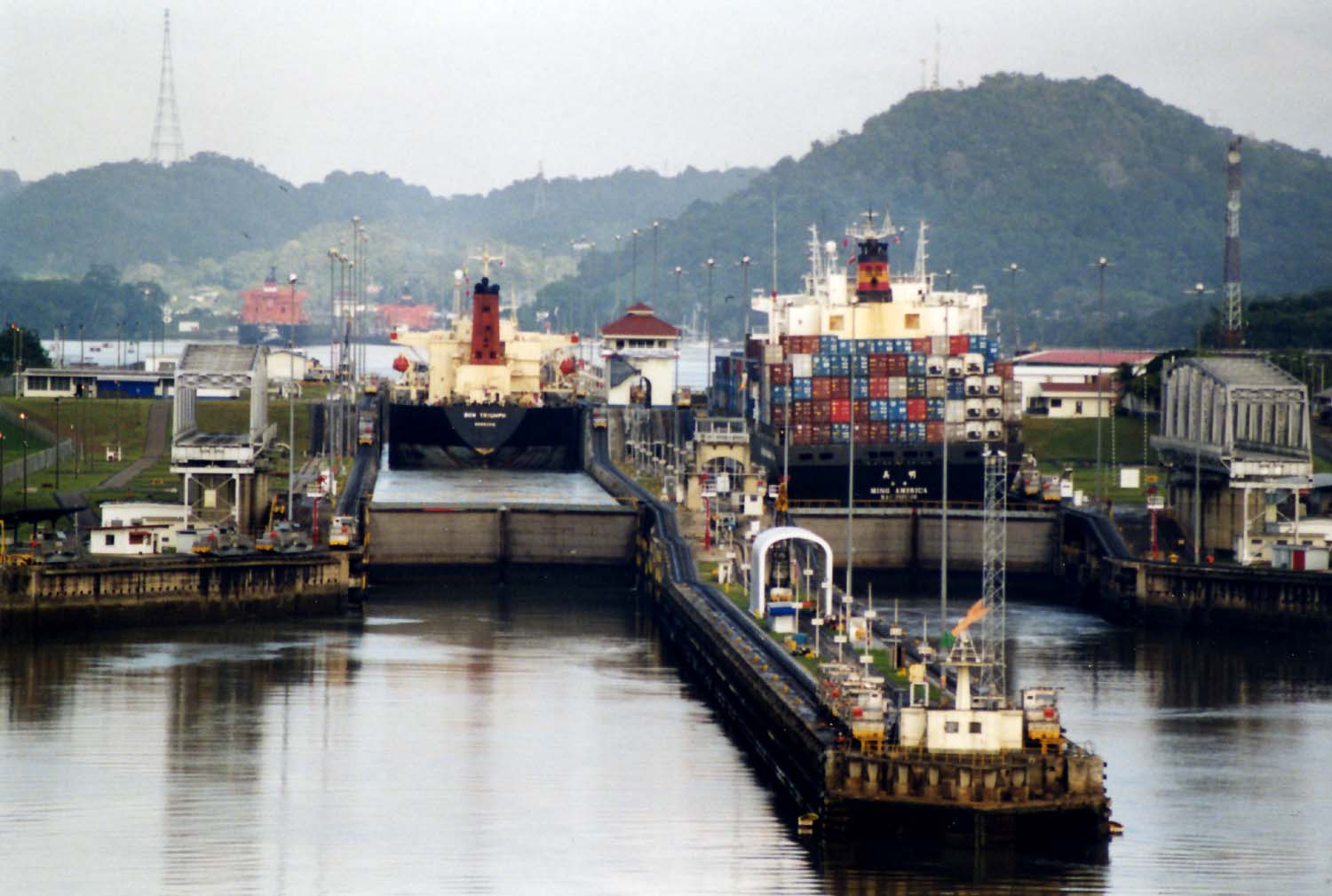
That is why the comparison belongs in Hidden Fortunes. It is really a comparison between two different forms of chokepoint power, each shaped by different imperial sponsors, traffic patterns, and commercial consequences.
Suez operated within the logic of European imperial competition. Britain’s control was an extension of its global maritime strategy — protecting the route to India, managing traffic from competing powers, and using financial leverage to maintain operational influence even after Egyptian nationalization in 1956.
Panama operated within the logic of American strategic hegemony. The United States used the canal as both a commercial asset and a military chokepoint, maintaining direct control until the 1999 handover to Panama. Even after handover, American commercial and strategic interest in canal traffic remained substantial.
Route power tied to a single imperial sponsor is powerful but politically fragile. Route power embedded in global commercial dependency — where thousands of shipping companies from dozens of countries all need the passage — tends to be more durable because no single political reversal can eliminate it.
The Hidden Strategy Behind the Fortune

The hidden strategy behind the fortune was comparing two chokepoints that monetize geography in different ways to show that route power depends on trade patterns, financing, and political backing.
Suez’s power was initially built on imperial finance and military backing. When Nasser nationalized it in 1956, the resulting crisis revealed how dependent that power was on a political arrangement that could be revoked.
Panama’s power was built on American strategic interest and commercial dependency simultaneously. When control transferred in 1999, the canal continued operating smoothly precisely because its revenues depended on global shipping patterns, not on any single sponsor’s goodwill. Today China-linked entities have significant operational roles at the canal’s port facilities — a reminder that route power continues to attract new sponsors as old ones recede.
The deeper lesson: chokepoints that are politically constructed tend to be politically fragile. Chokepoints that are geographically irreplaceable and commercially embedded in global trade patterns tend to outlast the political arrangements that built them.
The Cost, Risk, or Collapse
Canal power also creates vulnerability. Chokepoints invite military interest, geopolitical tension, and the persistent risk that concentration becomes both an asset and a strategic liability.
Suez demonstrated this in 1956 when Egypt’s nationalization exposed how dependent British imperial strategy had become on a route it no longer fully controlled. The crisis effectively ended Britain’s pretension to independent superpower status.
Panama demonstrated it in 1989 when the US invasion to remove Noriega was partly justified by the need to secure canal access. The canal’s very indispensability made it a target for political contestation as much as a source of commercial advantage.
Lessons for Modern Business Readers

1. Geography compounds when it becomes indispensable
A shortcut is valuable. A shortcut that every major shipping company in the world depends on is a structural position. The difference between the two is the difference between a product and a chokepoint.
2. Pricing power follows dependency
Both canals gained pricing power not because they were expensive to build but because they became expensive to avoid. The toll machine works because the alternative route is worse. Modern platforms follow the same logic.
3. Political backing creates power but also fragility
Suez’s power was imperial-political. When the politics shifted, the power eroded. Panama’s power became more commercially embedded over time, making it more resilient to any single political reversal.
4. Build around chokepoints, not only products
Products can be copied. A route, contract structure, clearing layer, resource bottleneck, or capital-market channel is often harder to replace.
5. The handover test
A chokepoint that retains its value after a change of political ownership — as Panama did in 1999 — has achieved genuine structural power. One that loses its value when the sponsoring power withdraws has built leverage on borrowed political authority.
Conclusion
Seen clearly, this is not just a story about two famous canals. It is a story about two different theories of how geography becomes power — and why one theory proved more durable than the other when political arrangements changed.
That is why the article exists inside the Hidden Fortunes ecosystem. It reinforces Logistics & Infrastructure and Empires & Kingdoms, connects the Suez and Panama pillar articles into a sharper comparative framework, and gives later articles on modern infrastructure chokepoints a stronger base to stand on.
Book Recommendation
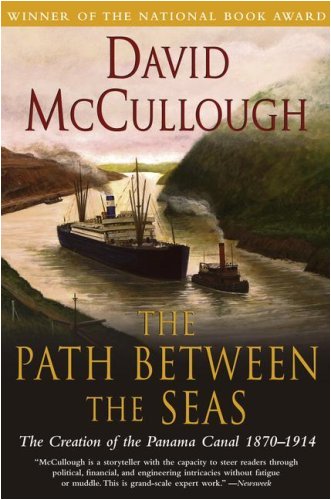
For readers who want the strongest next step, start with The Path Between the Seas by David McCullough. It is the definitive account of the Panama Canal’s construction — and a masterclass in how geography, finance, engineering, and political will combine to create infrastructure that changes the world.