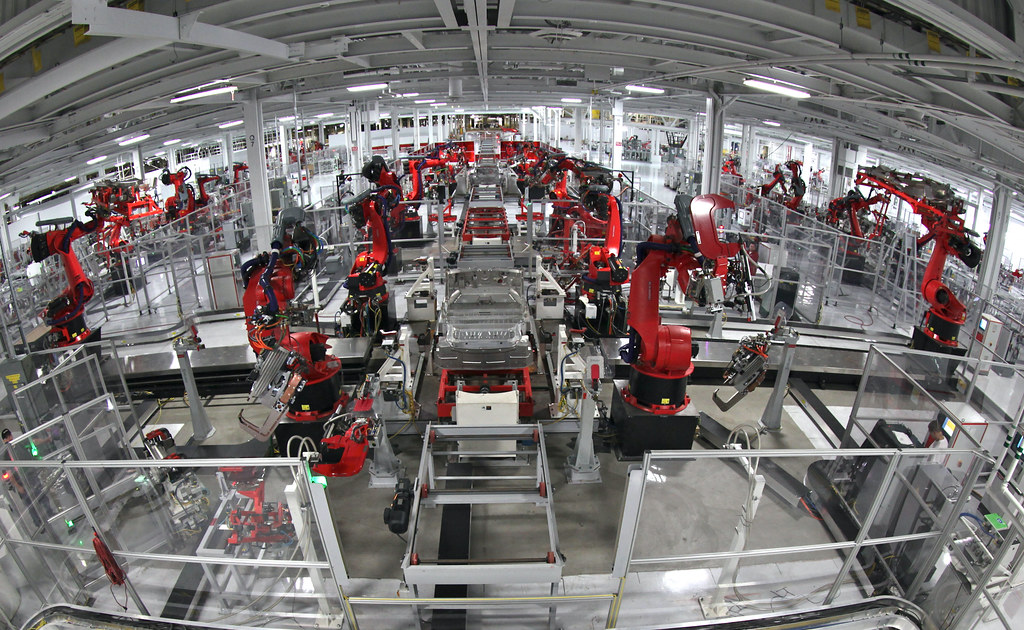
The digital future becomes expensive very quickly once it starts depending on the physical world.
The dominant narrative about AI has focused on software — on foundation models, on inference capabilities, on chat interfaces and coding assistants and enterprise integrations. These are real and significant. But a parallel shift has been underway that receives less attention: the growing dependence of AI systems on physical infrastructure, and the growing interest of AI-adjacent companies in physical industrial assets that software alone cannot replicate.
Ford’s River Rouge factory showed what happens when an industrial enterprise tries to control every physical input simultaneously. The physical AI economy thesis is a modern variation on that logic: AI capabilities become more durable and more defensible when they are anchored to physical systems — power, factories, logistics, mineral extraction — that competitors cannot replicate quickly through software investment alone.
The AI infrastructure sovereignty playbook has shown how nations are increasingly treating compute capacity as a strategic asset. The physical AI economy extends that logic: the next competitive dimension may not be who has the most compute, but who has secured the physical inputs that compute requires and who has deployed AI into the physical systems that generate the most economic value.
The World Before the Fortune

Industrial history repeatedly shows that the most valuable systems are not always the most glamorous ones. The winning layer is often the one that turns abstract growth into something that can actually be built, powered, transported, or maintained.
The first wave of commercial AI application focused on domains where software could capture value without requiring physical infrastructure: content generation, code assistance, customer service, document processing, and search. These applications were valuable, scaled quickly, and generated revenue that funded continued model development. But they operated within existing digital infrastructure and did not require AI to interact with or depend on physical industrial systems.
The second wave — which is still early — involves AI interacting with physical systems: industrial robots, autonomous vehicles, warehouse automation, precision agriculture, energy grid management, medical imaging and diagnostics, and manufacturing process optimization. These applications require AI models to operate in environments where sensor data is noisy, physical constraints are real, safety margins matter, and the cost of failure can be significant. They also require investment in physical infrastructure that software companies have not traditionally owned.
The environment that is driving the physical AI transition is the convergence of model capability with declining hardware costs. Autonomous vehicle technology that required custom compute hardware at enormous expense in 2016 can now run on commodity GPU platforms. Industrial robots that required expensive custom programming can increasingly be directed through natural language instructions processed by foundation models. The gap between digital AI capability and physical AI deployment is narrowing because the compute and sensing infrastructure required for physical AI is becoming more affordable.
The Rise
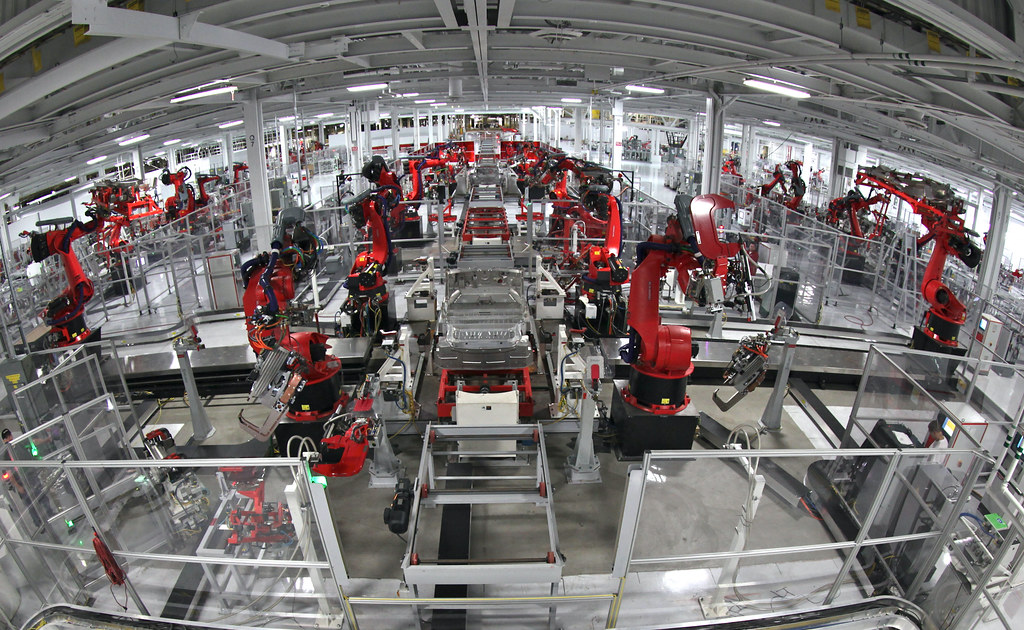
The physical AI thesis matters because it relocates value from application excitement toward the assets that let intelligence act in the real world. That means factories, grids, mines, robotics infrastructure, and industrial coordination become more important to the story.
The companies best positioned for the physical AI economy share several characteristics. They have AI capabilities that can be applied to physical optimization problems — manufacturing process control, logistics routing, energy dispatch, predictive maintenance. They have access to the physical data that trains and validates those models — sensor readings from factories, grid measurements from utilities, satellite imagery from agricultural fields. And they have the organizational capability to deploy AI-based solutions into physical environments where integration with existing systems, safety requirements, and operational constraints create significant implementation challenges.
Tesla is the most visible example of a company explicitly pursuing this strategy. Its vehicle platform generates sensor data at scale from real-world driving conditions, which trains the autonomous driving models that in turn improve vehicle capability, which generates more data, which trains better models. The physical manufacturing infrastructure — Gigafactories, battery production, vehicle assembly — creates the physical product that generates the data that trains the AI that improves the product. Each layer reinforces the others.
Microsoft’s investment in nuclear power — signing agreements for electricity from new nuclear generation to power data centers — represents a different kind of physical AI economy play: securing long-term, low-carbon electricity supply that cannot be easily disrupted by renewable generation intermittency. The physical asset (a nuclear plant) provides a capability (firm, low-carbon power) that cannot be replicated through software, and that creates a defensible cost and sustainability advantage for AI training operations.
The Expansion of Power
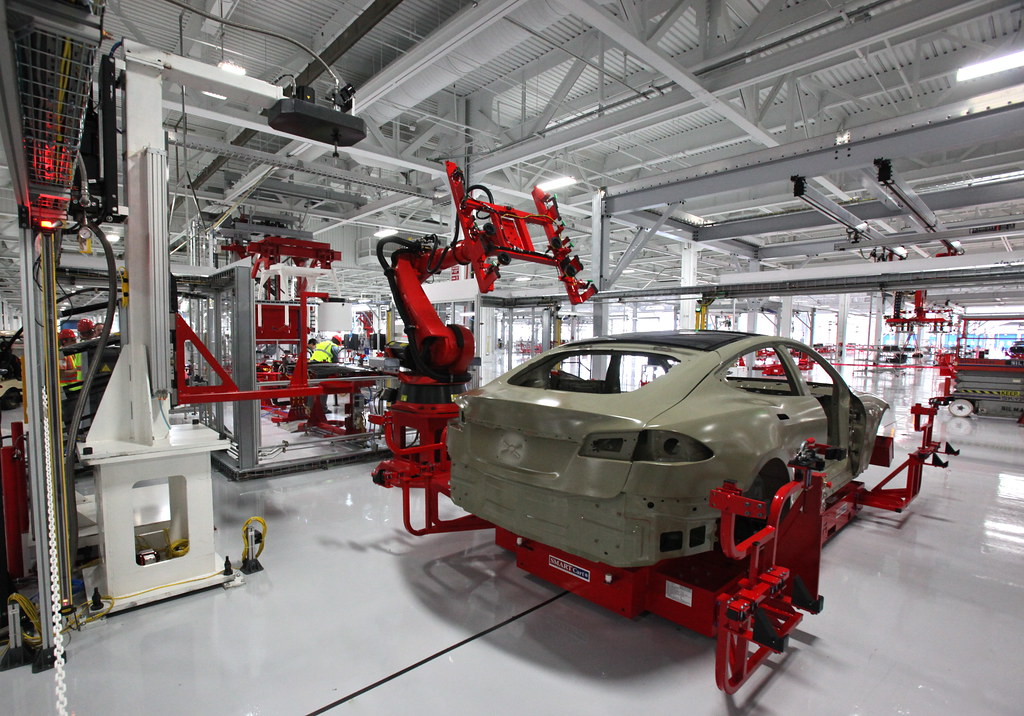
That is what makes the topic such a strong Hidden Fortunes expansion. It brings the modern AI cluster back into contact with one of the site’s oldest lessons: empires harden when they secure the infrastructure beneath the visible product.
The Helix digital infrastructure play illustrated how controlling physical data center infrastructure could create moats that pure cloud service arrangements could not. The physical AI economy extends this logic: the most defensible AI positions may be those that integrate digital capability with physical infrastructure ownership in ways that create mutual reinforcement.
The mineral supply chain dimension of this is significant and underappreciated. AI hardware — GPUs, high-bandwidth memory, advanced logic chips — requires substantial amounts of rare earth elements, gallium, germanium, cobalt, and other materials whose production is concentrated in a small number of countries and mining operations. Control of or privileged access to these supply chains is becoming a strategic consideration for governments and large technology companies that previously treated hardware procurement as a commodity purchasing function.
The Saudi Arabia AI factory investment represents one model of sovereign physical AI positioning: a resource-rich state using its capital and its energy advantage to establish AI manufacturing and data center capacity that it can maintain and deploy without depending on foreign technology infrastructure. This is the physical AI economy at the sovereign level.
The Hidden Strategy Behind the Fortune

The hidden strategy behind the fortune was arguing that the next AI empire will be built by linking compute to physical bottlenecks such as energy, industrial assets, supply chains, and resource extraction.
The competitive dynamic that makes physical AI distinctive is the combination of high capital requirements and long lead times. A software company can iterate on a new model in weeks and deploy globally without physical infrastructure. A physical AI play — a new factory instrumented with AI-based process control, or a new mining operation using AI-assisted exploration and extraction — requires years of capital investment and organizational development before it can generate returns.
This temporal gap creates a moat. Early movers in physical AI deployment build the operational experience, proprietary data sets, and integration capabilities that make their physical AI systems more effective over time. A competitor that starts later faces not just the capital requirements of the physical infrastructure but also the experience deficit — the accumulated learning about how AI models interact with specific physical environments, which equipment configurations generate the best sensor data, which failure modes need specific modeling attention.
The lasting lesson is about how the link between compute and physical bottlenecks — power, industrial assets, logistics, and extraction — can become a lever strong enough to outlive one cycle, one model generation, or one product category. Physical assets are slower, more regulated, more capital-intensive, and more politically exposed than software alone. They are also harder to replicate, which is the foundation of a durable competitive advantage.
The Cost, Risk, or Collapse
The transition also raises risk. Physical assets are slower, more regulated, more capital-intensive, and more politically exposed than software narratives often admit.
The risks of physical AI investment are real and specific. Physical assets are subject to regulatory approval processes that can take years — a new power plant, a new mine, a new factory in a regulated industry requires permits, environmental reviews, and stakeholder processes that software deployment does not. Physical assets are exposed to political risk in ways that software is not — a mine in a politically unstable country, a factory subject to trade policy changes, or power infrastructure subject to regulatory rate-setting all face risks that pure software businesses do not.
Physical AI deployment also faces integration risk that is more complex than software deployment. AI models that must operate in physical environments with real consequences for failure — medical devices, autonomous vehicles, industrial robots — face safety and liability requirements that digital applications do not. The organizational capability required to integrate AI into physical operating environments is distinct from the capability required to develop and deploy software AI applications.
The financial return profile is also different. Physical AI investments typically require large upfront capital, generate returns slowly as the physical infrastructure is built and the AI systems are trained on actual operational data, and have longer payback periods than software AI investments. This return profile requires patient capital — long-horizon investors with tolerance for illiquidity and construction-phase risk — that is more expensive and less abundant than the growth equity that funded the software AI boom.
Lessons for Modern Business Readers

1. Physical integration creates moats that software replication cannot easily dissolve
A software capability can be replicated by competitors with sufficient engineering talent and compute resources. A physical AI system that integrates AI models with proprietary sensor data from a specific industrial environment creates a moat that requires not just software replication but also physical asset construction, operational experience accumulation, and data set development. The combination is harder to replicate on compressed timelines.
2. The supply chain beneath AI hardware is a strategic vulnerability
The rare earth elements, specialty metals, and advanced semiconductor materials required for AI hardware are produced in concentrated supply chains that are subject to geopolitical risk. Technology companies and governments that have treated hardware procurement as a commodity function are beginning to recognize that supply chain diversification and strategic stockpiling for critical AI hardware inputs are now strategic priorities.
3. Data from physical operations is a distinct competitive asset
The sensor data generated by AI-instrumented physical operations — factory floor sensor readings, vehicle telemetry, grid measurement data, agricultural satellite imagery — is proprietary and non-substitutable. A competitor without access to comparable physical operations cannot generate equivalent training data by scaling software development. Proprietary physical data creates AI model quality advantages that compound over time.
4. The physical AI transition favors incumbents with existing operational infrastructure
Existing industrial operators — utilities, manufacturers, logistics companies, mining companies — have operational infrastructure, domain expertise, and regulatory relationships that pure-software AI companies would need years to develop. The physical AI transition may advantage traditional industrial incumbents who develop AI capability faster than it advantages pure-play AI companies trying to enter physical industries.
5. Patient capital is required for physical AI returns
The return profile of physical AI investment is fundamentally different from software AI investment — longer timelines, higher capital requirements, lower short-term returns, but larger and more defensible positions once established. The capital structures that fund physical AI must be aligned with these characteristics. Short-horizon growth equity is poorly suited for physical AI; long-horizon infrastructure capital, industrial private equity, and strategic corporate investment are better matched.
Conclusion
Seen clearly, this is not just a story about robots and smart factories. It is a story about how AI capability becomes more durable when it is anchored to physical systems that competitors cannot replicate quickly — and about why the next phase of AI competition may be won or lost not in model benchmarks but in mines, factories, utilities, and supply chains.
That is why the article belongs inside the Hidden Fortunes ecosystem. It bridges the Modern Power Systems / Industrial Systems cluster by connecting the AI infrastructure narrative to the site’s older lessons about physical chokepoints — creating clean bridges to the River Rouge integration model, grid-responsive compute, and the AI sovereignty playbook as complementary frameworks for understanding how physical control shapes AI competitive position.
Book Recommendation
For readers who want the strongest next step, start with Power and Progress by Daron Acemoglu and Simon Johnson. It is the best recent account of the thousand-year history of technology and prosperity — arguing that the benefits of technological progress are not automatically distributed broadly, and that the political and institutional choices made around new technologies determine whether they create shared prosperity or concentrated power.