Power grows deeper when the same employer can influence both what a worker earns and what the worker owes back.
George Pullman built one of the most profitable industrial enterprises in Gilded Age America — the Pullman Palace Car Company, whose sleeping cars dominated long-distance American rail travel. But the business strategy that defined Pullman’s approach to labor went further than most industrialists attempted: he designed an entire town on the South Side of Chicago where his workers were required to live, paying rent to the company, buying goods from company stores, and participating in social institutions that the company owned and controlled.
The Homestead Strike had shown what happened when a major industrial employer tried to force wage concessions on workers who had nothing to fall back on. The Pullman system was an attempt to preempt that kind of conflict through a different mechanism: not by breaking unions through violence, but by making worker independence economically difficult through spatial and financial control of daily life.
Ford’s Five Dollar Day represented one theory of industrial labor relations — pay workers enough to be consumers and reduce turnover costs. Pullman’s approach represented an opposite theory: control the worker’s cost structure so thoroughly that the effective wage was whatever the company chose, regardless of the nominal amount on the pay slip.
The World Before the Fortune

Industrial America was not only a story of factories and railcars. It was also a struggle over whether workers could ever operate as economically independent actors when employers controlled key parts of daily life beyond the plant gate.
George Pullman founded the Pullman Palace Car Company in 1867 and built it into the dominant provider of sleeping car service on American railroads. The Pullman car — a luxurious sleeping car that could be attached to regular passenger trains — transformed long-distance rail travel for wealthy and middle-class Americans. Railroad companies licensed the cars and service from Pullman, whose staff operated the cars and whose brand represented a standard of comfort and service.
By the late 1870s, the company was extraordinarily profitable. Pullman decided to invest some of those profits in an ambitious social experiment: a purpose-built industrial town on land he purchased on the South Side of Chicago. Construction began in 1880, and the town of Pullman was completed by 1884 — a planned community of approximately 12,000 residents, all of whom were Pullman employees and their families.
The environment favored the company-town model as a labor strategy because the Chicago-area labor market of the 1880s was large and unstable. Workers moved frequently between employers, organizing was difficult to prevent in a mobile workforce, and the costs of turnover and labor conflict fell heavily on employers who had invested in training skilled workers. Pullman’s response was to make his workforce spatially anchored and economically dependent.
The Rise

Pullman’s model looked orderly and paternal on the surface. Underneath, it gave management a stronger position by shaping not only the workplace, but the cost structure of the worker’s existence.
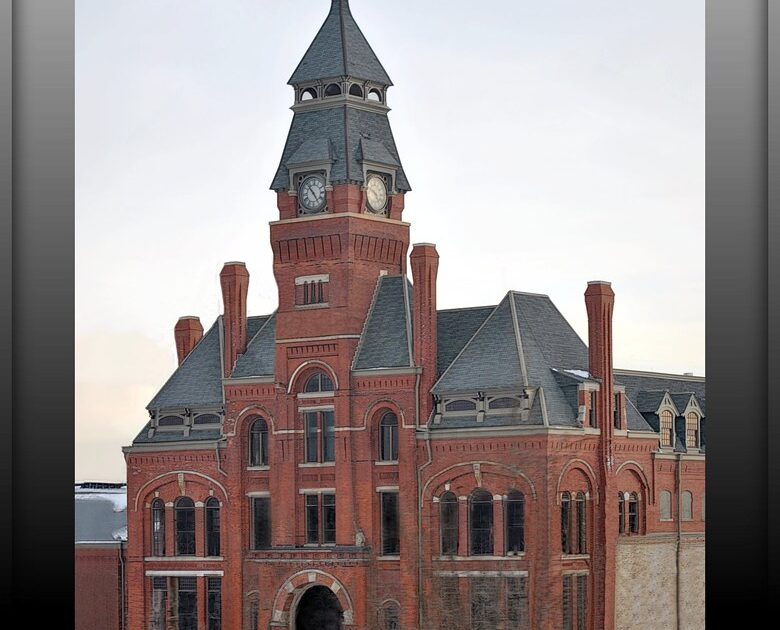
The town of Pullman was architecturally sophisticated. It included well-built housing in several grades — better quarters for skilled workers, more modest accommodations for unskilled laborers — along with a market hall, a library, a hotel, churches, a school, and recreational facilities. By the standards of industrial housing of the 1880s, Pullman was genuinely superior: cleaner, better maintained, and more comfortable than the boarding houses and tenements where most Chicago workers lived.
But the architecture concealed the economics. Pullman workers were required to live in company housing — employment at the Pullman works was contingent on residence in the company town. Rent was deducted directly from wages. Gas, water, and other utilities were provided by the company at rates the company set. The library charged admission fees. The hotel was company property. The market hall merchants paid rent to the company.
The system meant that a substantial fraction of the nominal wage paid to workers returned directly to the company through rent and service fees. Workers lived in good housing, but they had very limited ability to exit the cost structure the company had designed. Moving to Chicago and commuting would mean giving up their job; moving and finding other work meant severing ties with the primary employer in the region for skilled carriage workers.
The Expansion of Power

That is why the company-town model deserves a systems article. It reveals a form of industrial control that did not depend on a trust or a rebate alone. It depended on narrowing the space where labor could bargain from outside the employer’s orbit.
Pullman was deliberately designed to prevent the formation of independent worker institutions. Saloons were prohibited — the town had no drinking establishments because Pullman believed alcohol undermined productivity and because the social spaces where workers organized were often taverns. Labor organizers could not rent meeting space in a town where the company owned every building.
The system also created a specific form of financial fragility. Because rent was deducted automatically from wages, a wage cut did not only reduce disposable income — it could leave workers with paychecks that were entirely consumed by rent deductions, effectively working for nothing after housing costs. This is precisely what happened in 1893-94, when a severe economic depression prompted Pullman to cut wages by approximately 25% while refusing to reduce rents.
Carnegie and his partners understood that the threat of replacing workers was the key to maintaining wage discipline in heavy industry. Pullman had added another dimension: the worker who resisted a wage cut also risked losing their housing, their neighbors, their social community, and their children’s school — not just their job.
The Hidden Strategy Behind the Fortune

The hidden strategy behind the fortune was controlling both sides of the worker ledger by paying wages through one system and reclaiming part of them through company-controlled rent and services.
The financial arithmetic of the Pullman system was precise. The company operated the town as a profit center, not a worker benefit. The rate of return on the capital invested in the town was approximately 6% — decent by the standards of the era. The town was not a subsidy to workers; it was a business that extracted revenue from the same labor force that the main factory employed.
This dual extraction mechanism — wages paid out, rent collected back — created a labor situation that was more constrained than a pure wage relationship. In a free labor market, workers could respond to a wage cut by seeking employment elsewhere. In Pullman, seeking employment elsewhere meant simultaneously finding housing elsewhere, which meant surrendering the spatial community built around company housing. The switching cost was not just economic — it was social and spatial.
The lasting lesson is about how wages, rent, social control, and employer influence over the worker’s household balance sheet became a lever strong enough to outlive one cycle. The mechanism was not unique to Pullman — company towns existed throughout American mining, textile, and industrial communities. But Pullman made the system more explicit and more architecturally deliberate than most.
The Cost, Risk, or Collapse
The human cost was profound because dependence became spatial, social, and financial all at once. That made conflict more explosive when wages fell but obligations remained.
The Pullman Strike of 1894 began when workers whose wages had been cut by 25% discovered that their rent — deducted directly from already-reduced paychecks — had not been reduced at all. Workers were effectively paying more of their reduced wage to the same company that had just cut their income. The strike spread nationally when the American Railway Union, led by Eugene V. Debs, boycotted all trains carrying Pullman cars, paralyzing railroad traffic across much of the country.
President Grover Cleveland sent in federal troops over the objection of Illinois Governor John Peter Altgeld, who argued that the state was capable of maintaining order. The intervention broke the strike by force. Debs was imprisoned. The workers returned to work without the wage restoration they had sought. Pullman never negotiated.
But the political consequences were substantial. The strike focused national attention on the company-town model and its coercive dimensions. A federal commission investigating the strike concluded that Pullman’s refusal to arbitrate was unjust and that the company-town system itself was incompatible with American principles of worker independence. In 1898, the Illinois Supreme Court ruled that the Pullman Company was required to divest its residential properties — it could own a factory, but not the town around it.
Lessons for Modern Business Readers

1. Controlling the cost side of the worker ledger is a form of wage control
Pullman’s insight was that the effective wage is not the nominal wage — it is the wage minus the unavoidable costs the employer controls. Any business that controls costs workers cannot avoid is exercising a form of wage determination beyond the payroll. Modern equivalents include employer-provided housing in remote locations, mandatory company-store arrangements in isolated communities, and some forms of platform labor where platform fees consume a substantial fraction of nominal earnings.
2. Switching costs can be spatial as well as economic
The Pullman system was difficult to exit not just because of economic dependency but because of spatial and social embedding. Workers’ families, children’s schools, and social relationships were all housed within the company’s property. This spatial dimension of dependency made collective action harder to organize and individual exit more costly. Modern equivalents include corporate campuses that provide housing, meals, and social life as a retention mechanism.
3. Paternalism and control are not opposites
Pullman genuinely believed the company town model was good for workers — better housing, cleaner streets, no saloons. The architecture was superior to most working-class housing of the era. But paternalistic intentions and coercive outcomes can coexist. The quality of the housing did not change the financial mechanics that made resistance difficult.
4. Systems that work in expansion become explosive in contraction
The company-town model was tolerable when wages were adequate. When wages were cut in 1893, the combination of lower income and unchanged rent produced an explosive contradiction: workers could no longer afford the obligations the system had built into their daily lives. Systems that control the cost structure of employees’ lives create concentrated risk during downturns that a simple wage relationship would distribute differently.
5. The line between benefit and control depends on exit conditions
Whether an employer-provided benefit is genuinely beneficial or coercive depends primarily on the worker’s ability to exit. Pullman workers could not easily leave their housing without leaving their jobs and their community. When the ability to exit is constrained, any benefit becomes part of a dependency relationship rather than a voluntary exchange.
Conclusion
Seen clearly, this is not just a story about the Pullman company town or the 1894 strike. It is a story about what happens when the employment relationship extends beyond the factory gate into housing, utilities, social infrastructure, and the daily cost of living — and about the specific form of employer power that emerges when workers cannot easily separate their economic dependence from their spatial and social community.
That is why the article belongs inside the Hidden Fortunes ecosystem. It deepens the Industrial Empires / Labor Systems cluster with a precise account of how balance-sheet control over workers extended Pullman’s leverage — creating clean bridges to the Homestead Strike, Ford’s wage strategy, and the River Rouge machine as parallel cases of industrial labor system design.
Book Recommendation
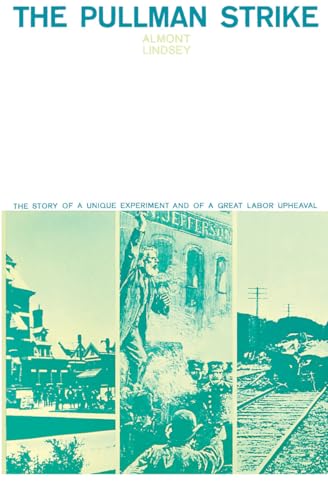
For readers who want the strongest next step, start with The Pullman Strike by Almont Lindsey. It is the definitive account of the 1894 strike and the company-town system that made it possible — showing the economic mechanics, the political dimensions, and the federal intervention that ended the most significant labor conflict of the Gilded Age.