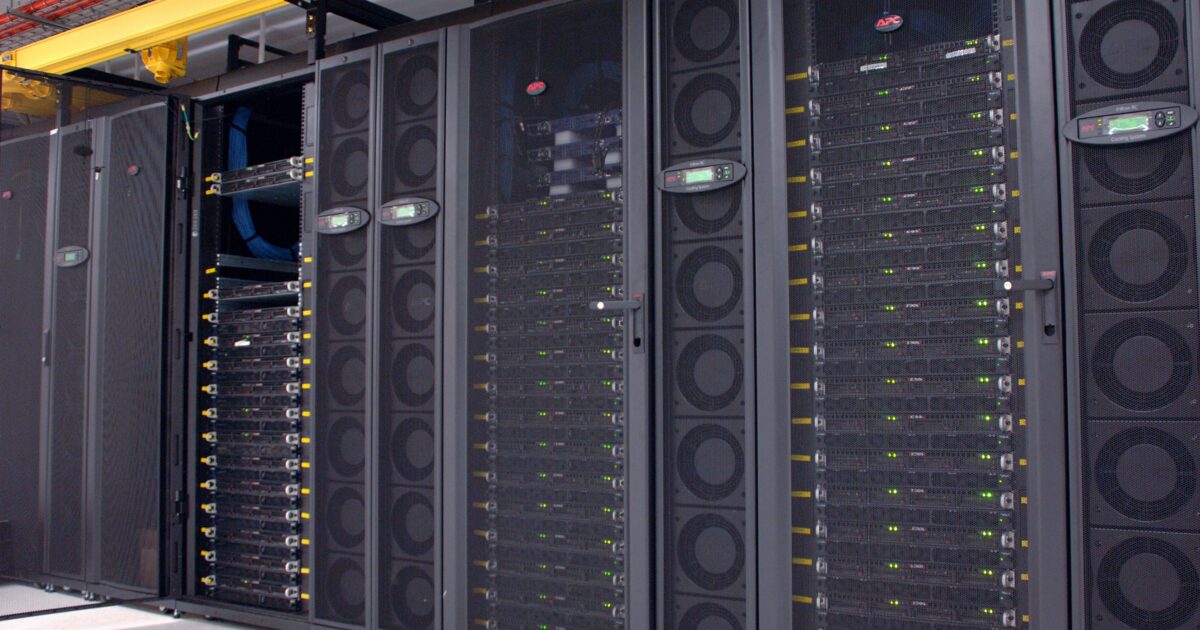
Every empire likes to talk about independence. Few admit how many suppliers that independence still requires.
The public story of the AI race centers on Nvidia, on data center deals, on sovereign compute strategies. But beneath every hyperscaler’s announced path to chip independence sits a quieter company — Broadcom — that has built the custom silicon and networking infrastructure that makes those independence claims operationally possible. Understanding Broadcom means understanding that the escape from one supplier dependency usually requires embracing another.
The Scarcity That Created the Opening

The AI boom of 2023 and 2024 exposed a structural problem for the largest technology companies. Nvidia’s GPU dominance was not just a competitive advantage — it was a bottleneck. Allocation queues stretched months. Pricing power sat entirely with the supplier. For companies spending billions on compute, the dependency felt strategically dangerous.
The response was predictable in direction if not in speed. Google had been designing custom AI accelerators — Tensor Processing Units — since 2015. Meta, Microsoft, Amazon, and Apple all announced or accelerated custom silicon programs. The TPU strategy demonstrated that hyperscalers could build chips that outperformed Nvidia on specific workloads. The question was never whether alternatives were possible. It was who would build the layer beneath them.
Custom silicon solves one problem and creates several others. A chip designed for a specific workload needs to be manufactured, packaged, tested, and connected to the rest of the stack. It needs networking that can move data between thousands of accelerators fast enough to make distributed training viable. It needs someone who already has the deep engineering relationships with foundries, the packaging expertise, and the networking silicon that hyperscalers do not want to build themselves.
The Supplier No One Talks About
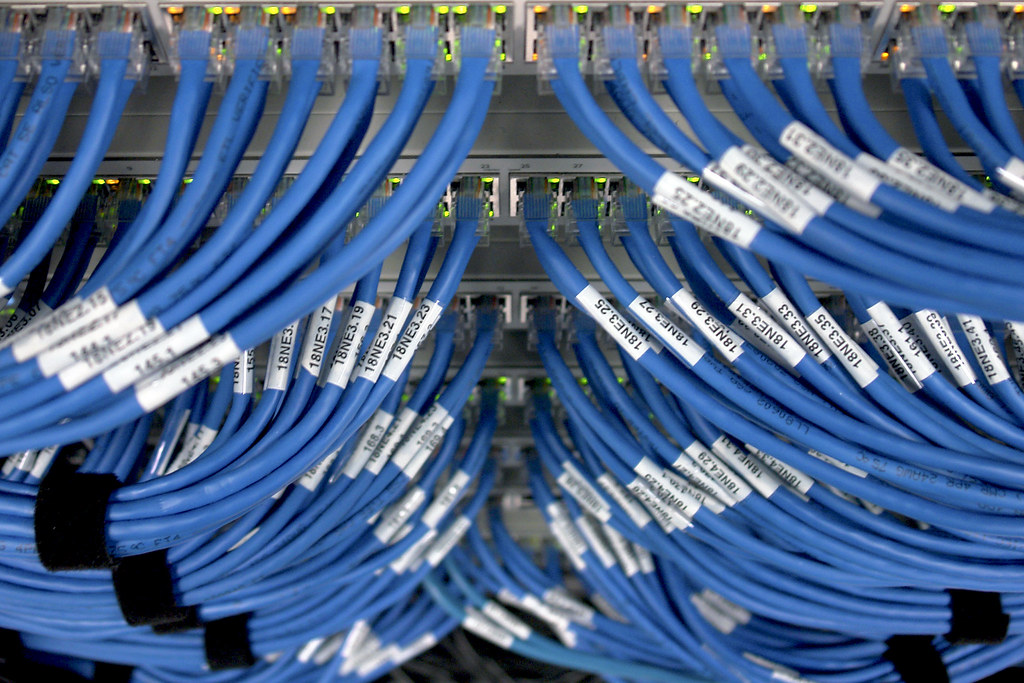
Broadcom is not a household name, and the company appears to prefer it that way. Its CEO, Hock Tan, has built one of the most consistently profitable technology companies in the world through acquisition, operational focus, and a deliberate refusal to compete for public attention. Broadcom’s products are in nearly every major data center on the planet, but the brand stays hidden beneath the logos of the customers who deploy them.
The company’s AI revenue line, which it began disclosing more explicitly in 2023, became a proxy for something investors had not previously priced clearly: Broadcom is the primary ASIC design partner for Google’s TPU program and is believed to be working with at least one other major hyperscaler on custom accelerator programs. It also supplies the networking silicon — Ethernet and InfiniBand alternatives — that connects GPU and TPU clusters into functional training systems.
This dual position is structurally important. A hyperscaler that replaces Nvidia GPUs with custom ASICs still needs Broadcom’s networking silicon to connect those ASICs at scale. The dependency does not disappear. It migrates. And because Broadcom’s networking technology has compounded over decades of R&D and acquisition — including the VMware deal, the CA Technologies acquisition, and the original Avago merger — replicating it from scratch is not a realistic alternative for any customer in the near term.
Custom Silicon as a Managed Dependency

The logic of custom silicon is often framed as a story about independence. A hyperscaler that designs its own chip is no longer dependent on Nvidia’s roadmap, Nvidia’s pricing, or Nvidia’s allocation decisions. Sovereign compute strategies apply the same logic at the national level — build your own chips, own your own stack, reduce exposure to foreign suppliers.
What this framing underweights is the depth of what custom chip design actually requires. The design process itself needs silicon engineers, EDA tools, and years of training data about what workloads actually look like. Manufacturing requires a foundry relationship — overwhelmingly TSMC for leading-edge nodes — and packaging capacity that is itself scarce and controlled by a small number of operators. The networking layer requires a company that has been building high-speed interconnects for data centers for decades.
Broadcom sits at the intersection of the design partnership, the packaging integration, and the networking stack. A hyperscaler working with Broadcom on a custom ASIC is trading dependence on Nvidia’s general-purpose GPU for dependence on Broadcom’s specialized engineering. Whether that is a better position depends on how the relationship is structured — and Broadcom, like other hidden infrastructure suppliers in the AI stack, tends to negotiate from a position of indispensability rather than competition.
The Network Layer Nobody Replaces

Broadcom’s networking business is older than its AI chip story and in some ways more defensible. The company’s Ethernet networking silicon — under brands including Tomahawk and Trident — is the default choice for hyperscale data center switching. As data center investment has accelerated, the networking layer has become increasingly critical: larger AI clusters require faster, lower-latency interconnects, and the cost of a networking failure in a training run is measured in wasted compute hours worth millions of dollars.
InfiniBand, which Nvidia acquired as part of its Mellanox purchase, is the primary competitor for high-speed AI cluster networking. But Broadcom has been investing in Ethernet alternatives that it argues can match InfiniBand performance for many AI workloads at lower cost and with greater flexibility for hyperscalers who want to own more of their network stack. The argument has resonated: several major hyperscalers have shifted portions of their cluster networking to Broadcom Ethernet over the past two years.
The strategic implication is that Broadcom benefits regardless of which chip wins the AI accelerator market. A cluster running Nvidia GPUs still needs network switching. A cluster running custom ASICs needs the same. Even vertically integrated AI infrastructure plays require networking silicon that sits outside the chip itself. Broadcom has positioned itself as the plumbing company for a building boom, selling infrastructure to every developer regardless of which architectural bet they have made.
The Risk Beneath the Position
The same concentration that makes Broadcom powerful also creates exposure. A significant portion of Broadcom’s AI revenue is believed to come from Google’s TPU program. If Google were to internalize more of the ASIC design process, or if a competitor emerged with competitive networking silicon at scale, the revenue concentration would become a vulnerability rather than an asset.
Geopolitical risk is the other variable that is difficult to price. Broadcom’s manufacturing, like most advanced semiconductor production, runs through TSMC in Taiwan. The concentration of leading-edge chip fabrication on one island is a risk that every company in the sector shares but none has fully solved. Sovereignty strategies are partly a response to this — but moving foundry capacity at the scale and node sophistication Broadcom requires takes years and tens of billions of dollars.
The sector’s opacity also means that public claims about custom chip progress can outrun what is operationally real. Announcements of custom accelerator programs are common; deployments at training-relevant scale are rarer. Broadcom’s position is strongest when hyperscaler custom programs actually ship at volume — which depends on design timelines, yield rates, and system integration that remain largely invisible to outside observers.
Lessons From the Hidden Supplier
Broadcom’s position in the AI infrastructure stack encodes a strategic pattern that appears across very different industries and eras.
1. The layer beneath the headline is often the most durable
Nvidia gets the coverage. Broadcom gets the recurring revenue. Visibility and leverage are not the same thing.
2. Escaping one dependency usually creates another
Hyperscalers building custom chips to reduce Nvidia exposure are building Broadcom exposure. The nature of the dependency changes; the structural fact of dependence does not.
3. Networking compounds differently than chips
Chip architectures change with every generation. Network protocols and switching silicon accumulate institutional knowledge and customer lock-in across many generations. Broadcom’s networking moat is older and in some ways harder to replicate than its ASIC design capability.
4. Indispensability beats visibility
Broadcom’s strategy is to be the company that sophisticated buyers cannot afford to replace, not the company they want to feature in announcements. That positioning produces different margins and different durability than brand-led strategies.
5. Concentration is both the asset and the risk
Deep relationships with a small number of the world’s most important technology companies produce high margins and strong barriers. They also mean that a change in one customer’s strategy can move the revenue line materially. The same logic that makes the position strong makes it worth monitoring closely.