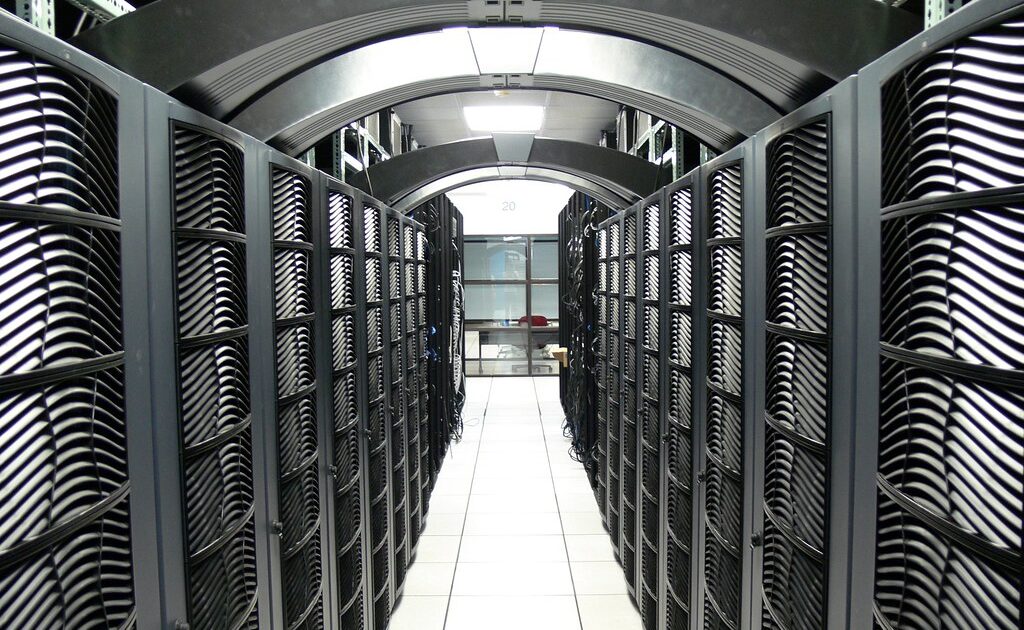
The glamorous story of artificial intelligence is written in models, chips, and headlines. The less glamorous story is written in debt.
Every large AI promise still has to pass through concrete, transformers, cooling systems, construction contracts, and the kind of financing structures Wall Street knows how to package, price, and distribute. That is what makes the data-center boom so revealing. Beneath the innovation narrative sits a capital machine trying to convert compute demand into an investable asset class.
This is where Hidden Fortunes becomes useful. The deeper fortune in AI may not belong only to the companies writing the code. It may belong to the investors, lenders, and infrastructure owners who learn how to financialize the physical layer beneath the code.
The World Before the Fortune
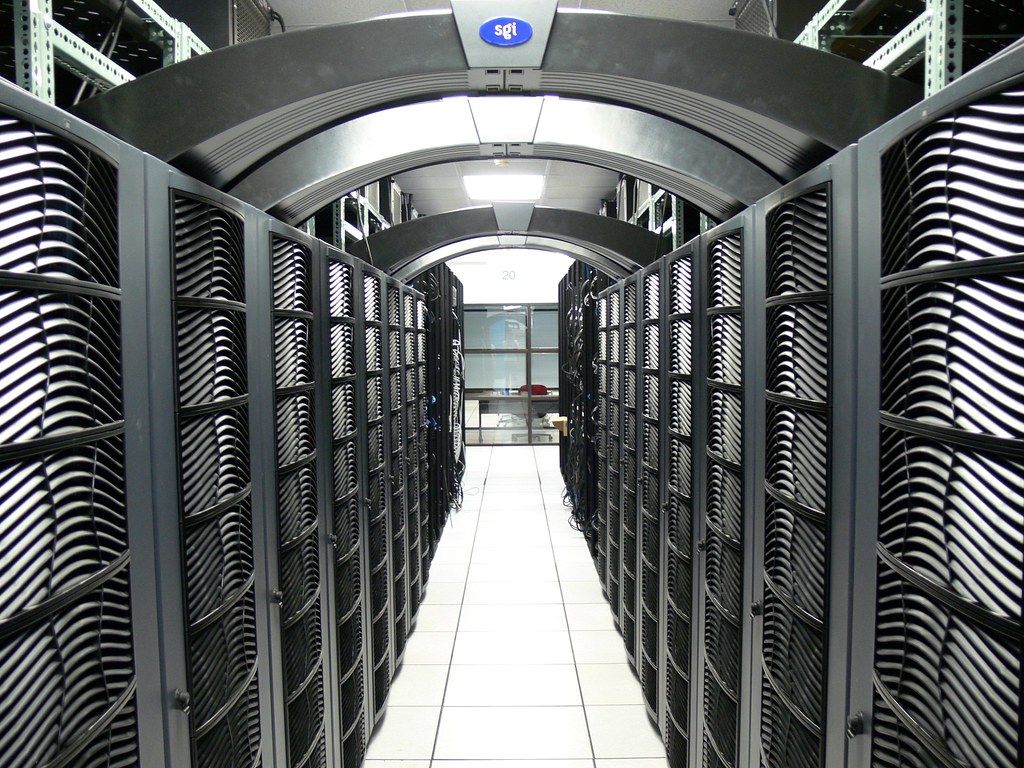
For years, technology stories trained readers to think in software terms. Platforms scaled quickly, marginal costs looked magical, and investors learned to prize code over concrete. AI has disrupted that mental model. Large-scale models still need electricity, land, networking, and buildings dense enough to run expensive hardware at industrial scale.
That physical requirement changes the capital equation. A consumer app can be launched with venture money and a small team. A serious AI infrastructure buildout requires enormous up-front spending, multi-year planning, utility coordination, and a financing structure capable of surviving long payback periods. Once that happens, the ecosystem stops behaving like a normal software category and starts behaving like infrastructure.
Infrastructure attracts a different class of investor. Pension funds, private equity firms, infrastructure specialists, real estate operators, structured lenders, and sovereign pools of capital all recognize a familiar pattern: a long-duration physical asset tied to demand from powerful counterparties. In other words, AI data centers are becoming something finance already knows how to underwrite.
The deeper payoff is that it trains the reader to see how fortunes compound when an operator captures systems, not just headlines.
The Rise
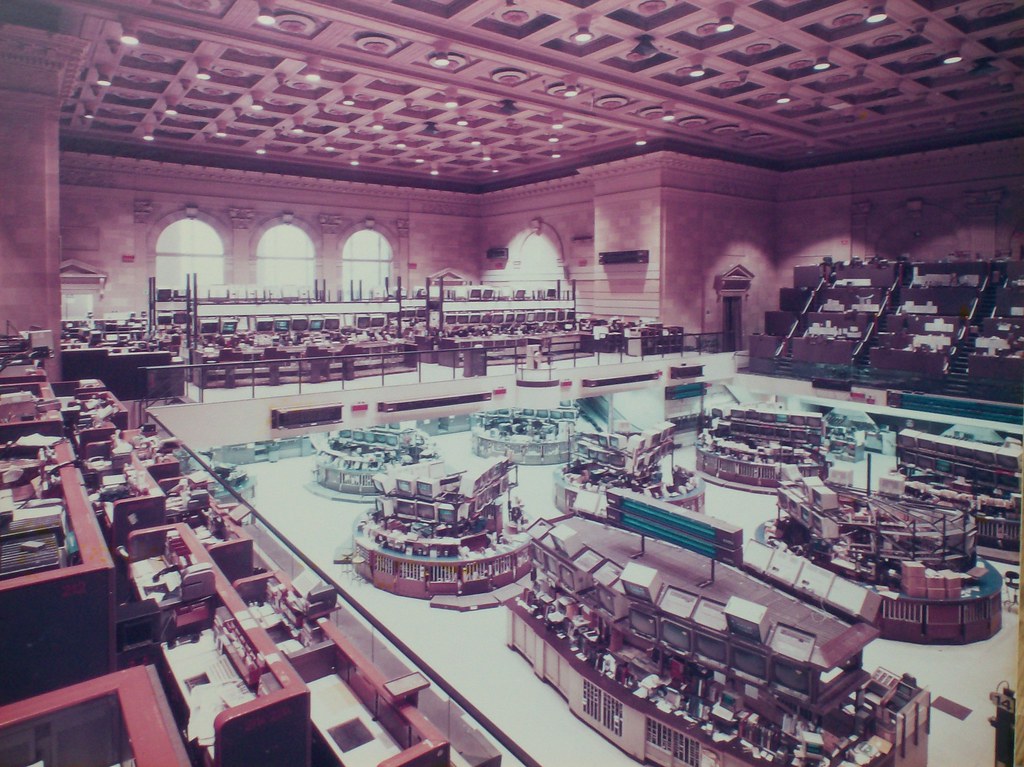
The first stage of the AI buildout was easy to romanticize. Hyperscalers expanded capex, chipmakers soared, and startups promised a new industrial revolution. But the second stage is more disciplined and more revealing. Someone has to own the land. Someone has to fund the shell, the substations, the debt stack, and the operating agreements that make a facility bankable.
That is where Wall Street enters. Private capital does not merely want exposure to AI in the abstract. It wants exposure to the assets that hyperscalers and model builders will need to rent, finance, or contract around. This is the same instinct that once moved capital into pipelines, toll roads, telecom towers, and warehouse networks. The physical bottleneck becomes the investment thesis.
The more this logic matures, the more AI infrastructure begins to look like a hybrid between commercial real estate, energy infrastructure, and structured corporate finance. That hybrid matters because it invites leverage. Assets with long contracts and strong demand signals can support debt, and debt makes the machine scale faster than equity alone would allow.
What contemporaries often missed was the compounding effect of the mechanism itself. Once AI’s physical buildout was transformed into a finance machine — one in which hyperscaler demand, private capital, debt, and securitization absorbed the cost of compute empires — every later decision became easier to understand. The firm at the center of this story did not need to win every battle dramatically. It needed to make rivals operate on worse terms and make the surrounding market feel natural only after its own structure had already become dominant.
The Expansion of Power

Once the sector is viewed as an asset class, a self-reinforcing loop appears. Long-term demand from cloud operators or major AI customers makes lenders more comfortable. More financing lowers the barrier to larger projects. Larger projects create more ecosystem confidence. More ecosystem confidence brings in more funds, more vehicles, and more aggressive underwriting. The boom thus becomes easier to narrate as inevitable.
This is how financialization works in practice. A real operating need is translated into standardized structures that institutions can own. The asset stops being just a building and becomes a bundle of expected cash flows, contractual risk, energy exposure, refinancing pressure, and optionality around future demand. Once those cash flows can be modeled, they can be sold.
There is a deeper strategic consequence too. If AI infrastructure becomes a recognized Wall Street product, then the expansion of compute will increasingly depend on financing terms as much as on engineering terms. The next bottleneck may not be chip design alone. It may be who can refinance fastest, secure cheaper debt, or win more favorable capital-market trust. Firms like those behind Oracle’s AI data-center gamble or the Nvidia versus Wall Street infrastructure race are already operating inside this logic.
The Hidden Strategy Behind the Fortune

The hidden strategy behind the fortune is financializing the physical layer before the market fully reprices its importance.
This is the real play. The AI narrative makes everyone look upward at models and applications. Meanwhile, capital is moving sideways into the structures that make those models physically possible. If those structures can be treated like bankable infrastructure, investors do not need to predict every software winner. They only need to own a layer that many winners will still need.
That makes the data-center debt machine powerful in the same way pipelines, railroads, or utility grids once became powerful. It sits underneath a broader expansion wave. It monetizes dependence rather than novelty. And because it is wrapped in finance, it can scale through leverage, tranching, and investor appetite long before the public treats it as a separate system of power.
For business readers, this is the payoff. The loudest market story may be AI intelligence. The quieter and potentially more durable story is AI collateral.
In sectors as different as AI infrastructure, technology, finance, and software, the same pattern keeps returning: the loudest story sits on top while the durable leverage sits underneath. Executives, investors, and founders who learn to identify that lower layer early usually build stronger positions than those who chase the most visible trend.
The Cost, Risk, or Collapse

Financialization always brings fragility with it. Once assets are financed aggressively, they become sensitive to refinancing conditions, rate shifts, utility constraints, and overbuilding risk. A data-center boom backed by debt can look unstoppable until power pricing, tenant concentration, or slower-than-expected demand exposes the assumptions underneath.
There is also a political layer. AI infrastructure consumes land, water, and electricity in ways that can trigger local resistance. The more the sector grows, the more it invites scrutiny over who gets the upside and who absorbs the physical burden. A debt machine can distribute risk on paper, but it cannot eliminate the underlying friction of scarce resources.
That does not weaken the strategic thesis. It sharpens it. The most profitable infrastructure waves are often the ones investors treat as inevitable right up until the financing structure itself becomes part of the story.
The danger in stories like this is that success can make the system look cleaner than it really was. Once a mechanism begins to work, observers often mistake temporary dominance for inevitability. But fortunes built through AI infrastructure logic still face execution risk, political reaction, human resistance, and the possibility that the very technique that created power will later attract scrutiny or overreach. That is why disciplined readers should study not only the ascent, but the stress points hidden inside the ascent.
Lessons for Modern Business Readers

1. Asset classes are built, not discovered
Wall Street does not wait for a sector to be obvious. It helps make a sector obvious by translating demand into structures institutions can own.
2. Physical bottlenecks attract financial engineering
Whenever a fast-growing market depends on land, power, and long-lived assets, finance will try to standardize and leverage the bottleneck.
3. The balance sheet can decide the technology race
In infrastructure-heavy markets, the winner is not always the smartest engineer. It may be the operator with the best financing stack.
4. Demand certainty is monetizable
Contracts, counterparties, and recurring usage patterns can turn emerging infrastructure into something lenders and funds are willing to underwrite.
5. Financialization magnifies both growth and fragility
Leverage helps scale expansion, but it also makes errors, delays, and weak assumptions more dangerous.
6. Follow the layer beneath the hype
When a market becomes culturally loud, hidden fortunes often accumulate in the quieter layer that everyone else must still pay to use.
Seen that way, this article creates natural bridges to The Data-Center Land Rush and Why Is Wall Street Buying Data Centers, and gives later articles a stronger analytical base.
Hidden Fortunes is not trying to collect disconnected stories about famous names. It is trying to show readers how power behaves when money, infrastructure, governance, and timing begin to reinforce one another. Once the reader understands that framework, related pieces stop feeling isolated and start feeling like variations on the same long historical problem: who gets to own the layer everyone else must still pass through.
Book Recommendation
For readers who want the best next step, start with Chip War by Chris Miller. It extends the strategic logic behind this article by showing how control of semiconductor manufacturing became the defining infrastructure race of our era — and why the physical layer always matters more than the headline technology.
