Long before gunboats forced China’s ports open, China had already built a gate.
At first glance, the Canton System can look like a narrow customs arrangement on the eve of a larger crisis. But the real question is how market access, silver management, and controlled intermediaries became the mechanism that made Qing power durable for over a century. That is why this story matters. It is not only about foreign trade policy in Guangzhou. It is about how a state learned to convert commercial appetite into imperial leverage.
The World Before the Gate

In the eighteenth century, Qing China presided over one of the world’s largest and most valuable markets. European merchants competed fiercely for access to Chinese tea, silk, porcelain, and nankeens. The problem, from Beijing’s perspective, was not that foreigners wanted to trade. It was that unchecked commercial access could become political access — and political access, in a vast empire with fragile inland communication, was a threat the Qing court had no interest in tolerating.
By 1757, the Qianlong Emperor had seen enough. A series of informal trading posts along the coast were consolidated into a single authorized port. Guangzhou — Canton to Europeans — became the one legal entry point for foreign commerce. Every ship, every merchant, every bale of tea destined for London or Amsterdam had to pass through this single regulated gate.
The Architecture of the Cohong

The system’s operational core was the Cohong: a guild of licensed Chinese merchant houses authorized to deal directly with foreigners. At its peak, the Cohong comprised around thirteen hong merchants who bore legal responsibility for the conduct of every foreign ship that docked. They guaranteed customs duties, mediated disputes, controlled credit, and managed the physical movement of goods.
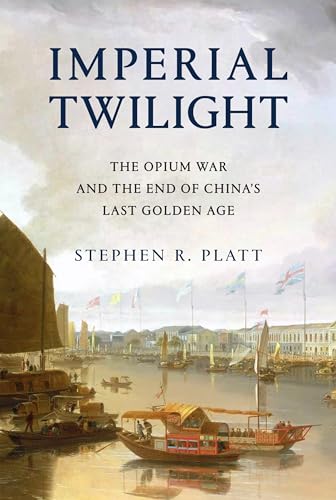
Foreign traders were confined to a strip of waterfront outside Canton’s city walls — the Thirteen Factories — where they could reside only during the trading season, could not bring wives or firearms, and were forbidden from venturing into the city proper. The Cohong was the only legal channel. Foreign merchants had no direct access to Chinese producers, no ability to set terms independently, and no route around the licensed intermediaries without risking expulsion from the trade entirely.
The result was a system where China’s commercial partners were structurally dependent on terms they had not set and could not easily renegotiate. Access was the product. The Cohong were its managers.
Silver, Leverage, and the Controlled Flow

The Canton System’s deepest function was silver management. European merchants, especially the British East India Company, came to China with silver because there was almost nothing else China wanted from the West. Chinese silk, porcelain, and tea commanded strong prices in Europe; European woolens and clockwork novelties interested the Qing court mainly as curiosities.
Silver flowed steadily into China, strengthening the Qing monetary base and rewarding the state’s preference for a controlled trade surplus. The Cohong controlled credit terms, effectively deciding how fast foreign merchants could accumulate purchasing power and how quickly they could liquidate their positions. A merchant who fell out of favor with his hong could find his debts called early, his season cut short, and his access to the next year’s shipment in doubt.
The most celebrated hong merchant, Houqua — Wu Bingjian — accumulated a personal fortune estimated at 26 million Spanish dollars by the 1830s, making him one of the wealthiest individuals in the world. He did it not by smuggling or speculation but by operating as the indispensable link between Chinese commercial networks and the foreign merchant houses that needed his vouching to function at all.
The Hidden Logic Behind the System

What made the Canton System strategically brilliant was its refusal to exclude foreign merchants entirely. Exclusion would have produced confrontation sooner and eliminated the silver inflows the Qing treasury relied upon. Instead, the system offered genuine profit — but only within rules designed to prevent that profit from translating into political power.
Foreign merchants could grow wealthy in Canton. Firms like Jardine, Matheson built substantial fortunes operating within the Cohong framework before they began pushing against it. But their wealth depended on Cohong licenses, on the goodwill of hong merchants, and on seasonal access that could be revoked. They were guests inside a system designed on someone else’s terms.
The Qing state was doing something subtler than simple monopoly control. It was separating commercial gain from structural power. Foreign merchants got returns. The state retained the architecture.
The Cost of Rigidity

The same logic that protected Qing control also narrowed the system’s flexibility. Because access was artificially restricted to one port and a small licensed guild, the incentive to circumvent the rules grew with every decade of the system’s success. Smuggling became chronic. Private traders — “country traders” operating outside the East India Company’s official monopoly — found informal channels that the Cohong could not fully police.
More fatally, the system’s silver dynamic reversed in the early nineteenth century. The British began paying for Chinese tea not with silver but with opium grown in Bengal and smuggled through private networks. Silver began draining out of China rather than flowing in. The monetary stability the Canton System had helped maintain began unraveling, fueling inflation, rural distress, and growing addiction across Chinese provinces.
When Commissioner Lin Zexu moved to destroy the opium stocks in 1839, the confrontation the Canton System had delayed for a century finally arrived. The First Opium War ended in 1842 with the Treaty of Nanking, which opened five treaty ports, ceded Hong Kong to Britain, and effectively terminated the Canton System as a governing principle. The gate had held for eighty years — and then it did not hold at all.
Lessons From the Canton Gate
The Canton System’s rise and collapse encodes a strategic logic that runs well beyond its historical moment.
1. Control the layer beneath the headline
The Qing court never sold the right to set the rules. Foreign merchants got access to profits. The architecture of access remained Chinese property.
2. Dependency compounds faster than attention
Firms like Jardine Matheson spent decades building businesses inside a system they did not control. Their prosperity and their vulnerability grew together.
3. Controlled access is only stable while enforcement is credible
The Canton System worked while the Qing state had the administrative capacity to enforce it. Once enforcement became selective, the arbitrage incentive overwhelmed the system.
4. Trade surpluses can fund the architecture of control
Silver inflows underwrote Qing monetary stability and the patronage networks that kept the Cohong functioning. The system financed itself through the very appetite it restricted.
5. Rigidity in defense creates brittleness under pressure
A system designed to resist change in normal times often lacks the flexibility to adapt when conditions shift sharply. The Canton System had no off-ramp. When the opium crisis arrived, the choice was between capitulation and war.