The easiest way to compare dynasties is by asking who was richer. The better way is to ask what kind of machine each dynasty built.
The Medici and the Rothschilds are ideal for that question because they represent two different archetypes of banking power. One flourished in a world of city politics, patronage, and cultural legitimacy. The other dominated a world of sovereign debt, fast information, and multi-capital coordination.
That is why the comparison matters. It reveals that banking empires do not all win by the same logic, even when both are remembered as legendary.
The World Before the Fortune

Banking power is never only financial. It is social, political, cultural, and organizational. Different eras reward different combinations of those traits. A family that thrives in a city-state environment may not look like the family that thrives in continental state finance.
The Medici rose in a world where civic influence, patronage, and local institutional embeddedness were central to elite power. The Rothschilds rose in a world where scale, sovereign borrowing, and transnational communication gave speed and network design far greater strategic value.
Comparing them therefore means comparing two different political economies, not just two surnames. The environment shapes the machine, and the machine shapes the fortune.
The Rise

The Medici built themselves into Florence by becoming not merely bankers but civic actors. Patronage, reputation, and political embeddedness helped them translate money into legitimacy. Their power was inseparable from the city and from the cultural world they helped fund.
The Rothschilds, by contrast, became formidable by operating across borders. Their rise depended less on urban patronage and more on the disciplined coordination of multiple family houses serving governments, markets, and bond investors under conditions where speed and information advantage mattered enormously.
This difference shaped everything that followed. The Medici excelled in proximity. The Rothschilds excelled in range. Both were building empires of trust, but they located trust differently — one inside a single city, the other across a continent.
What contemporaries often missed was the compounding effect of the mechanism itself. The Medici built power through civic and cultural embeddedness; the Rothschilds built power through transnational speed, sovereign finance, and networked credibility. Once either system achieved critical mass, it made rivals operate on worse terms and made the surrounding market feel natural only after its own structure had already become dominant.
The Expansion of Power

As their power expanded, each family doubled down on its strategic advantage. The Medici embedded themselves more deeply in political and cultural life, turning patronage into a stabilizing force for both influence and legacy. They made themselves feel native to the civic order they were shaping.
The Rothschilds expanded by building and exploiting network strength. Multiple capitals, trusted family coordination, and sovereign-finance expertise made them unusually effective in an era where governments needed intermediaries who could move information and capital across Europe. The Suez Canal purchase of 1875 is one of the clearest examples: a single private bank providing capital that shaped the geopolitical course of empires.
In practical terms, the Medici cultivated a thick local ecosystem. The Rothschilds cultivated a wide transnational one. Both were empires of trust, but they located trust differently.
The Hidden Strategy Behind the Fortune

The hidden strategy behind the comparison is that banking power can be built through embedded legitimacy or through networked speed.
The Medici demonstrate the strength of making finance socially indispensable to one political center. The Rothschilds demonstrate the strength of making finance geographically indispensable to many political centers. One model turns culture and proximity into leverage. The other turns communication and sovereign intermediation into leverage.
This matters because readers often collapse all banker dynasties into the same stereotype. The comparison shows how much strategic variety exists inside elite finance. Not every fortune is built by the same mechanism simply because the business category looks similar.
For business readers, this is the useful payoff: there are multiple paths to durable power, but each path depends on matching your structure to the environment that rewards it most. The Medici could not have replicated the Rothschild model in fifteenth-century Florence, and the Rothschilds could not have replicated the Medici model in nineteenth-century Europe.
The Cost, Risk, or Collapse

Both models carried vulnerability. Deep local embedding can make a dynasty too dependent on one political center. Wide transnational reach can expose a dynasty to geopolitical volatility, regulatory tension, and public suspicion across multiple societies at once.
There is also a moral cost to both models. Patronage can distort civic life by binding culture too tightly to elite money. Sovereign-finance intermediation can tie profits to war, debt burden, and unequal access to state influence.
These costs should not be hidden by the families’ glamour. They are part of the price of understanding how financial power really works. The Medici eventually overextended their political reach in Florence. The Rothschilds eventually faced the limits of operating in an era of rising nationalism and state-controlled finance.
The danger in stories like this is that success can make the system look cleaner than it really was. Fortunes built through banking dynasty logic still face execution risk, political reaction, and the possibility that the very technique that created power will later attract scrutiny or overreach.
Lessons for Modern Business Readers

1. Match the structure to the era
The strongest organizations fit their power model to the political and economic system around them.
2. Trust can be local or transnational
A business may win by becoming indispensable in one center or by becoming credible across many centers.
3. Legitimacy is built differently in different systems
Patronage, culture, and civic embedding create one kind of stability; speed, credibility, and sovereign service create another.
4. Range and depth are different strategic advantages
The Medici went deeper in one civic world. The Rothschilds went wider across many state worlds.
5. Financial power is always more than money
Influence, social position, and network design often matter as much as the capital itself.
6. Comparison sharpens strategy
Looking at two dynasties side by side reveals which mechanisms were essential and which were just historical decoration. The Medici and Rothschild comparison does not produce a winner — it produces a framework for reading any future dynasty.
Book Recommendation
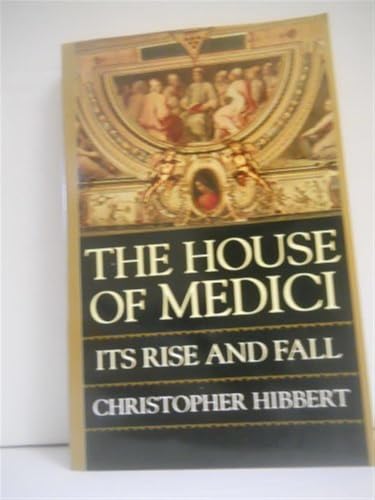
For readers who want the best next step, start with The House of Medici: Its Rise and Fall by Christopher Hibbert. It is the right follow-up because it grounds the strategic logic of this article in the specific political, cultural, and financial choices that made the Medici family’s power both extraordinary and ultimately fragile.