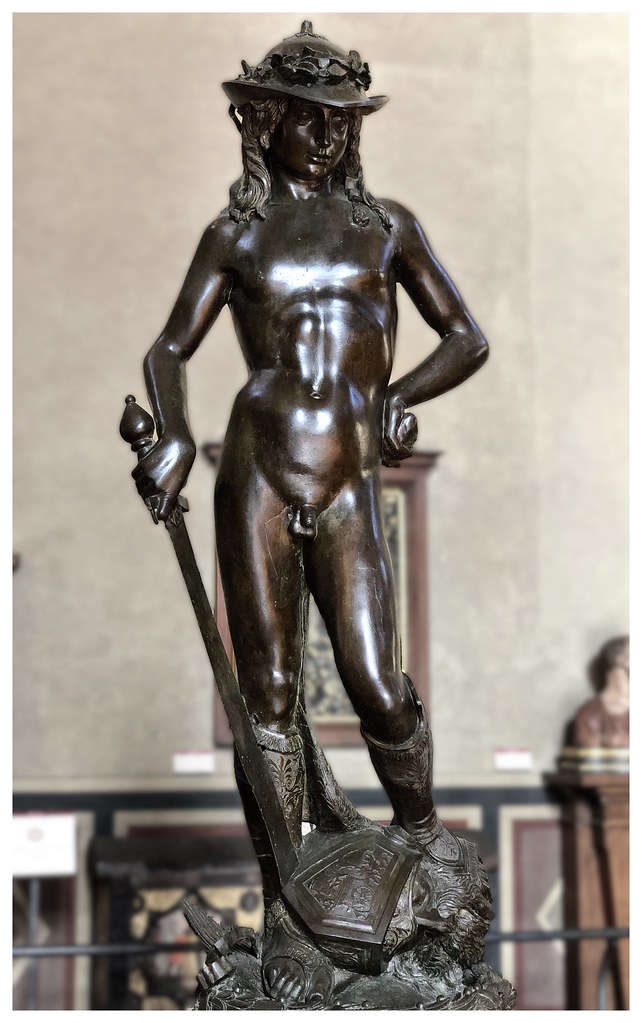
Florence looked like a city of beauty. It was also a city of leverage.
Behind the frescoes, chapels, and refined civic pageantry sat a harder reality: money moved power, and the family that could make money respectable could govern without always wearing a crown. The Medici understood that better than anyone.
That is why their story still feels so modern.
The Medici did not simply accumulate wealth and then buy luxury with it. They used banking to shape politics, shape image, shape prestige, and eventually shape the terms through which Florence imagined authority itself. They were not kings in the simple hereditary sense. They were something subtler and, in a republic, often more effective: financiers who learned to make control look civic.
To study the Medici is to study one of history’s earliest demonstrations that money alone is rarely the final form of power. The higher art lies in turning money into legitimacy.
The World Before the Fortune

The Medici emerged in a world where Italian city-states mixed commerce, factional politics, and family ambition with unusual intensity. Florence was not an empire in the territorial sense, but it was a dense arena of wealth, patronage, and civic competition. That made banking unusually potent.
Giovanni di Bicci de’ Medici, often treated as the first great Medici, built the family business through cloth, silk, and banking. He established the financial base that later generations would weaponize socially and politically.
This setting matters because Florence was not a courtly monarchy where rank alone settled everything. It was commercially alive, politically unstable, and socially alert. Merchants mattered. Reputation mattered. Faction mattered. Public image mattered. And credit mattered perhaps most of all, because credit sits at the point where trust and power become measurable.
That made banking a far more strategic business than a simple counting-house operation.
Giovanni’s achievement was therefore foundational. He did not only enlarge family wealth. He placed the Medici in a line of work that touched merchants, officials, institutions, and elite households all at once. Banking gave the family more than income. It gave them social visibility and a map of dependency.
In cities like Florence, dependency is political gold.
And Florence was full of people who needed something from someone: credit, alliance, favor, office, protection, access, legitimacy, or rescue from a factional setback. The family that could sit quietly at the intersection of those needs would always be more powerful than the family that merely looked noble from a distance.
The Rise

The family’s real ascent came when Cosimo de’ Medici turned private banking success into a public power structure. He understood that in Florence, influence did not always require direct monarchy. It required credibility, allies, debt relationships, and the ability to appear indispensable to civic life.
That was the Medici move. They made wealth look like stewardship.
Cosimo’s brilliance lay in understanding that open domination can provoke resistance, while managed indispensability can become almost self-protecting. A family that loudly announces itself as ruler invites coalitions against it. A family that presents itself as prudent patron, stabilizer, lender, and benefactor can often accumulate more real influence with less visible backlash.
This was not accidental image management. It was a method.
Through offices, alliances, financial relationships, and a reputation for civic seriousness, the Medici built a political base without always needing formal monarchical titles. Their money reached into the city’s practical life. Their name reached into its symbolic life. The more those two layers overlapped, the stronger the dynasty became.
That is also why exile and return became such dramatic features of Medici history. Families ruling through influence rather than unambiguous legal supremacy are always vulnerable to shifts in coalition. Their power can look inevitable until, suddenly, it looks intolerable. But when the structures of dependency remain, influence can return faster than outsiders expect.
This is one reason the Medici story feels so cinematic. It moves between ledger and spectacle, intimacy and conspiracy, chapel and council chamber. The family’s rise is not a straight line upward. It is a demonstration that financial power in a republic often has to hide, bend, retreat, and then reappear in a more acceptable form.
The Expansion of Power

As the family’s fortune grew, so did its role in Florentine politics and culture. The Medici funded artists, architects, and religious institutions, but this was not charity in the modern sense. Patronage created prestige. Prestige softened political domination. Cultural grandeur became legitimacy.
By the time Lorenzo the Magnificent defined the family’s most glittering era, the Medici had built something rare: a system in which finance, governance, and symbolic capital all fed each other.
That interplay is what made the dynasty so formidable.
Patronage is often misunderstood as decorative behavior by the rich. In a place like Florence, it was strategic theater with lasting institutional consequences. Art, architecture, religious endowment, and public generosity all helped define what kind of family the Medici appeared to be. And appearances, in elite politics, do not sit outside power. They often shape it.
By helping finance a cultural world that later generations would associate with the Renaissance itself, the Medici did more than collect beauty. They wrapped themselves in the aura of civilization. They made themselves harder to depict as mere profiteers. Their fortune started to feel connected to the flourishing of the city.
That is one of the most elegant moves in the history of wealth.
The family effectively learned how to launder power through magnificence.
That magnificence was not empty display. It taught the city how to feel about the family. If citizens associate a dynasty with sacred spaces, civic glory, and cultural brilliance, opposition becomes harder to simplify. The Medici were not just funding beauty. They were writing themselves into the emotional architecture of Florence.
Meanwhile, banking remained the quiet engine underneath the spectacle. The cultural halo only worked because the underlying financial machine had enough strength to support it. If the money had failed, the myth would have thinned quickly. But while the money and the image reinforced each other, the Medici occupied a uniquely durable position: they seemed at once rich, necessary, refined, and almost natural.
The Hidden Strategy Behind the Fortune

The hidden strategy behind the Medici fortune was the conversion of financial capital into social and political insulation.
They did not leave wealth sitting inside the bank. They translated it into influence, patronage, marriages, offices, and public image. In modern language, they built a power stack: financing at the base, legitimacy in the middle, prestige at the top.
That is why they matter so much. The Medici proved that the richest family in a commercial republic could shape the city not only by lending money, but by defining what authority looked like.
This is the deepest lesson in the story.
A great fortune can remain vulnerable if it stays trapped in one form. Cash can be taxed, seized, competed away, or resented. Political office can be lost. Public favor can turn. The Medici responded by diversifying not only assets, but forms of power.
They took liquid financial strength and converted it into:
- elite alliances
- civic obligations
- reputational depth
- cultural memory
- institutional embedding
That meant rivals had to challenge not just a bank, but a whole ecosystem of influence.
The family’s genius was therefore not merely to finance Florence, but to become woven into Florence’s self-image. Once a dynasty becomes part of how a city tells its story about itself, it acquires a defensive barrier far stronger than cash alone.
Modern readers should recognize the pattern immediately. Companies and families today still attempt versions of this strategy through philanthropy, universities, museums, media positioning, policy influence, and cultural sponsorship. The names change. The mechanism does not.
The Medici just practiced it in one of its most beautiful and revealing forms.
And they practiced it early enough that later centuries would mistake the elegance of the result for innocence in the method. There was nothing innocent about it. It was strategy wrapped in marble, patronage, and memory.
The Cost, Risk, or Decline

The same fusion of money and power that made the Medici formidable also made them vulnerable to factional backlash, exile, dynastic fragility, and the long erosion that comes when a family’s symbolic brilliance outruns its financial sharpness.
That vulnerability is built into dynastic systems of this kind.
When one family becomes too identified with civic life, admirers may call it stewardship while enemies call it capture. The Medici could be praised as patrons and condemned as manipulators, sometimes by the same city in different moods. Their authority was both resilient and exposed.
Over time, every prestige system faces a test: can the descendants match the strategic discipline of the founders, or do they simply inherit the surface aesthetics of power? That question haunts almost every famous dynasty. When image outgrows operational excellence, decay usually follows.
The Medici answer is mixed, which is exactly what makes the story durable. Their grandeur survived in history longer than their pure strategic sharpness did. That, too, is part of the lesson: symbolic victories can outlast financial supremacy, but they cannot permanently replace it.
Lessons for Modern Business Readers

1. Reputation can be capital
The Medici show that reputation is not secondary to finance. In many environments, it is a direct amplifier of financial power.
2. Patronage is a form of power

Supporting culture, institutions, and public goods can become a strategic way to shape legitimacy and widen influence.
3. Elite networks matter as much as raw liquidity

Money moves further when it travels through trusted alliances, marriages, offices, and institutions.
4. Cultural influence can stabilize commercial dominance

If a firm or dynasty becomes associated with excellence, seriousness, and civic value, resistance to its power often becomes harder to organize.
5. Prestige without operational strength eventually decays

No amount of image can save a family or company whose underlying machine weakens. Symbolic capital must be financed by real competence.
6. The highest form of wealth is often social translation

The Medici did not merely earn money. They translated money into authority, and authority into memory.
That final translation is what made them more than bankers and more than patrons. It made them a governing style.
And governing styles, once normalized, can outlast the original balance sheet by generations.
Book Recommendation

For readers who want the richest narrative follow-up, read The House of Medici by Christopher Hibbert on Amazon.