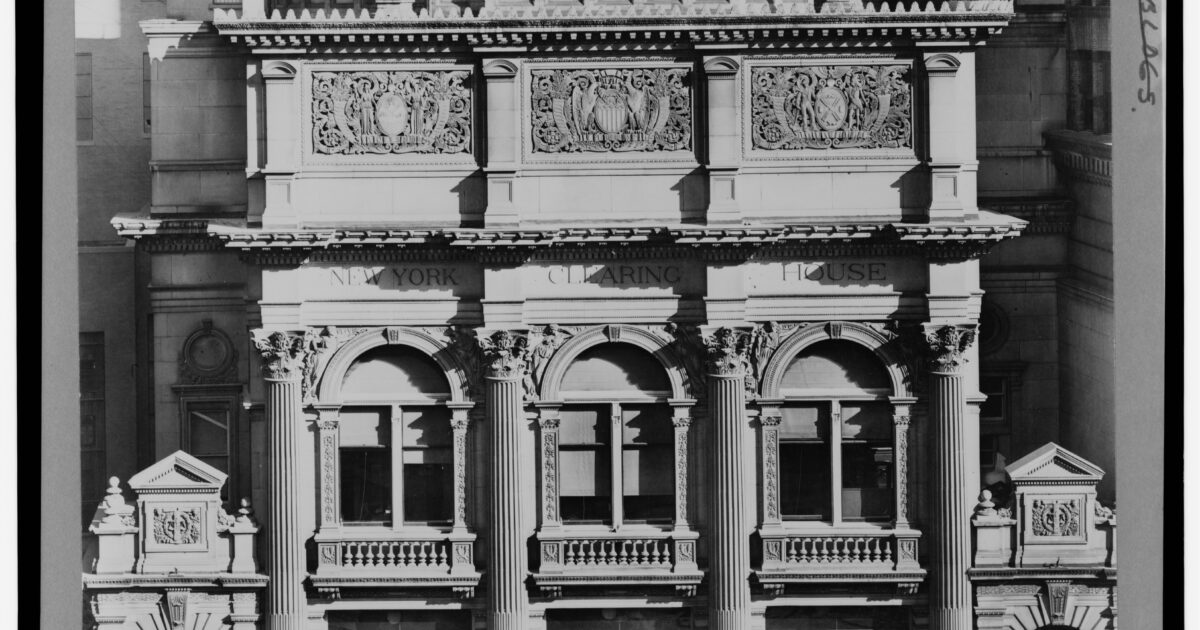
Before America had a central bank, Wall Street’s clearing house became a private emergency state.
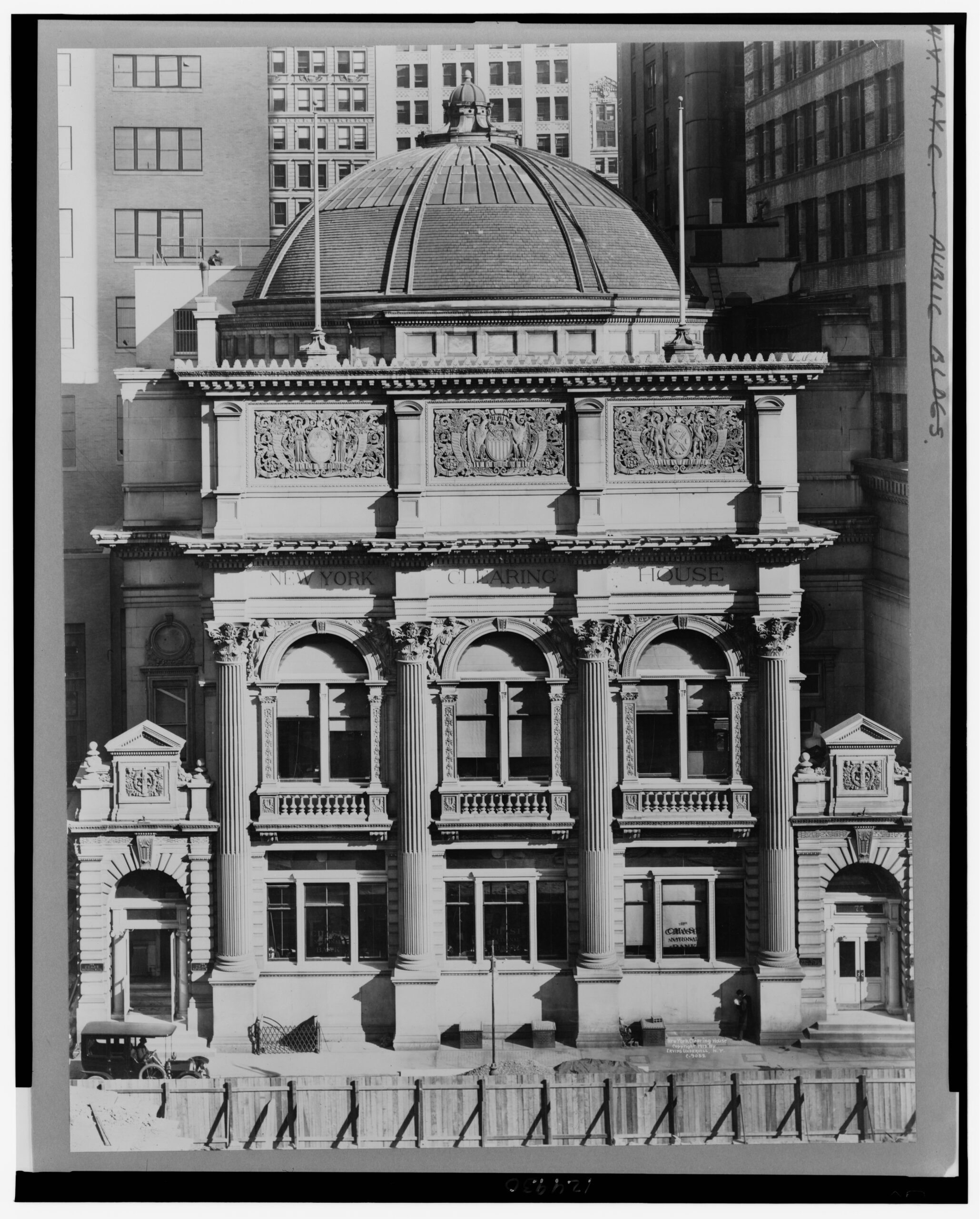
The New York Clearing House Association, founded in 1853, began as a technical institution. Its original purpose was simple: instead of bank messengers running across Manhattan carrying physical checks to dozens of rival banks, member banks would gather each morning, net their obligations, and settle the differences with a single transfer. The innovation saved time. It also created something more significant — a formal structure through which New York’s leading banks had to cooperate every day, whether they liked it or not.
That daily cooperation became the foundation for a more powerful arrangement. When financial panics struck, the Clearing House became the closest thing America had to a central bank.
The World Before the Fortune
In the mid-nineteenth century, American banking was radically decentralized. There was no Federal Reserve, no national deposit insurance, and — after Andrew Jackson killed the Second Bank of the United States in 1836 — no institution with the authority to act as a lender of last resort.
New York banks competed ferociously for deposits and business. But they also depended on one another in ways that were not always visible. When a large bank failed, its checks were already circulating through the system. Other banks held those checks as assets. A single failure could trigger cascading calls for settlement.
The panics of 1857, 1873, and 1893 each demonstrated the same structural weakness: without a mechanism to coordinate bank responses, individual self-preservation made collective outcomes worse. Every bank that hoarded reserves made the liquidity shortage more severe for everyone else.
The Rise
The Clearing House’s transformation from settlement utility to crisis manager happened through necessity.
During the Panic of 1857, member banks faced a wave of deposit withdrawals that threatened to exhaust their specie reserves. The Clearing House committee, which managed daily settlement, proposed a radical solution: member banks would pool their reserves and issue Clearing House loan certificates — a form of emergency paper that member banks could use to settle their interbank obligations instead of cash. The certificates were backed by the pooled collateral of the member banks. They circulated internally among Clearing House members.
The mechanism worked. By temporarily converting illiquid assets into circulating claims, the Clearing House created breathing room. Banks stopped competing to hoard reserves and started using the certificates to settle obligations. The panic subsided faster than it would have otherwise.
The same mechanism was deployed in 1873, 1884, 1890, 1893, and again in 1907. Each use refined the tool. Each crisis demonstrated that the Clearing House could do something no individual bank could do alone: certify collective solvency when individual solvency was in doubt.
The Expansion of Power
By the 1890s, the New York Clearing House operated as what economists would later call a private lender of last resort.
Membership in the Clearing House conferred both practical and reputational advantages. Member banks settled accounts through the institution. Non-members were excluded from the daily netting mechanism, which meant higher transaction costs and slower settlement. When panics struck, member banks had access to Clearing House certificates. Non-members did not.
This structure was explicitly anti-competitive in the best sense: it rewarded banks that accepted collective discipline with collective protection. Banks that participated in the daily clearing process, maintained adequate reserves, and submitted to Clearing House examination gained access to emergency liquidity in a crisis. The arrangement was a private cartel that also happened to stabilize the system.
The power dynamics mirrored what Hamilton had understood about public credit: the institution that certifies trust extracts value from every transaction that passes through it. The Clearing House did not need to lend at crisis terms to profit from its position. Membership access was itself the value.
The Hidden Strategy Behind the Fortune
The hidden strategy of the Clearing House was not secret. It was simply invisible because it operated in the background of normal finance.
The member banks of the Clearing House — the First National, the National City, the Chase, the Hanover — were not simply pooling risk. They were constructing a private governance layer that gave them collective control over which institutions could access emergency credit and which could not. Trust companies, which competed with banks for deposits but were not Clearing House members, discovered during the 1907 panic that the pool of emergency liquidity did not extend to them.
When financial systems concentrate both profit and governance in the same institutions, the governance decisions begin to serve institutional interests rather than system-wide stability. The Clearing House’s exclusion of trust companies was not irrational from the member banks’ perspective. But it meant that the private lender of last resort protected its members while allowing non-members to fail — deepening the panic rather than containing it.
The Cost, Risk, or Collapse
The 1907 panic revealed the Clearing House system’s limits.
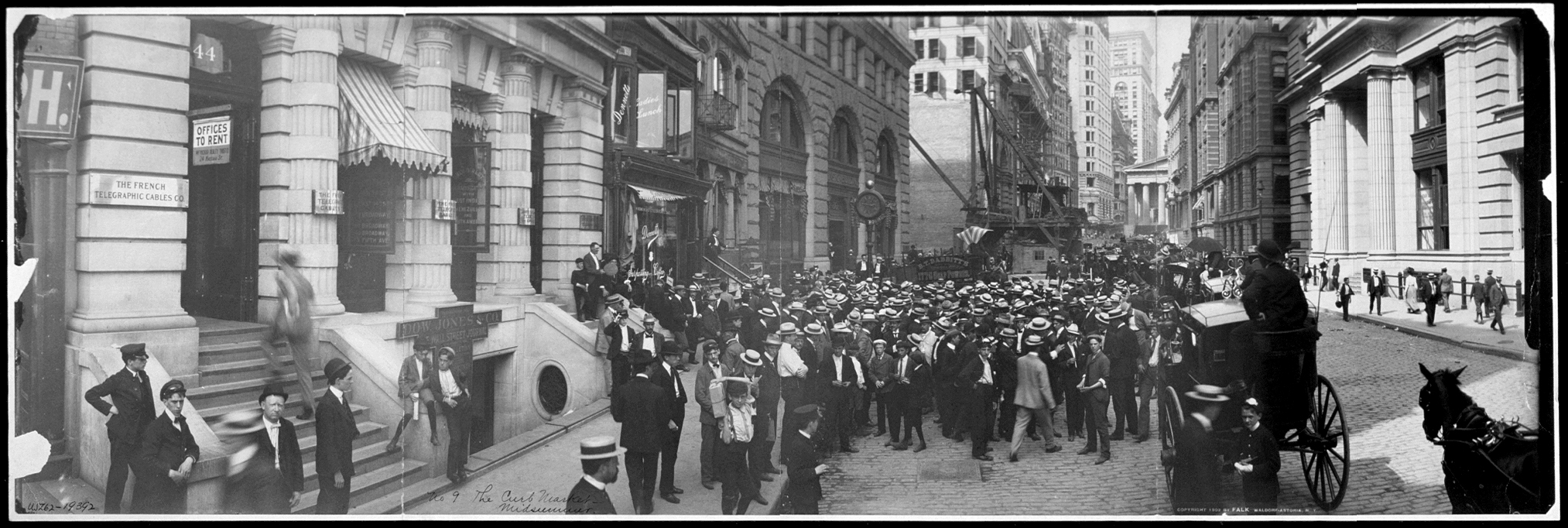
The Knickerbocker Trust Company, one of New York’s largest trust companies, faced a depositor run after its president was linked to a failed copper speculation. Because Knickerbocker was not a Clearing House member, it had no access to Clearing House certificates. The Clearing House committee declined to support it. Knickerbocker failed. Its failure spread panic to other trust companies. The contagion nearly closed the New York Stock Exchange.
J.P. Morgan stepped in where the Clearing House could not — coordinating emergency lending from his own resources and those of the major banks he controlled. His success revealed the irony: the private central bank function had to be exercised by one man because the institutional structure excluded the very institutions at the center of the panic.
Congress responded with the Aldrich-Vreeland Act of 1908, which authorized emergency currency issuance during panics, and then with the Federal Reserve Act of 1913, which created a public lender of last resort. The Clearing House had demonstrated both the possibility and the limits of private emergency governance.
Lessons for Modern Business Readers
Private coordination can substitute for public institutions — until it can’t. The Clearing House managed six panics over fifty years before meeting one it could not contain. The 1907 experience defined the boundary: private emergency governance fails when the crisis originates outside the club.
Membership architecture creates durable competitive advantage. Clearing House membership was worth more than any single loan or fee. It provided access to emergency liquidity, reputational certification, and competitive protection — all financed by the daily discipline of collective settlement.
Governance that concentrates in incumbent institutions becomes exclusionary. The Clearing House protected its members. It did not protect the system. The trust companies that failed in 1907 were not necessarily insolvent — they were excluded from access to liquidity because they had been excluded from membership.
The institution that manages the crisis defines who survives it. Clearing House certification during a panic was the difference between a solvent bank that survived and a solvent bank that failed in a run. Control over crisis management is control over competitive outcomes.
Reform follows failure, not foresight. The Federal Reserve was not created because regulators anticipated the 1907 crisis. It was created because the 1907 crisis revealed a failure mode that could not be patched within the existing private architecture.
How This Fits the Hidden Fortunes System
The Clearing House Cartel explains the institutional infrastructure that connected the financial crises Hidden Fortunes has already covered. Without understanding how New York banks governed emergencies through the Clearing House, the 1907 panic and the origins of the Federal Reserve are difficult to explain.
It adds the institutional layer beneath the individual crisis stories — the mechanism that determined which banks survived panics and which did not, and why private banking governance ultimately required public replacement.
Conclusion
The New York Clearing House Association was a private emergency state. It coordinated the most powerful banks in America, issued its own money during crises, and determined which institutions could access collective survival.
Its story is a case study in what happens when private institutions fill a public governance vacuum: they solve the immediate problem for their members, distribute the cost to outsiders, and eventually encounter a crisis large enough to reveal the limits of private coordination. The Federal Reserve did not replace the Clearing House because it failed. It replaced it because the Clearing House showed exactly how far private emergency governance could reach — and where it stopped.
Further Reading
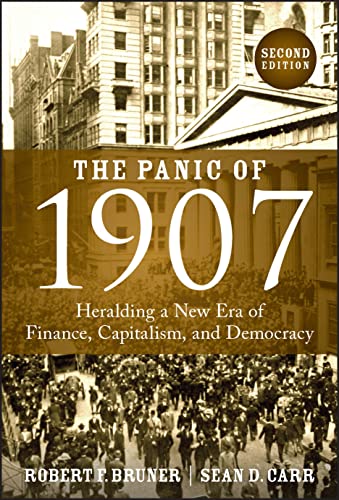
For readers who want to go deeper on the architecture of financial crisis management, the history of the New York Clearing House reveals the gap between private coordination and public responsibility that the Federal Reserve was designed to close. The Courage to Act by Ben Bernanke describes the modern version of the same dilemma — when a lender of last resort must decide which institutions to save and which to let fail.