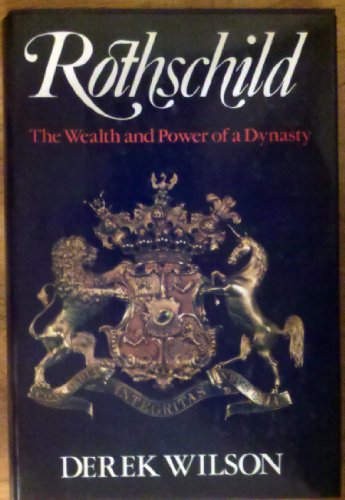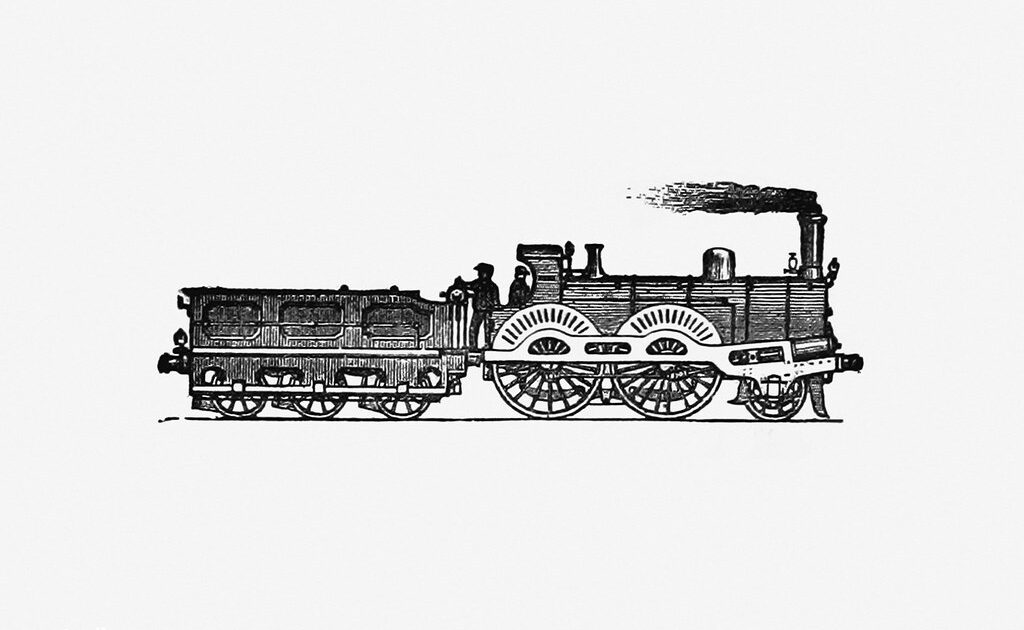
A banking dynasty becomes harder to dislodge when it stops funding only rulers and starts funding the routes an entire continent will move across. The Rothschilds understood this shift earlier than most of their contemporaries, and they executed it more systematically than any other banking house of the nineteenth century. By the time the European railway boom was at its peak in the 1840s and 1850s, the family had positioned itself at the intersection of sovereign credit, industrial capital, and physical infrastructure in a way that no purely commercial bank could have replicated.
The story of Rothschild railway finance is not primarily about trains. It is about how a banking dynasty that had built its dominant position on sovereign bond placement recognized that railways were the next layer of institutional infrastructure — the kind of physical system that reshapes trade flows, industrial geography, and political leverage for generations rather than years. Financing a government bond is a transactional relationship. Financing the rail network that a government’s economy will depend on for the next century is something else entirely.
The dynasty did not only finance governments. It learned how to finance the routes that would reorganize governments, trade, and industry around them. Understanding that shift — from sovereign finance to infrastructure finance — is the key to understanding how the Rothschild position remained durable through political upheavals, technological revolutions, and competitive challenges that destroyed lesser banking houses.

The World Before the Railways
The Rothschild family’s governance model had been built around a specific set of advantages: cross-border information networks, family loyalty enforced through marriage and internal governance, access to political elites across multiple European courts, and a track record of reliable sovereign bond placement that no competitor could easily replicate. These advantages were enormous in the early nineteenth century, when sovereign debt markets were the dominant form of large-scale capital mobilization and the ability to raise money reliably across international borders was a genuinely rare skill.
But the same industrial revolution that was creating demand for railway finance was also creating new competitors. Joint-stock banks, merchant banks, and investment partnerships were proliferating across Europe, attracted by the same capital flows the Rothschilds had previously dominated. The growth of organized stock exchanges in London, Paris, Frankfurt, and Vienna was democratizing access to investment capital in ways that reduced the information and relationship advantages that had made the Rothschilds unique.
The Rothschild information advantage — the courier systems, the cross-border family network, the privileged access to political intelligence — remained valuable, but it was becoming less exclusive. Telegraph networks, which railways would help build and maintain, were further eroding the speed advantage that had made the Rothschilds’ cross-border information network so powerful. To maintain their dominance, the family needed to move into new categories of capital intermediation rather than defending an increasingly contested position in sovereign markets alone.

The Railway Finance Machine
The Rothschilds’ entry into railway finance combined several existing advantages with a new understanding of what railway bonds required. Unlike sovereign bonds, which depended primarily on a government’s overall creditworthiness and political stability, railway bonds required specific analysis of route economics: projected traffic volumes, construction cost estimates, competitive threats from parallel routes, and the political sustainability of the concessions that gave railway companies their operating rights. This was more complex analysis than sovereign bond placement required — and the Rothschilds had the cross-border relationships to gather the necessary information more efficiently than competitors who were confined to single national markets.
The Austrian Northern Railway, financed by the Paris and Vienna houses of Rothschild from 1836 onward, was an early demonstration of the model. The concession for the route running from Vienna toward Bohemia was obtained through the family’s relationships with the Habsburg court; the bonds were placed through Rothschild’s cross-European distribution network; and the family’s participation in the financing gave it ongoing influence over route extensions, operating contracts, and subsequent capital raises. The railway was not simply a product the Rothschilds sold to investors. It was a relationship that kept producing commercial, political, and informational advantages long after the initial bond placement.
The French railway system provided an even larger opportunity. The Rothschild Paris house under James de Rothschild was deeply involved in the financing of the Chemin de Fer du Nord — the northern French railway that connected Paris to the Belgian border and eventually to London via the Channel ferries. The Chemin de Fer du Nord was one of the most commercially successful railways in Europe, and the Rothschild involvement in its financing, governance, and subsequent expansions gave the Paris house a sustained position in the most important infrastructure asset in France.

The Leverage of Industrial Geography
The gold network that the Rothschilds maintained across European financial centers was partly a product of their railway finance activities: the same cross-border relationships that made them effective railway bond distributors also made them the natural clearinghouse for the international gold flows that railway construction financing required. Capital raised in London needed to pay construction workers in France and Austria; equipment purchased in Britain needed to be invoiced to Belgian and German clients. The Rothschilds’ ability to handle these cross-currency flows efficiently was itself a product of their railway finance involvement, which in turn reinforced their gold and foreign exchange business.
The deeper leverage was geographical. The routes that received Rothschild financing were not chosen randomly. James de Rothschild’s involvement with the Chemin de Fer du Nord meant that the northern French railway network was organized around a financial relationship that gave the family ongoing influence over route decisions, tariff structures, and subsequent concession grants. A banker who finances a railway has influence for the duration of the financing. A banker who becomes embedded in the governance of a railway network has influence for decades.
This is what distinguishes infrastructure finance from transactional banking: the relationship does not end when the bond matures. The Rothschilds’ most successful railway investments created dependencies that kept the family central to ongoing capital decisions, operating financing, and route extension planning. Each new segment required new financing; each new financing reinforced the family’s position in the governance of the network; each governance position provided information that made subsequent investments more accurately priced. The compounding was institutional rather than merely financial.

The Hidden Strategy Behind the Strategy
The broader banking systems that powered European empires in the nineteenth century were built on a few recurring mechanisms: cross-border credit relationships, privileged access to political authority, and the ability to translate reputation in one market into advantage in another. The Rothschilds’ railway strategy was a sophisticated application of all three simultaneously.
The hidden strategy was not just financing railways. It was ensuring that the routes the Rothschilds financed were routes that reorganized commercial geography in ways that reinforced the family’s existing network of relationships. A railway connecting Vienna to the Bohemian coalfields was commercially valuable to Rothschild because the family had relationships in both Vienna and the industrial north that allowed it to benefit from the increased trade flows the railway created, not merely from the bond underwriting fee.
The same logic applied to the choice of which concessions to pursue and which to decline. James de Rothschild was famously willing to turn down railway investments that seemed commercially viable but that would have required the family to work with governments or promoters whose reliability he doubted. This selectivity was not merely conservative risk management. It was a deliberate strategy of maintaining the Rothschild brand as the mark of credible large-scale infrastructure finance — which meant that Rothschild involvement in a railway project served as an implicit quality signal that other investors and lenders could rely on when evaluating whether to participate.

The Costs and Limits of Infrastructure Finance

Railway finance also created exposures that pure sovereign lending did not. A government bond defaults or doesn’t default; the outcome is binary and the mechanism is well understood. A railway concession can be profitable, unprofitable, politically contentious, physically delayed, operationally mismanaged, or competitively threatened by parallel routes — and all of these outcomes are partly within the control of the government granting the concession and partly beyond anyone’s control. The Rothschilds lost money on some railway investments, accepted renegotiated terms on others, and spent decades managing political conflicts over routes, tariffs, and labor practices that sovereign bond portfolios never required.
The political exposure was particularly complex. Railway networks were politically sensitive in every European country during the nineteenth century — they affected regional economies, military logistics, labor markets, and national identity in ways that sovereign bond portfolios never did. A banking house that was deeply embedded in railway finance was inevitably drawn into political conflicts about route decisions, pricing, and labor practices that had nothing to do with the original underwriting relationship. The Rothschilds managed these exposures carefully, generally avoiding the most politically contentious railways in favor of commercially oriented routes where the economics were clearer and the political interference was more manageable.
The longer-term vulnerability was technological obsolescence — not of railways themselves, which remained central to European logistics for a century, but of the relationship between a specific banking house and a specific infrastructure technology. The Rothschilds’ railway advantage was partly a first-mover advantage in a new capital category. As the nineteenth century progressed and railway finance became more routine, the information and relationship advantages that had made Rothschild involvement so valuable in the 1830s and 1840s became less distinctive. The family adapted — moving into further infrastructure categories, maintaining their sovereign finance presence, and building out their gold and foreign exchange businesses — but the railway chapter illustrated both the power and the limits of infrastructure finance as a dynastic strategy.
Lessons for Modern Business Readers

1. Infrastructure finance creates relationships that compound beyond the transaction
The Rothschilds’ railway investments were not primarily valuable for the underwriting fees they generated. They were valuable because they created ongoing governance relationships, information advantages, and commercial positioning that kept the family central to subsequent investment decisions in the same networks. Modern infrastructure investors who seek to become embedded in the governance of the assets they finance rather than simply placing capital and waiting for returns are applying the same logic.
2. Route decisions are power decisions
Which railways got built, which routes they followed, and which cities they connected were not purely commercial or engineering decisions. They were decisions about industrial geography — about where factories would locate, where labor would move, where trade flows would be concentrated. A financier with influence over route decisions had influence over the economic geography of an entire region. Modern equivalents include undersea cable routes, data center locations, logistics hub placement, and the infrastructure decisions that determine where economic activity will concentrate for the next generation.
3. First-mover advantages in new capital categories are real but temporary
The Rothschilds’ initial advantage in railway finance came partly from being early enough that competitors had not yet developed the frameworks, relationships, and distribution capabilities to compete effectively. That advantage was real and valuable for roughly a decade. As railway finance became more routine, the advantage eroded. The lesson is not that first-mover advantages don’t exist — they do. It is that they require continuous reinvestment in new categories to remain durable, because the returns in any specific category compress as competitors catch up.
4. Quality signal is itself a competitive asset
Rothschild involvement in a railway project signaled to other investors that the project had passed a credibility threshold. That quality signal was worth money — it reduced the cost of distributing the bonds and increased the number of investors willing to participate. Any institution that can credibly position itself as a quality signal in a specific investment category earns a structural advantage that is hard to replicate through technical expertise alone.
5. Political exposure follows infrastructure investment
Railway finance brought the Rothschilds into political conflicts that sovereign lending had largely insulated them from. Infrastructure assets are politically sensitive in ways that financial instruments are not — they affect visible constituencies, can be expropriated, and attract regulatory attention that bond portfolios avoid. Modern infrastructure investors who seek the higher and more durable returns of physical asset ownership should expect, and plan for, political engagement that purely financial investment does not require.
6. Adapt the mechanism, not just the strategy
The Rothschilds’ railway strategy worked because it applied the family’s existing capabilities — cross-border relationships, political access, distribution networks, credit reputation — to a new category of capital intermediation. The underlying mechanism was the same; only the asset class changed. Modern firms that can apply established institutional capabilities to new investment categories — without losing the disciplined selectivity that makes those capabilities valuable — replicate the same pattern that made the Rothschild railway strategy successful.
Conclusion
The Rothschild railway strategy is one of the clearest examples in financial history of a banking dynasty successfully transitioning from one dominant capital category to another without losing the institutional position that made it powerful in the first place. The family moved from sovereign bond placement into infrastructure finance not by abandoning what it was good at but by applying those capabilities to a new category that offered larger scale, longer duration, and more embedded influence than sovereign lending could provide.
For modern readers, the practical lesson is not about railways. It is about the distinction between transactional finance and infrastructure finance — and why institutions that can move into infrastructure relationships tend to build more durable positions than those that remain in markets where every transaction is a fresh competition. The Rothschilds did not simply finance European railways. They financed the routes that reorganized Europe’s economic geography, and in doing so they built a position that outlasted the individual bond issues, the specific route decisions, and the particular political relationships through which the original investments were made.
That is the hidden strategy behind the railway strategy: the asset was not the bond. The asset was the relationship embedded in the infrastructure that would keep producing leverage long after the original financing was repaid.