Making a fortune is hard. Keeping one alive for centuries is harder.
That is where most dynasties fail. One generation builds. Another spends. A third fragments the estate. A fourth mistakes inheritance for strategy. Yet a small handful of wealthy families remain relevant across centuries because they understood a harsher truth: wealth does not survive through nostalgia. It survives through structure.
This is what gives old money its strange aura.
People often talk about dynastic wealth as if time itself were the achievement. But time does not preserve wealth. Time destroys it unless governance, adaptation, and institutional discipline keep forcing the fortune into new forms. The real miracle of old wealth is not that a family was rich once. It is that a family kept redesigning the vehicle while preserving control.
That is why the oldest wealthy families still rich today deserve more than social curiosity. They deserve strategic attention. They are long-term survival models disguised as aristocratic stories.
The World Before Dynastic Survival
Most family fortunes are born in one historical moment: trade, war, finance, land, oil, shipping, or industrialization. The trouble begins when the founding market changes. A dynasty that attaches itself too tightly to one asset class can become a museum.
The families that endure do something else. They preserve governance discipline while allowing the asset base to evolve.

That flexibility is rare because family wealth creates emotional traps. Founders often see the original business as sacred. Heirs often see inherited assets as identity. Public mythology can trap a dynasty inside the story people most enjoy telling about it.
In every case, survival depends on separating the fortune’s governing logic from its original costume.
The public tends to romanticize this process as tradition. In reality, it is often a harsh administrative discipline. Surviving families learn how to manage succession, tax exposure, public visibility, strategic reinvestment, and internal disagreement with almost corporate seriousness.
That corporate seriousness is usually hidden from public view because “old money” sells better as an aesthetic than as an operating system.
The Families
The Rothschilds
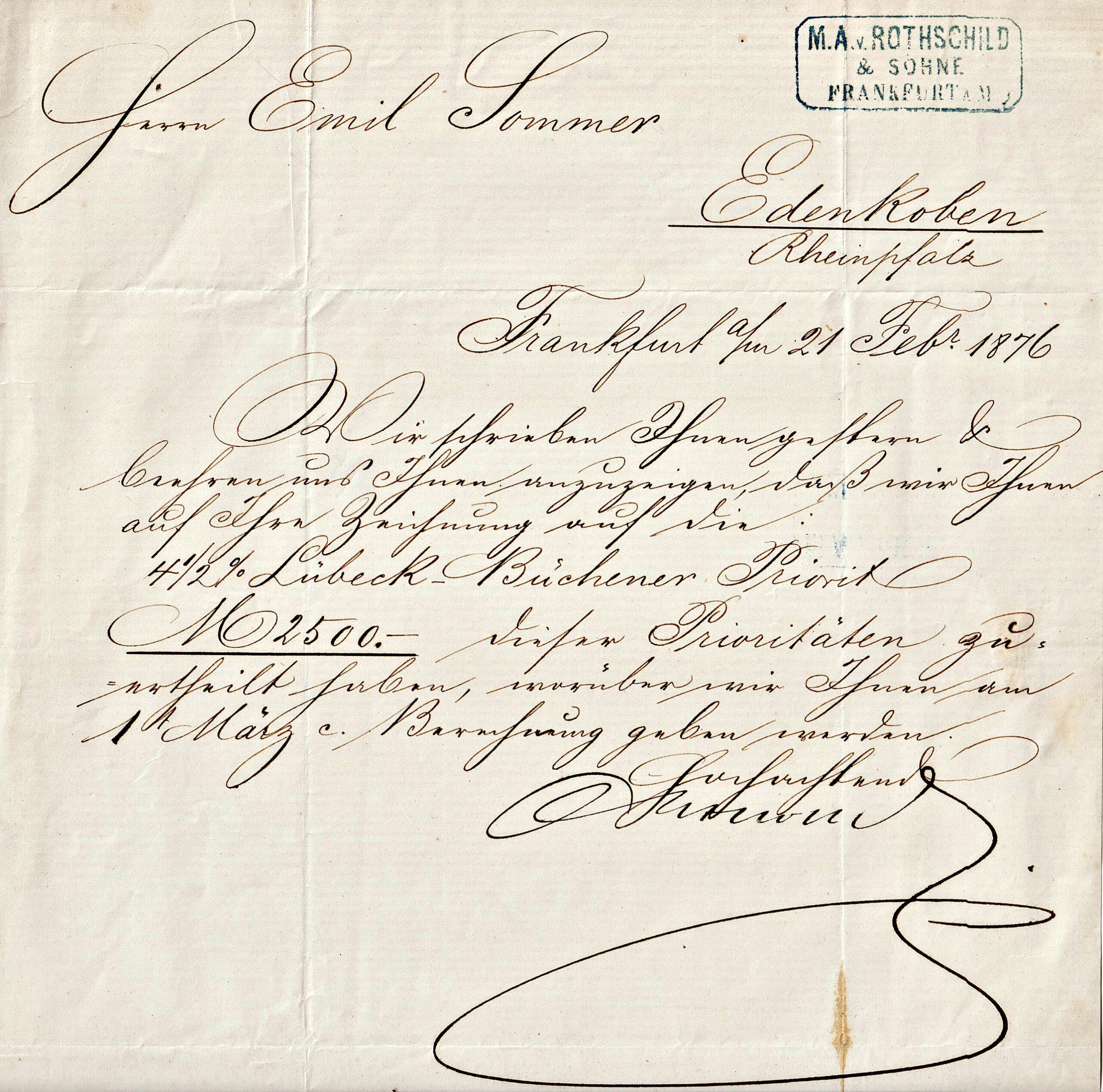
The Rothschild dynasty began in Frankfurt and spread through Europe’s financial capitals. Their early fortune was built in banking, sovereign lending, and wartime finance, but later generations diversified into mining, energy, real estate, and wine. The lesson is obvious: preserve the network, not just the original product.
The Rothschilds illustrate the purest network model. The founding advantage was not just money, but cross-border trust and coordination. Later branches survived not by repeating the 19th-century banking playbook, but by carrying the family’s strategic advantages into adjacent sectors.

The Wallenbergs
The Wallenberg family of Sweden built influence through banking and then through long-term industrial participation. Their modern structure, including family foundations and major positions in Swedish enterprise, shows how dynastic continuity can depend on institutions that outlast individual heirs.
The Wallenbergs demonstrate that old wealth becomes more durable when it is routed through structures that reduce personal chaos. Foundations, holding companies, and disciplined governance can preserve strategic continuity better than loose inheritance alone.
They also reveal a less theatrical model of old wealth. Not every surviving dynasty depends on palace-style spectacle. Some survive through patient institutional gravity, low-drama governance, and disciplined participation in national industry over generations.
The Barings
The Baring family illustrates both endurance and fragility. They built a major merchant-banking house that played a central role in British and transatlantic finance for generations. Their story is also a warning that even old houses can stumble catastrophically when risk outruns discipline.
Dynastic wealth is not self-healing. A famous name cannot compensate forever for bad risk management.
Other Dynastic Patterns
Families like the Sassoons or Agnellis can enter the wider conversation, though their timelines and present-day continuity vary. The point is less the exact roster than the survival logic.
When dynasties fail, they often fail gradually at first. Assets become easier to liquidate than govern. Branches of the family drift apart. Then one crisis, tax shock, or strategic mistake reveals that the fortune had already been weakening for years.
The Hidden Strategy Behind the Fortune
The hidden strategy of old wealth is governance.
These families survive not because every heir is brilliant. They survive because the structure prevents chaos. Family offices, foundations, boards, trusts, and tightly managed succession rules all do the same thing: they reduce the odds that one generation will destroy what another built.
That is what makes dynastic wealth different from mere inheritance. It is inherited capital plus inherited operating rules.

This distinction is easy to miss because public fascination with old money focuses on aesthetics: houses, names, marriages, schools, board seats. Those things are real, but they are not the core survival mechanism.
The core mechanism is rule preservation. Who can sell what? Who controls voting power? How are disputes resolved? How much liquidity can be distributed? These questions are where old fortunes live or die.
The families that last understand that wealth preservation is not passive. It is a governance craft. They build buffers against volatility, against heir incompetence, against ego, against fashion, and sometimes against politics itself.

That is why the oldest wealthy families often look less entrepreneurial at the surface than first-generation wealth creators. Their true business is not explosion. It is continuity.
And continuity, done well, is one of the hardest disciplines in finance.
The Cost, Risk, or Decay
Old wealth can become passive, arrogant, and strategically slow. Families that confuse prestige with competence often decay. Others become over-financialized and lose the practical edge that built the fortune in the first place.
There is also a cultural risk. Dynasties can start believing that pedigree is a substitute for adaptation. Once that happens, the family name may remain famous long after the strategic intelligence thins out.
Old wealth therefore faces a paradox. The very structures that preserve it can also make it cautious, insulated, and vulnerable to new eras if they become too rigid. The best dynasties solve this by protecting control while allowing enough flexibility for reinvention.
Lessons for Modern Business Readers
1. Preservation is a separate skill from creation
Building a fortune and defending one across generations are not the same game. The second often requires more humility and more structure than the first.
2. Governance matters more than glamour
Family myths, social prestige, and inherited taste do not preserve capital by themselves. Rules do.
3. Diversification works best when control principles stay clear
Changing assets is necessary. Losing the logic of control is fatal.
4. Reputation is a strategic asset across generations
A trusted family name can open doors in finance, politics, and partnerships long after the founding business model changes.
5. The dynasty survives by evolving the vehicle, not abandoning the rules
You do not preserve old wealth by freezing the portfolio in time. You preserve it by adapting the portfolio while keeping the governance spine intact.
6. Time itself is not the moat
The moat is disciplined renewal.
That may be the single sentence most worth remembering. Wealth survives centuries only when a family keeps renewing the machine that protects it.
The oldest wealthy families are therefore not monuments. They are maintenance systems. That is a colder description than most dynasties would prefer, but it is also the one most aligned with reality.
In that sense, the oldest wealthy families are best understood not as historical curiosities, but as governance machines that learned how to survive time itself.
Book Recommendation
For readers interested in how American and dynastic elite wealth behaves across generations, read The Rich and the Super-Rich by Ferdinand Lundberg on Amazon.