
The richest person in history may never fit neatly inside a spreadsheet.
How do you compare a medieval emperor who controlled rivers of gold to a Roman ruler who effectively owned the tax machinery of an empire? How do you compare a modern monopolist whose fortune sat inside shares to a king whose wealth was fused with land, tribute, and state power? The answer is that you cannot do it perfectly.
But you can do something more interesting.
You can ask what kind of machine produced each colossal fortune.
The World Before the Ranking

Modern readers are trained to think about wealth in billionaire terms: stock ownership, market capitalization, net worth estimates, and liquid assets. That works reasonably well in contemporary capitalism. It breaks down quickly once you move backward through time.
Historical fortunes often sat inside political systems, not personal portfolios. A ruler might command taxes, mines, labor, and land without owning them in a modern private-property sense. An emperor’s wealth might be inseparable from the state itself. A monopolist’s power might live inside a trust structure that is easier to price. A merchant prince might control credit flows that mattered more than his visible balance sheet.
So the phrase “richest people in history” comes with a warning label.
The ranking is approximate. The mechanisms are the real story.
That is the wager behind this article. If we stop pretending that one clean scoreboard can solve the question, we can learn something more useful than a number. We can learn what kinds of systems repeatedly generate wealth so large that later eras can barely imagine it.
The List

1. Mansa Musa

Mansa Musa, ruler of the Mali Empire in the 14th century, is widely considered the richest person in history. His wealth came from commanding one of the world’s great gold-producing regions at a time when gold itself shaped global power. His famous pilgrimage to Mecca in 1324 advertised not just personal luxury but sovereign abundance. The hidden strategy was resource control at imperial scale.
2. Augustus Caesar

Augustus is a reminder that state power can dwarf conventional private wealth. As the first Roman emperor, he controlled the tax system, political order, military force, and the revenues of a vast empire. His fortune cannot be understood as mere private ownership. It was system ownership by another name.
3. John D. Rockefeller

Rockefeller belongs on every serious list because Standard Oil turned industrial organization into a wealth machine. He built fortune through vertical integration, secret freight advantages, and monopoly control over refining and distribution. His hidden strategy was not oil alone. It was command over the structure of the oil business.
4. Andrew Carnegie

Carnegie made steel into an empire by building a highly integrated industrial machine. He rode technology, efficiency, and vertical integration to dominate a sector that sat at the heart of American expansion. His wealth came from industrial scale with ruthless cost discipline.
5. Nicholas II

The last tsar of Russia is often included because the Romanov monarchy controlled extraordinary land, resources, and state wealth. The difficulty is that much of this was sovereign rather than cleanly personal. That ambiguity makes him historically relevant and methodologically dangerous.
6. William the Conqueror

William’s wealth came from conquest-backed land control after 1066. In a feudal economy, land was not a side asset. It was the core operating system of power, income, and military obligation.
7. Jakob Fugger
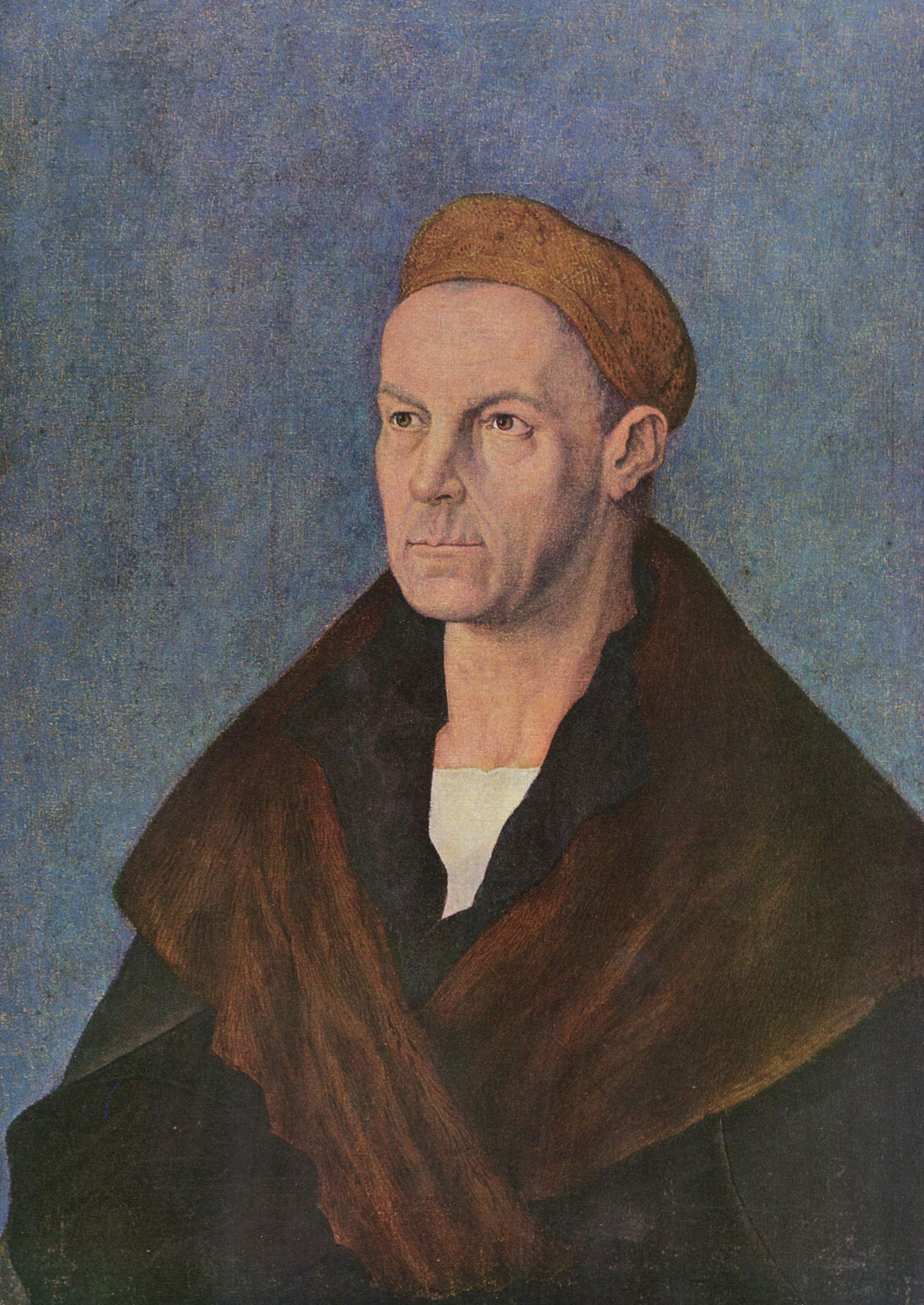
The German merchant-banker Jakob Fugger built one of Europe’s most formidable fortunes through mining, banking, and political lending. He financed rulers and profited from strategic metals. His advantage was being essential to sovereign finance.
8. Mir Osman Ali Khan
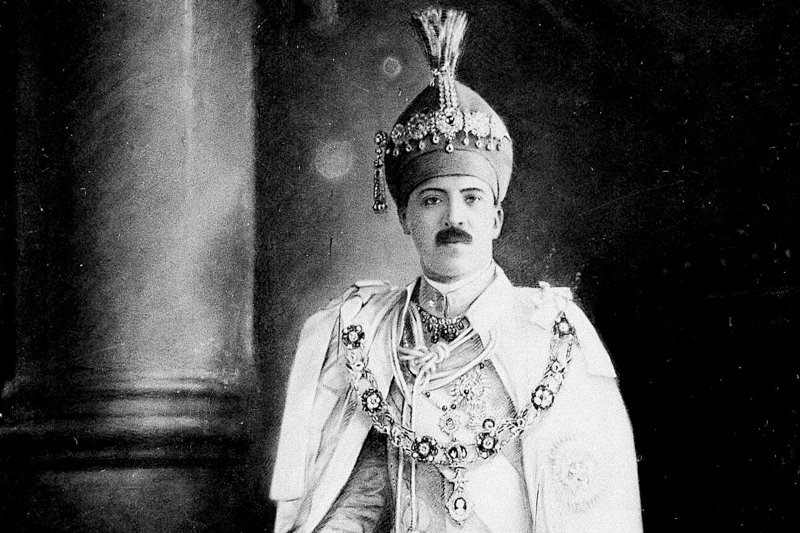
The Nizam of Hyderabad is often listed among the richest people of the 20th century because he controlled one of the world’s wealthiest princely states, with large revenues and remarkable treasure holdings. As with many rulers, exact comparisons remain imperfect.
9. Cornelius Vanderbilt

Vanderbilt represents the infrastructure route to giant private wealth. He moved from ferries to steamships to railroads and proved that controlling movement can create empire-level fortune.
10. Henry Ford

Ford belongs in the conversation because he mastered industrial scale and consumer manufacturing. His wealth came from standardization, production flow, and turning a machine business into a social system.
The exact final slot could be argued over. Another historian might elevate a different ruler, industrialist, or resource sovereign. That does not weaken the larger point. It strengthens it. The debate itself reveals how many different structures have produced giant wealth across time.
The Hidden Strategy Behind the Fortune

The hidden strategy behind almost every fortune on this list is system control.
Mansa Musa controlled gold production and imperial trade routes. Augustus controlled taxation and political order. Rockefeller controlled refining and distribution. Carnegie controlled industrial efficiency and scale. William the Conqueror controlled land allocation. Fugger controlled financing and strategic metals. Vanderbilt controlled routes. Ford controlled production systems.
The names change. The underlying pattern does not.
That is the real answer hidden beneath the ranking question. The people who become unimaginably wealthy are usually not the people who work harder inside an existing system. They are the people who sit at the point where the system itself can be directed, taxed, enclosed, or monopolized.
People become historically rich when they stop playing inside a market and start influencing the architecture of the market itself. Sometimes that architecture is legal. Sometimes it is territorial. Sometimes it is financial. Sometimes it is industrial. Often it is violent.
That is why listicle thinking is too shallow here. The point is not that one man had a larger pile than another. The point is that the largest fortunes in history usually come from one of five structural advantages:
- Control of land or tribute
- Control of strategic resources
- Control of monopoly distribution
- Control of industrial systems
- Control of sovereign finance
Once you see that, modern billionaire culture looks less mysterious. The vehicles have changed. The logic has not.
Shares replaced tribute in some cases. Corporate law replaced inherited crowns in others. Infrastructure, code, networks, and data may now play roles once occupied by land or bullion. But the deepest fortunes still gather around control points.
The Cost, Risk, or Distortion

The richest people in history often sat close to coercion.
That does not mean every fortune was identical or equally violent. But it does mean giant wealth has rarely been a clean moral tale. Empires extract. Monopolies suppress. Conquerors seize. Industrial systems often break workers before they enrich shareholders. Even admired philanthropists usually made their money in harsher conditions than later memory prefers.
There is also a measurement distortion. Historical wealth figures are frequently inflated or simplified in media retellings. That is especially true when trying to convert medieval or ancient resource control into modern dollars. A good article should admit uncertainty without losing narrative force.
That admission is not a weakness. It is intellectual hygiene. When the evidence cannot support fake precision, the disciplined writer shifts attention back to the strategic machinery that can be observed more honestly.
Lessons for Modern Business Readers

1. The largest fortunes come from control, not activity

Being productive matters. Controlling the system in which others must be productive matters more.
2. Scale usually rides on an underlying bottleneck

Gold, taxes, rail routes, oil refining, or industrial capacity: there is usually a choke point somewhere.
3. Political and economic power often reinforce each other

The divide between business and state has always been less clean than modern branding suggests.
4. Measurement can mislead

The exact ranking matters less than the strategic pattern. Precision can become fake certainty.
5. Every fortune has a governing logic

If you want to understand wealth, stop asking only how much. Ask what machine generated it.
That final question is more durable than any ranking. Numbers change by methodology. Machines reveal how power actually worked.
A final point is worth making because it ties the whole ranking together. Wealth at this scale is usually a moving command over a system: an empire’s tax base, a commodity chokepoint, a monopoly’s distribution logic, an industrial process no rival can match, or a financial network governments cannot ignore.
Whether the asset was gold, land, oil, steel, or imperial revenue, the decisive move was almost always the same: stop participating in the game at the retail level and move toward the layer where rules, routes, or extraction can be controlled. Once that happens, wealth stops looking like earnings and starts looking like architecture.
The ranking therefore works best as a diagnostic tool. It reveals that wealth at the farthest edge of history is rarely accidental, rarely simple, and almost never detached from the underlying rules of power. Whoever controls those rules, even briefly, enters the conversation.
That is the enduring pattern hidden behind the spectacle of the list.
Book Recommendation

For a wider framework on why some societies generate durable wealth while others do not, read The Wealth and Poverty of Nations by David S. Landes. It is the strongest Amazon follow-up for readers who want the structural context behind this ranking.