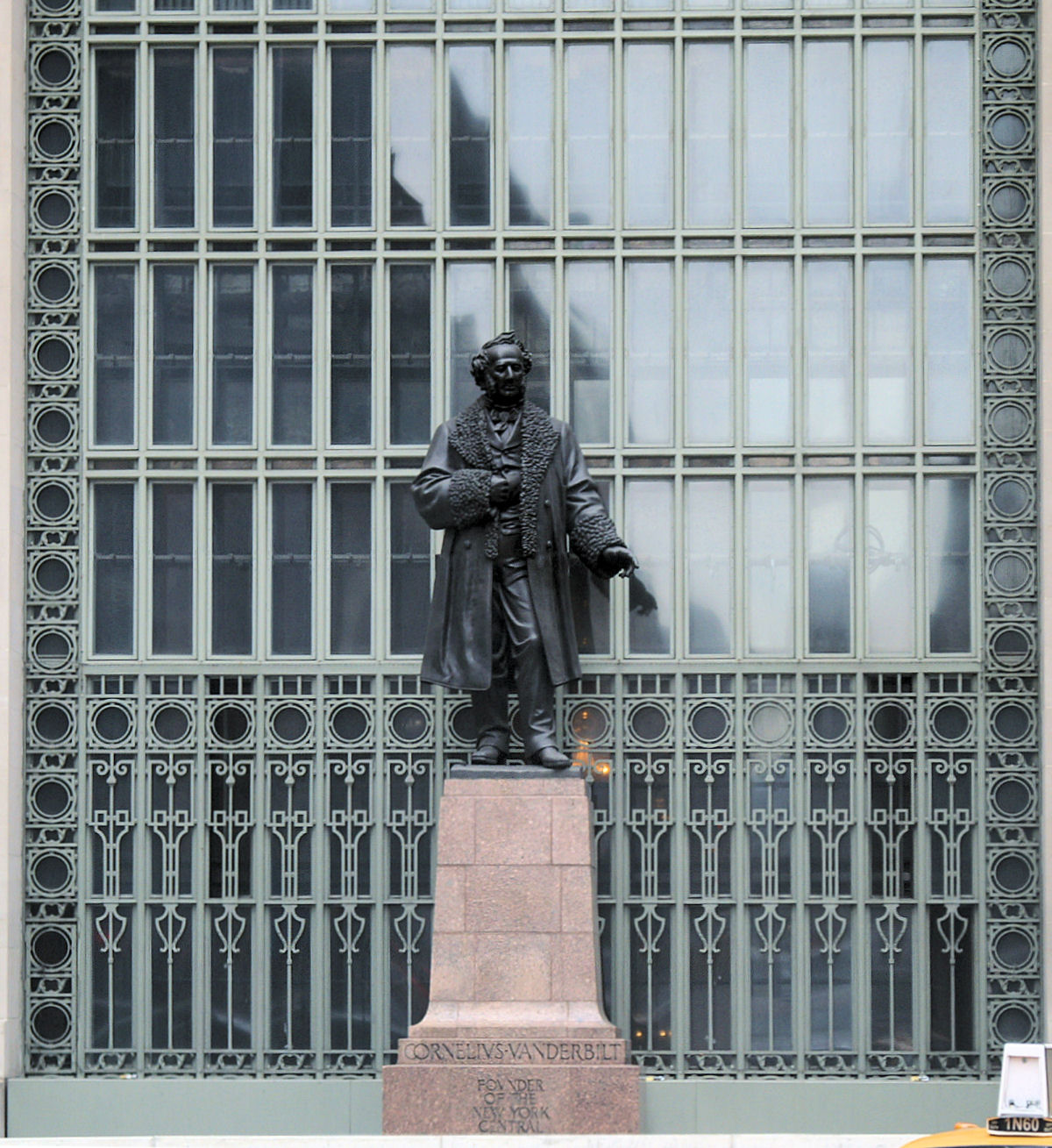
Before Cornelius Vanderbilt was a railroad titan, he was a man staring at water and seeing a machine.
New York Harbor in the early 19th century was not elegant. It was loud, wet, crowded, and full of opportunity. Ferries carried workers, goods, gossip, and urgency. Traffic moved not because the system was refined but because people had no choice. Somebody had to move them. Somebody had to move everything.
Vanderbilt understood that primitive fact early: if a growing nation depends on motion, then the man who controls motion will eventually control money.
The World Before the Fortune
The United States Vanderbilt was born into was not yet the industrial giant of later myth. It was a young republic with uneven roads, scattered markets, and an economy that still depended on local movement.
Cornelius Vanderbilt was born in 1794 on Staten Island to a poor farming and boatman family. There was no polished path into elite wealth waiting for him. His advantage was not pedigree. It was exposure. He grew up around waterfront labor, local trade, and the practical mechanics of getting from one shore to another.
That matters because Vanderbilt’s later empire can look inevitable in hindsight. It was not. What he saw, before many others did, was that transportation was not a side business. It was the spine of commerce. If population, trade, and industry expanded, the transport layer would become more valuable than almost anything riding on top of it.
He began at the smallest scale. In 1810 he bought his first boat with borrowed money from his parents. This was not a glamorous beginning. But it taught him the business in its rawest form: traffic, fares, demand, weather, and competition. During the War of 1812, he expanded his fleet by supplying government outposts around New York.
The future tycoon began not with abstract capital but with route economics.
That is the clue most summaries skip. Vanderbilt’s earliest success was small enough to look humble, but it trained his eye on the exact level where later fortunes would be made: traffic, demand, pricing power, and the value of controlling necessary movement.
The Rise
Vanderbilt’s first great lesson in scale came in steam.
After building his early ferry operations, he sold his boats and went to work for Thomas Gibbons in 1818. Under Gibbons, Vanderbilt learned the steamship trade in depth. He learned what mattered operationally and commercially: costs, speed, route selection, and the strategic importance of beating rivals not by appearing respectable but by making them unprofitable.
By 1829 he launched his own steamship company. From there, the Vanderbilt method became unmistakable.
He entered routes with real demand. He cut prices hard. He accepted short-term pain in order to force weaker operators into retreat. And once he gained leverage, he either dominated the route or extracted favorable settlements. In later memory, this behavior helped make him one of the “robber barons.” But the darker truth is more precise: Vanderbilt was learning how to weaponize efficiency.
He understood that lower prices were not always a concession. Sometimes they were a siege engine.
As the 1830s and 1840s advanced, Vanderbilt expanded his shipping reach and became famous for fare wars. Competitors who treated each trip as a profit center found themselves facing a rival who treated the route itself as the prize. That difference in thinking is the beginning of empire logic.
He was not merely selling transport. He was trying to own the corridor.
That distinction is what turned aggressive competition into lasting strategy. He did not want one profitable voyage. He wanted to make the route itself his territory.

The Expansion of Power
The truly great Vanderbilt move was not that he mastered ships.
It was that he understood when ships were no longer enough.
Many founders build fortunes in one system and then die defending it. Vanderbilt did something smarter. He recognized that railroads would do to long-distance commerce what steamships had done to local and regional movement: compress time, widen markets, and centralize advantage.
So he pivoted.
In the 1860s he moved aggressively into rail. This was not just diversification. It was an escalation into a more powerful version of the same business. Railroads offered scale, route permanence, and control over the arteries of industrial America. If the harbor had made Vanderbilt rich, the rail corridor could make him untouchable.
He acquired the Hudson River Railroad and the New York Central Railroad, then consolidated them in 1869. That merger mattered because it tied together the country’s financial capital with a crucial inland transport spine. When he added the Lake Shore and Michigan Southern line in 1873, the system could connect New York to Chicago more effectively than before.
That was no longer route dominance in the local sense. It was national infrastructure power.
And once he reached that scale, Vanderbilt’s business ceased to be merely entrepreneurial in the ordinary sense. It became a governing force within the economy’s movement layer, with all the leverage that implies.
Vanderbilt also ordered the construction of Grand Central Depot in New York during the Panic of 1873, a project that became both a transport landmark and a signal of how deeply his wealth was tied to movement at scale.
By the time of his death in 1877, Vanderbilt had amassed a personal fortune of more than $100 million. In modern terms, that places him among the most formidable business builders in American history. But the number matters less than the mechanism. He became rich because he kept graduating into the next layer of indispensable transport.
The Hidden Strategy Behind the Fortune
Cornelius Vanderbilt did not get rich by loving ships or railroads for their own sake. He got rich by understanding that infrastructure is where bargaining power hardens into empire.
That is the hidden strategy behind the fortune.
On the surface, Vanderbilt’s story looks like rugged individualism: a poor boy, a first boat, aggressive competition, a giant fortune. Beneath that familiar American myth is something colder and more strategic. He repeatedly targeted the routes that others had to use, treated low prices as a weapon of consolidation, and moved into the next dominant transport system before the full market had finished shifting.
That combination is what made him dangerous.
Most competitors tried to make money trip by trip. Vanderbilt tried to control the corridor. Most operators defended the business they already knew. Vanderbilt used one transport layer to finance the next one. Most businessmen thought in terms of local rivalry. Vanderbilt increasingly thought in systems.
That is why his transition into railroads was so important. It revealed that he was not a ship man. He was a bottleneck man.
He wanted the choke point.
If people had to travel, if freight had to move, if merchants had to connect cities, then whoever made that movement cheaper and more disciplined could eventually command extraordinary leverage. Once enough routes fell under one coordinated structure, the business stopped being just transportation. It became an economic gate.
Modern founders can recognize the pattern immediately. This is what happens when a company controls distribution, payments, logistics, cloud infrastructure, or operating systems. The user sees a service. The owner sees dependence.
Vanderbilt understood dependence.
That is the real bridge between the harbor and the railroad empire. He kept moving toward the layer where dependence was hardest to avoid.
The Cost, Risk, or Backlash
Fortunes built through infrastructure control tend to produce backlash, and Vanderbilt was no exception.
His methods were admired for efficiency and feared for their brutality. Fare wars devastated weaker rivals. Consolidation narrowed competition. Public memory later folded Vanderbilt into the darker mythology of the Gilded Age, where the line between market genius and monopolistic domination often looked thin.
There was also a moral cost. Vanderbilt was not a romantic builder of public welfare. He was a disciplined extractor of advantage. While later philanthropy attached the Vanderbilt name to universities and prestige, the core fortune itself was built through relentless commercial combat.
That tension is part of why the story still matters. Great business systems often produce benefits for markets while concentrating power in unsettling ways.
Lessons for Modern Business Readers
Vanderbilt’s life offers unusually sharp business lessons because his strategy was so stripped down.
1. Find the layer everyone depends on
The biggest opportunity may not be the product people talk about most. It may be the route, platform, or infrastructure underneath it.
2. Competition is different when the real prize is control
Vanderbilt’s price cuts were often strategic, not emotional. He was willing to hurt short-term margins to secure long-term dominance.
3. Move into the next system before the old one peaks
His greatest decision was not winning steamship routes. It was recognizing that railroads would be the larger prize.
4. Scale turns isolated wins into structural power
One profitable route makes money. A connected transport system changes bargaining leverage across an economy.
5. Ruthlessness without timing is useless
Vanderbilt’s aggression mattered because it was paired with strong judgment about where demand would go next.
6. Infrastructure fortunes feel boring until they become unbeatable
Transportation did not look glamorous in its raw form. But it sat under everything. The same is true in every era.
The founders who understand that usually look less fashionable at first and far more powerful later.
Vanderbilt looked like a transporter. In strategic terms, he was really a gatekeeper in training.
That final point sharpens the Vanderbilt lesson. He did not chase movement because it was exciting. He chased it because movement sat underneath commerce itself. Once he understood that, every route became a potential strategic fortress. His fortune grew not from motion alone, but from recognizing that whoever organizes movement at scale eventually acquires power over everyone still traveling through the system.
That is what made the fortune so durable: route control kept expanding into system control.
Book Recommendation
For readers who want the richest modern biography of Vanderbilt, the clear choice is The First Tycoon by T.J. Stiles. It is the best Amazon follow-up if you want the full story behind the man, the routes, and the discipline that made the fortune.