Some monopolies are built around resources. Others are built around habits trained until they become national demand.
James Buchanan Duke did not invent the cigarette. He invented the machine that made the cigarette a mass-market product, and then built the distribution system that made it unavoidable. Rockefeller’s trust system had shown how industrial-scale organization could convert fragmented production into monopoly control. Duke applied the same logic to a product whose peculiar quality — nicotine addiction — made repeat purchase not just likely but physiologically assured.
Standard Oil used railroad rebates to squeeze rivals out of distribution networks. American Tobacco used a different set of tools: machine production that cut costs below what hand-rollers could match, marketing budgets that built brand recognition before rivals understood what brand recognition was worth, and acquisition strategies that absorbed competitors rather than pricing them out. The mechanisms were different. The destination was the same: control over an industry organized so that rival participation became economically irrational.
De Beers had shown how controlling a commodity’s supply could be converted into pricing power. American Tobacco showed that control of production and distribution could achieve similar outcomes even for a commodity that grew in the fields of Virginia and North Carolina and had no inherent supply constraint — if you controlled the machines and the retail relationships.
The World Before the Fortune

Industrial America rewarded firms that could mass-produce, standardize, and distribute products nationally. The winner was often not the company with the best item in isolation, but the company that built the strongest system around repeat demand.
In the early 1880s, the American tobacco industry was fragmented and regional. Loose-leaf tobacco, chewing tobacco, pipe tobacco, cigars, and cigarettes all competed for consumer spending. Cigarettes were a minor category — hand-rolled, expensive relative to other tobacco products, and associated with imported Turkish and Egyptian blends rather than with the Virginia and North Carolina bright leaf that American growers produced.
The technology that changed this was the Bonsack cigarette machine, invented in 1880 and capable of producing 120,000 cigarettes per day — more than forty times the output of a skilled hand-roller. Duke licensed the Bonsack machine in 1884 and rapidly converted his Durham, North Carolina manufacturing operations to machine production. The cost economics were transformative: machine-rolled cigarettes could be produced at a fraction of the hand-rolled cost, creating room for the price cuts and marketing expenditure that would drive market expansion.
The environment favored anyone who could organize machine production, distribution control, brand conditioning, and repeated consumer dependence more effectively than rivals. Duke saw that the machine was not simply a cost advantage — it was the beginning of a system that could convert a fragmented industry into a national monopoly if the distribution and marketing layers were built on top of the production advantage.
The Rise

Duke’s edge came from more than mechanized efficiency. He learned how to align production, promotion, price pressure, and distribution so that rivals faced a market already being organized against them.
Duke’s first move after converting to Bonsack machine production was to cut prices aggressively — below what hand-rolling competitors could profitably match. This was not a long-term loss-leader strategy. It was a deliberate market-expansion move: cheaper cigarettes reached a broader consumer base, and nicotine addiction converted those consumers into reliable repeat purchasers regardless of price increases that could come later.
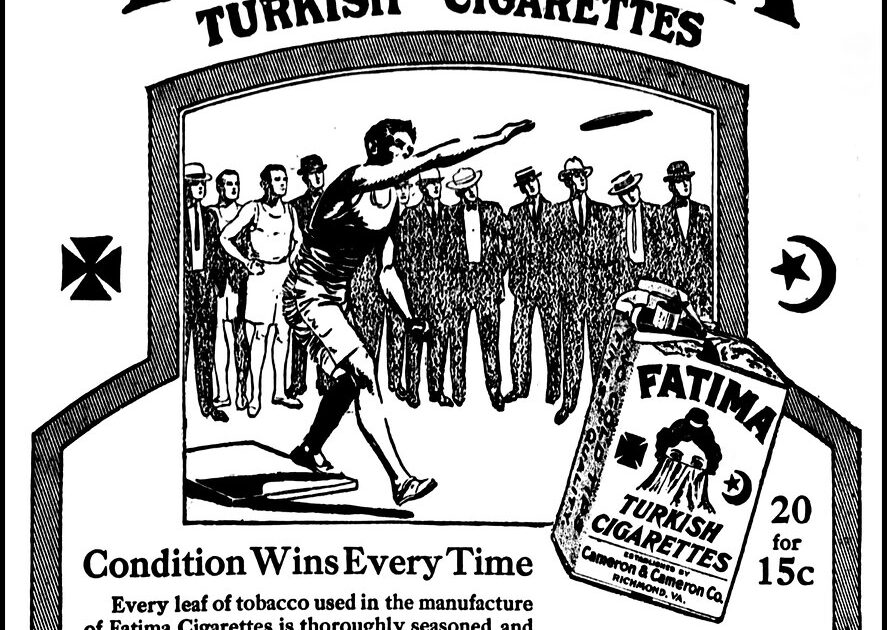
Simultaneously, Duke invested heavily in marketing in ways that were unusual for the era. He hired teams of agents to distribute promotional materials, offer free cigarettes at public events, and negotiate distribution arrangements with retailers. He pioneered the use of trading cards included in cigarette packages — collectible cards featuring athletes, actresses, and political figures that created a reason to purchase beyond the product itself. These techniques built brand recognition and consumer loyalty at a speed that rivals with smaller marketing budgets could not match.
By 1889, Duke controlled roughly 40% of American cigarette production. He then moved to consolidation: in 1890, he organized the merger of the five largest American cigarette manufacturers — including his own — into the American Tobacco Company, with a combined market share of approximately 90% of American cigarette production.
The Expansion of Power

That is why American Tobacco fits so naturally into Hidden Fortunes. It reveals a monopoly that did not depend on a single rare commodity alone, but on controlling how demand was manufactured, distributed, and defended.
Having established dominance in cigarettes, American Tobacco moved into adjacent tobacco product categories. Duke organized acquisitions of plug tobacco manufacturers, snuff producers, and eventually cigar companies. By 1904, the American Tobacco Company controlled approximately 80% of all American tobacco product sales outside of cigars — and Duke was working on cigars.
The expansion strategy used a consistent playbook: identify the dominant producers in a segment, offer to buy them, and if they refused, use the company’s financial resources and distribution advantages to price them into submission before making a lower acquisition offer. The company’s control over distribution relationships — particularly its arrangements with major retail chains and wholesalers — gave it leverage that smaller competitors could not effectively counter.
DuPont’s powder monopoly had shown how control of a critical industrial input could be maintained across generations. American Tobacco’s monopoly had a different character — it was built on consumer product demand rather than industrial necessity — but the organizational logic of using financial scale and distribution control to eliminate competitive alternatives was structurally similar.
The Hidden Strategy Behind the Fortune

The hidden strategy behind the fortune was industrializing addiction, advertising, and distribution until a consumer product became a nationally organized monopoly machine.
What made American Tobacco’s position unusually durable was the combination of production efficiency, distribution control, and the physiological mechanism of nicotine addiction. A consumer product that generates repeat purchase because of physical dependence is fundamentally different from one that generates repeat purchase because of quality or habit alone. The addiction component meant that once Duke’s brands had achieved market penetration, the consumer base was self-reinforcing in ways that required no additional marketing spend to maintain.
Duke understood this mechanism without necessarily articulating it in those terms. His pricing strategy after achieving market dominance was not to maximize short-term margins but to expand the consumer base by keeping cigarettes affordable — creating more addicted consumers whose lifetime value as customers was substantial even at low per-unit margins. The strategy was to maximize the scale of the consumer base rather than the per-unit margin, because the addiction mechanism would deliver lifetime value regardless of the entry price.
The lasting lesson is about how machine production, distribution control, brand conditioning, and repeated consumer dependence became a lever strong enough to outlive one cycle, one product, or one charismatic figure. American Tobacco’s position survived Duke personally — the company’s structural advantages were organizational, not individual.
The Cost, Risk, or Collapse
The ethical cost is impossible to ignore. A machine built around addiction, labor, and national distribution can be strategically brilliant while still carrying deep human consequences, public-health damage, and political influence that far outlast short-term commercial victories.
The Supreme Court dissolved American Tobacco in 1911 under the Sherman Antitrust Act — the same decision that broke up Standard Oil. Duke’s response was characteristic: he had already diversified substantially into hydroelectric power development and real estate, and the tobacco business was reorganized into several successor companies — American Tobacco, Liggett & Myers, Lorillard, and R.J. Reynolds — that continued to dominate the industry under a more competitive structure.
The deeper cost was public health. American Tobacco built the consumer base and distribution infrastructure for cigarettes in America at a moment when the health consequences of tobacco were not yet understood — but the industry’s subsequent behavior when those consequences were documented is part of the same story of institutional power. An industry that had built systemic consumer dependence used that same institutional power to suppress and delay public understanding of the product’s health effects for decades.
The tobacco industry’s twentieth-century public-health record demonstrates what institutional durability enables when the product at the center of the system is harmful: the organizational capacity to fight regulation, fund research designed to confuse rather than clarify, and maintain political influence sufficient to delay accountability for far longer than less entrenched industries could have managed.
Lessons for Modern Business Readers

1. Machine production enables market-making, not just cost reduction
Duke did not use the Bonsack machine merely to cut costs — he used cost reduction to fund price cuts and marketing investments that expanded the market and drove competitors to uneconomic pricing positions. The strategic move was to treat production efficiency as a platform for market-making rather than simply a margin improvement.
2. Addiction is the extreme version of a general business principle
Repeat purchase is the goal of every consumer business. Addiction is the physiological extreme of that goal — it guarantees repeat purchase regardless of product quality or competitive alternatives. The broader lesson is about building products and services that create strong behavioral or structural switching costs, even without the extreme mechanism of physical dependence.
3. Distribution control compounds production advantage
American Tobacco’s production advantage would not have been sufficient alone. The distribution arrangements Duke negotiated with retailers — preferred shelf placement, volume discounts, bundled arrangements — added a layer of market access advantage that smaller competitors could not replicate even if they achieved similar production costs.
4. Consolidation as strategy requires sequential execution
Duke did not attempt to acquire the entire industry simultaneously. He achieved dominance in cigarettes first, then expanded into plug tobacco, then into snuff and other categories. Each acquisition used the financial strength built from the previous market position. This sequential logic allowed him to use retained earnings and debt capacity built from one position to fund acquisition of the next.
5. Antitrust dissolution is not the end of the story
The 1911 dissolution of American Tobacco created successor companies that continued to dominate the tobacco industry for most of the twentieth century. This is a common pattern: antitrust remedies that focus on structural dissolution without addressing the underlying market dynamics that enabled monopoly tend to create oligopolies with similar characteristics. The market conditions that allowed Duke to build the trust remained after the trust was dissolved.
Conclusion
Seen clearly, this is not just a story about the American Tobacco monopoly machine. It is a story about how production efficiency, distribution control, and consumer conditioning can be combined into a system that converts a competitive market into a structure where rival participation becomes economically irrational — and how that system can outlast the antitrust actions designed to dismantle it.
That is why the article belongs inside the Hidden Fortunes ecosystem. It deepens the Industrial Empires / Monopoly Structures cluster with a precise account of how machine production, marketing, and distribution control created durable monopoly power — and creates clean bridges to the Rockefeller trust system, Standard Oil’s rebate mechanism, and De Beers’s stockpile strategy as parallel cases of monopoly construction.
Book Recommendation
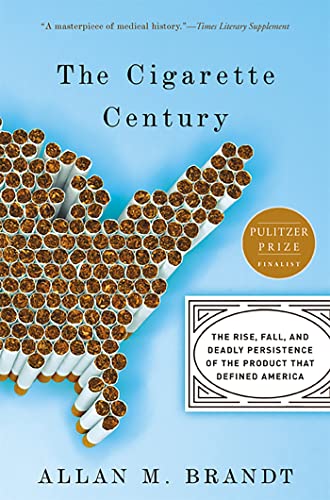
For readers who want the strongest next step, start with The Cigarette Century by Allan M. Brandt. It is the definitive history of American Tobacco and the cigarette industry — covering the rise of Duke’s machine, the public-health consequences that followed, and the political and legal battles through which the industry defended its position for a century after the antitrust dissolution.