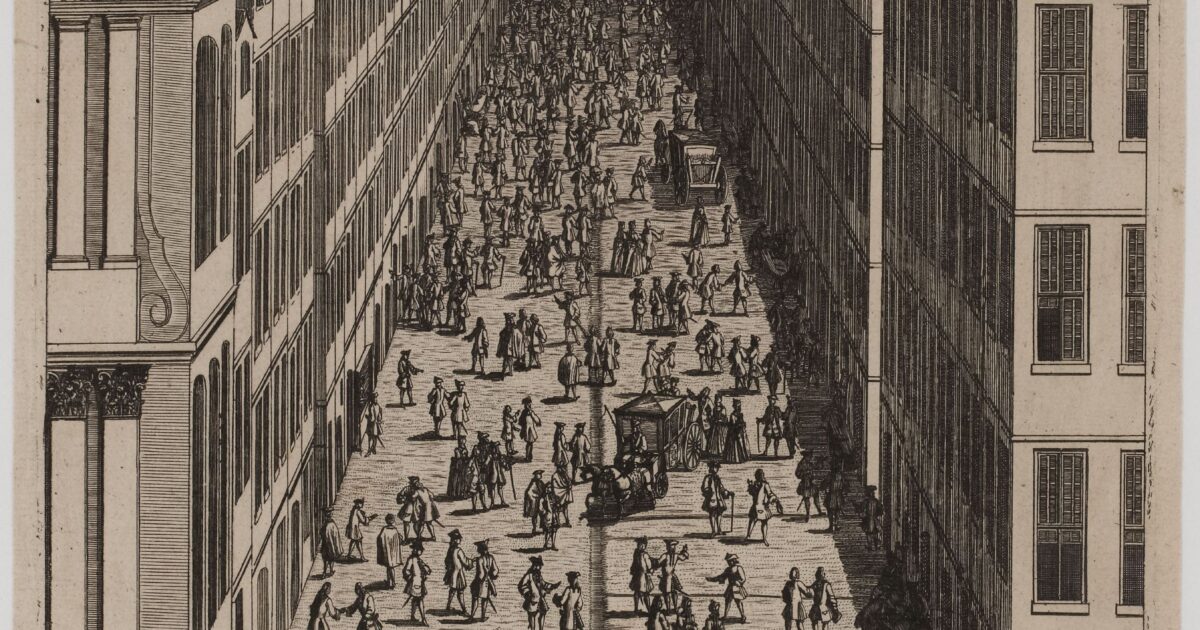
Every financial bubble needs capital. The great ones also need a script.
At first glance, the Mississippi Bubble is often treated as just another early-eighteenth-century speculation craze. But Hidden Fortunes exists for the layer beneath first glance. The real question is how public belief, state legitimacy, and persuasive narrative around finance became the mechanism that made power durable.
That is why this article matters now. It is not only about John Law’s bubble-selling machine. It is about how fortunes become harder to challenge once a player learns to control the structure other players still need.
The World Before the Fortune
Early modern finance depended heavily on trust in systems that were still being invented. Monetary experimentation, state debt, colonial dreams, and elite influence created an environment where narrative could change valuation faster than audited reality could restrain it.
In that setting, power rarely belonged to the loudest figure alone. It belonged to the operator who best understood how money, access, timing, and institutions could be arranged into a repeatable system. That is the deeper context for understanding the Mississippi Bubble’s media machine and how John Law turned an entire financial ecosystem into a story worth believing.
For Hidden Fortunes readers, this background matters because the article does not stand alone. It strengthens the Financial Crises branch of the publication and helps show why this topic belongs inside a broader map of power, wealth, and strategic control.
The Rise
John Law understood that paper value needed imagination behind it. The Mississippi project did not succeed at first because the underlying economics became transparent. It succeeded because enough people could be persuaded to see future wealth where present cash flows were still uncertain.
The rise worked because the bubble fused state sponsorship with a narrative of abundance convincing enough to outrun ordinary caution. The visible moves mattered, but the deeper advantage came from the ability to shape terms before rivals fully understood which terms mattered most.
That is how a story that might otherwise look like biography or policy becomes a systems article. Once the mechanism starts working, every later gain becomes easier to explain, because the system begins rewarding the same strategic behavior again and again.
The Expansion of Power
As belief spread, the promotional system became part of the financial system. Public excitement, elite participation, and perceived official backing turned the trade into something that felt not only profitable, but sanctioned.
This is the point where wealth becomes architecture. Instead of depending on one transaction, one campaign, or one lucky moment, Law began turning public belief, state legitimacy, and persuasive narrative around finance into an engine that could keep producing leverage.
The strongest fortunes are rarely built by winning one dramatic battle. They are built by making everybody else operate inside a structure designed on your terms. Once that stage is reached, the fortune begins to feel larger than the founder, larger than the original institution, and sometimes larger than the stated purpose itself.
The Hidden Strategy Behind the Fortune
The hidden strategy behind the fortune was using narrative, state backing, and financial imagination to convert public belief into speculative momentum. What actually created staying power was the ability to control public belief, state legitimacy, and persuasive narrative around finance with enough precision that rivals, partners, regulators, or subjects could not easily escape it.
In Hidden Fortunes terms, this is where the article stops being a narrative and becomes a framework. The visible subject is John Law’s bubble-selling machine. The durable business lesson is that power compounds fastest when it sits beneath the headline rather than inside the headline.

The Cost, Risk, or Collapse
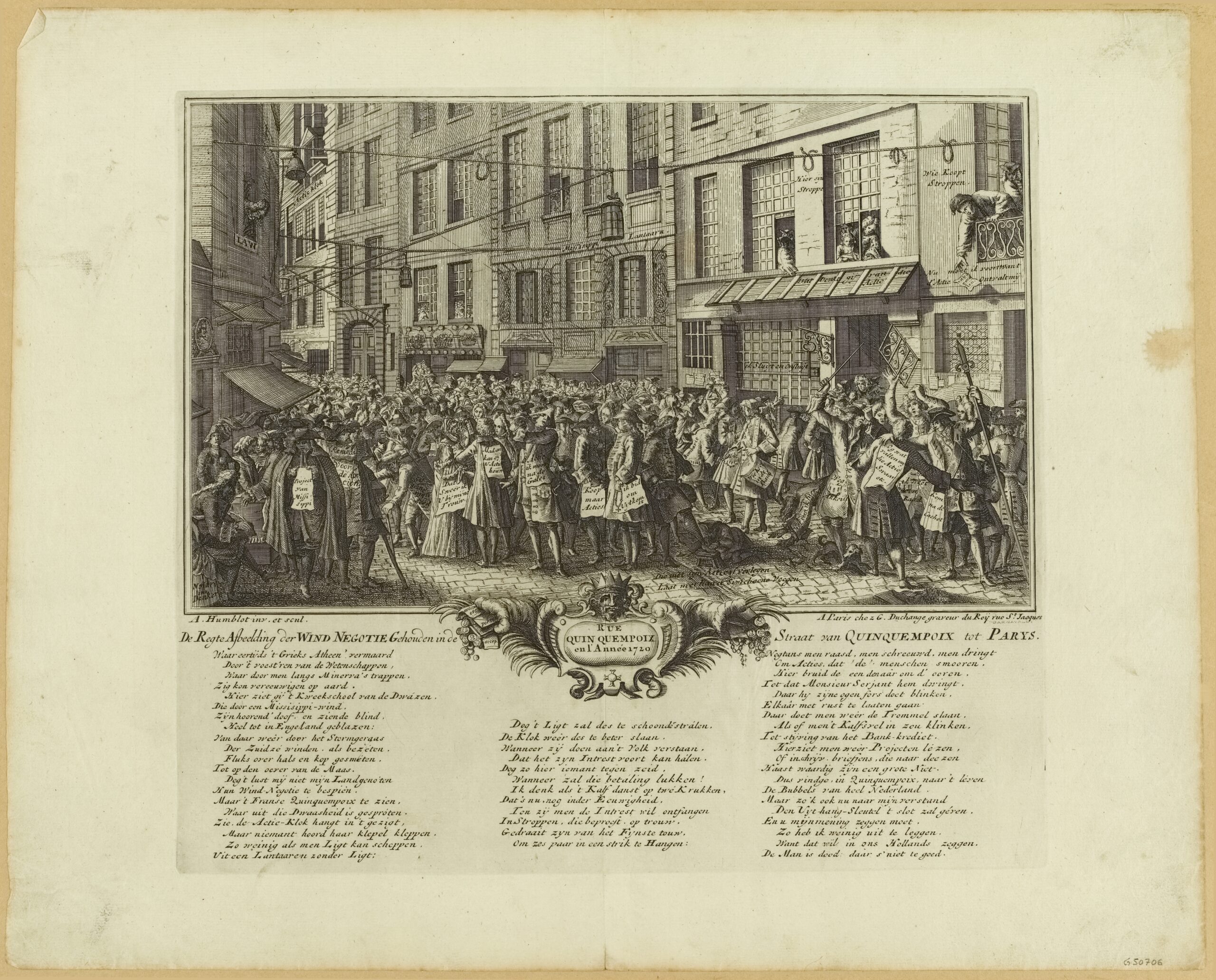
The collapse of John Law’s system came with brutal speed once confidence cracked. By late 1720, the Banque Royale had printed so much paper money to support rising share prices that inflation had become uncontainable. When panic spread through the Rue Quincampoix, the bank run was unstoppable. Thousands of investors — many of them ordinary people who had converted real property and gold into Company shares — were wiped out almost overnight.
Law himself fled France in October 1720, leaving behind a country in financial shock. The damage extended well beyond individual losses. The collapse poisoned French attitudes toward paper money and central banking for generations. While Britain’s South Sea Bubble left painful scars, England eventually rebuilt confidence in financial institutions. France drew the opposite lesson: that paper currency and speculative finance were inherently untrustworthy. That mistrust delayed the development of French banking infrastructure for decades, with real consequences for French economic power relative to Britain.
The deeper structural cost was ideological. A system built on narrative could only survive as long as the narrative held. When it broke, it did not merely fail — it discredited the entire framework it had constructed. John Law had built a machine for generating belief. When belief evaporated, so did everything the machine had assembled.
Lessons for Modern Business Readers
1. Control the layer beneath the headline
The subject of this article became stronger once public belief, state legitimacy, and persuasive narrative around finance mattered more than the visible surface story. The asset was never the land — it was the story told about the land.
2. Dependency compounds faster than attention
The strongest systems do not merely attract notice. They make other players depend on terms they did not set. Law’s genius was making the French state and aristocracy both complicit in and dependent on his paper money system before they understood its fragility.
3. Structure can outlast charisma
Fortunes become durable when they are embedded in a repeatable system rather than in one dramatic moment or personality. Law’s failure was building a structure that required his personal credibility to function — once that cracked, the architecture collapsed with it.
4. Financing, logistics, and governance are strategic assets
The businesses and empires that look most impressive in public often rest on quieter forms of coordination underneath. Law’s most powerful move was merging the national bank with the trading company — making monetary policy and speculative finance inseparable.
5. Reader trust comes from mechanism, not hype
The Mississippi Bubble endures as a case study not because of the drama, but because the mechanism was so clearly visible in hindsight. Understanding how a system functioned — not just that it failed — is what turns a dramatic anecdote into usable knowledge.
6. Ecosystems beat isolated victories
The same logic that made the Mississippi Company powerful — fusing multiple systems into one interdependent structure — is what made its collapse catastrophic. Integrated ecosystems are both the strongest and the most brittle form of power.
For readers who want to go deeper, the Tulip Mania article explores how the first speculative bubble created its own mechanics of belief, and the Baring Crisis shows how a century later, a single overleveraged bank nearly brought down the global financial system. The pattern that connects them — narrative, leverage, and the moment confidence breaks — is what Hidden Fortunes is built to map. For the modern version of that collapse, Lehman’s Repo 105 Machine shows how the same dynamics played out on Wall Street in 2008.
