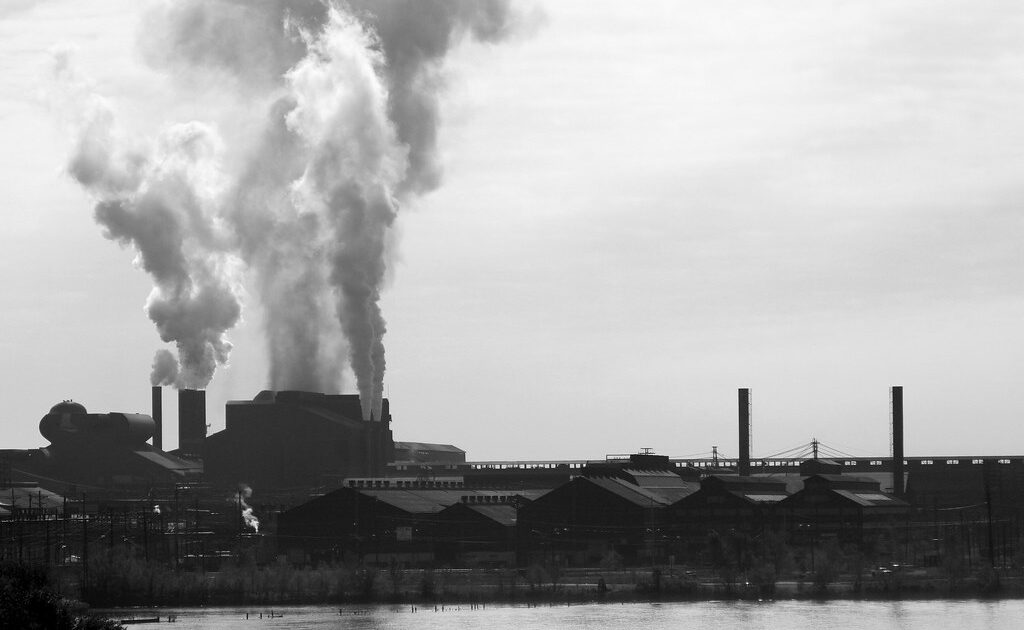
Steel looks glamorous only from a distance. Up close, it is heat, timing, rail schedules, fuel, labor, and the brutal math of waste. Andrew Carnegie understood that earlier and more completely than most of his rivals.
He did not build his fortune by admiring industrial progress from the boardroom. He built it by tightening the entire chain around steel until the system itself became the advantage.
That is why this is a Hidden Fortunes story. The hidden strategy was not steel alone. It was the machine around steel.
The World Before the Fortune

By the late nineteenth century, the United States was becoming an infrastructure civilization. Railroads needed steel rails. Cities needed beams and bridges. Expansion itself created appetite for stronger material at larger scale. That demand made steel a growth market, but growth markets do not automatically create lasting fortunes.
Many businessmen saw rising demand and chased production. Carnegie looked one layer deeper. He saw that the real winner would be the operator who could make steel reliably, cheaply, and at enormous volume while reducing dependence on outsiders.
The visible story is demand. The hidden story is who can organize the system around that demand better than everyone else.
The Rise

Carnegie entered the steel business after learning from railroads, telegraphy, and investment. He had already seen how infrastructure industries rewarded scale and timing. Steel was attractive because it sat at the center of America material expansion.
Carnegie and his circle pushed relentlessly to improve processes, reduce costs, and widen control over the chain. Raw materials, coke, freight, and mill efficiency all mattered because any leak in that chain could destroy margin.
This is where Carnegie ceased to be merely a smart investor and became an architect of an industrial machine. He was not buying a product category. He was designing a coordinated system.
The Expansion of Power

Vertical integration allowed Carnegie Steel to shape more of its own destiny. Control over ore, fuel, transport, and production reduced vulnerability to outside pricing pressure. It also made the company more capable of surviving market swings because fewer critical variables were being outsourced to chance.
That system grew stronger with repetition. Every improvement in process, freight handling, fuel access, or managerial discipline reinforced the economics of the whole enterprise. The company became hard to challenge because rivals had to match not just one mill or one contract, but a broad architecture of interlocked advantages.
Large fortunes in industrial America were often built by people who understood that scale without coordination is fragile. Carnegie made coordination part of the product.
The Hidden Strategy Behind the Fortune

The hidden strategy behind the fortune was vertical integration used as a cost and timing weapon. Carnegie did not merely want steel demand. He wanted control over enough of the chain that the economics of demand would break in his favor.
That meant managing not just mills but inputs, transport links, managerial routines, and reinvestment. When all of those elements align, the business stops depending on one good quarter or one favorable contract. It becomes a machine that keeps translating scale into lower cost and lower cost into stronger competitive position.
Competitors could imitate isolated pieces of the system, but matching the whole architecture was harder. Carnegie advantage came from stacking these layers until the moat became industrial rather than rhetorical.
The Cost, Risk, or Decline

No serious account of Carnegie can ignore cost in the moral sense. Industrial discipline and cost obsession existed alongside labor conflict and one of the most notorious confrontations of the era at Homestead in 1892. The machine that produced wealth also produced violence, resentment, and a harsh view of labor as a variable to be controlled.
That tension matters because it shows how frequently premium business systems carry social cost at the very moment they look most efficient. The wealth was real. So was the strain built into the method.
Carnegie eventual sale to J.P. Morgan in 1901, creating U.S. Steel, proved the economic scale of what he had built. But it also closed one chapter of industrial empire by translating operating control into an even larger corporate consolidation.
Lessons for Modern Business Readers

1. Own more of the chain when the chain decides outcomes
The product may draw the headlines, but margins often live in the surrounding system. Carnegie understood this before most industrial operators had even framed the question.
2. Reinvestment can deepen the moat
Fortunes become stronger when profits upgrade the machine instead of merely rewarding the owner. Carnegie ploughed earnings back into process improvements relentlessly.
3. Cost control is a strategic weapon
When an industry scales fast, lower cost can become a form of dominance. Carnegie pushed cost reduction even when demand was strong, building margin for the downturns that inevitably follow.
4. Integration reduces fragility
The fewer critical choke points owned by others, the more resilient the business becomes. Carnegie competitors found this out when market pressures squeezed those who had outsourced key inputs.
5. Operational systems outlast stories
Markets may love narratives, but real advantage survives through process and control. The Carnegie system worked not because of charisma but because every component reinforced the others.
6. Efficiency does not erase social cost
A powerful machine can still leave conflict and bitterness in its wake. Carnegie philanthropic legacy was in part an attempt to reframe a fortune built on methods that left deep marks on the workers who powered it.
For founders, operators, and investors, Carnegie offers a clear lesson: do not ask only where demand is rising. Ask where coordination is weak, where dependencies leak value, and where control over the chain could create a better system. Carnegie got rich because he understood that industrial wealth does not belong only to the maker. It belongs to the organizer.
Recommended reading: Andrew Carnegie by David Nasaw — the best full-length account of Carnegie as both builder and power operator.