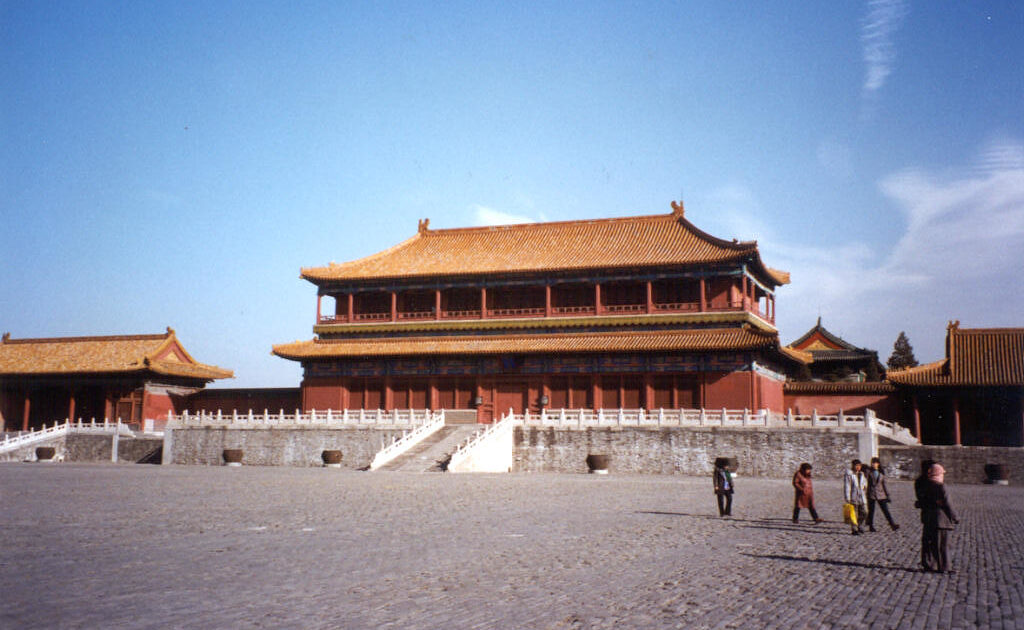
The Qing Dynasty is one of those subjects that many English-speaking readers know by silhouette but rarely by structure. There were emperors, palaces, and late imperial crises, yes. But beneath those images stood one of the largest and most economically formidable imperial systems in the world.
Its wealth was not built on a single glamorous secret. It came from governing scale: land, labor, markets, taxation, trade, and a bureaucratic apparatus capable of holding together a civilization-sized economy.
That is what makes the Qing story perfect for Hidden Fortunes. The fortune was not theatrical. It was systemic, and because it was systemic, it was enormous.
The World Before the Fortune
 China — a monument to the administrative and military infrastructure that the Qing Dynasty inherited and expanded to govern one of history’s largest empires” style=”width:100%;height:400px;object-fit:cover;display:block;”/>
Before the Qing reached its mature form, China already possessed a long civilizational history of agrarian administration, market exchange, and imperial governance. The Qing inherited not an empty field, but a sophisticated economic world that could be expanded, disciplined, and integrated further under stable rule.
This inheritance matters because great fortunes at imperial scale often emerge when a ruling system does not need to invent everything from scratch. It needs to consolidate, extend, and govern what already exists with enough strength that production, trade, and taxation continue to flow.
For modern American readers, this is an important corrective. Wealth at scale does not always begin with sudden disruption. Sometimes it begins with the ability to hold an immense existing order together and make it function more effectively across distance.
What makes this opening stage so important for modern readers is that early opportunity almost never looks polished. In every age, the future fortune begins inside disorder, partial information, and a market that still looks too unstable for cautious outsiders. The eventual winner is often the operator who can look past the noise and identify which layer of the system will still matter after the frenzy burns off.
The Rise
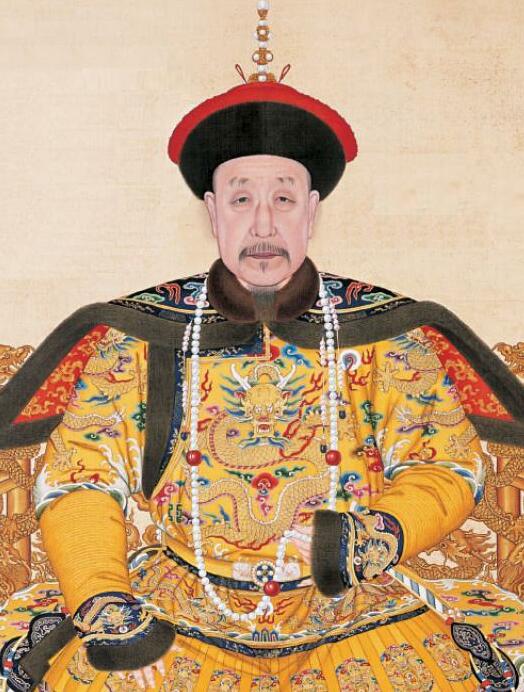
The Qing consolidated power over a vast territory and then benefited from the combination of administrative continuity, agricultural productivity, and demographic growth. A state governing a huge productive population already possesses an extraordinary foundation, provided it can tax lightly enough to preserve output while governing strongly enough to preserve order.
During the high Qing era, internal commerce expanded alongside the agrarian base. Regions specialized, markets deepened, and long-distance exchange linked different parts of the empire more tightly. This is one reason the Qing economy deserves more respect from Western readers. It was not a static agrarian block. It was a complex, internally active system with enormous depth.
External trade added another layer. Tea, silk, porcelain, and other goods linked Qing production to global demand. But the empire’s real strength was not foreign trade alone. It was the size and coherence of the domestic machine supporting that trade.
The emotional temptation in stories like this is to treat the rise as inevitable once the first decisive move is made. History is rarely that generous. The rise matters because it shows a sequence of disciplined choices, each one building on the last until competitors begin to mistake structure for destiny.
The Expansion of Power

The Qing fortune expanded because scale itself became an economic asset. A huge population created labor, demand, and tax potential. Productive agricultural regions fed both people and revenue. Merchant networks connected interior production to urban markets and export channels. The empire’s wealth was distributed across systems rather than resting on one sensational source.
That diversified strength gave the Qing unusual resilience for long stretches. If one sector weakened, others still mattered. If foreign demand shifted, the domestic economy remained enormous. This is what large integrated systems can do when they are competently governed. They create multiple layers of reinforcement.
The state also mattered in shaping how outside commerce entered the imperial order. Controlled trade channels reflected a strategic concern with sovereignty and administration as much as with exchange itself. Hidden Fortunes readers should notice that the deepest power often sits in deciding the terms on which outside markets may participate.
From an American business perspective, this is where the story stops being a historical curiosity and starts becoming a strategic case study. Expansion at this level does not come from hustle alone. It comes from turning one good position into a network of reinforcing positions, so that the system itself becomes harder to challenge than any single product, trade, or asset inside it.
The Hidden Strategy Behind the Fortune
.jpg)
The hidden strategy behind the fortune was governance of scale. The Qing did not need to discover a silver mountain or engineer a modern trust. It needed to manage land, people, taxes, and trade across a vast territory with enough competence that the system kept producing. That may sound less dramatic than conquest or finance, but at imperial scale it is one of the most formidable wealth strategies in history.
This strategy worked because the empire’s internal market depth was itself a kind of treasure. A ruling system that can keep a gigantic productive society legible and connected controls something more powerful than a one-time windfall. It controls recurring throughput.
The Qing also demonstrates the strategic power of selective openness. Foreign trade mattered, but the empire was not built around external demand alone. It could engage the wider world while still drawing its deepest strength from its own internal scale. That balance is a major reason the dynasty deserves more serious economic study.
For modern business readers, the lesson is that massive value can live inside systems that appear quiet from the outside. If you can govern complexity, preserve throughput, and shape the terms of access, you may be richer than louder competitors who rely on narrower engines.
The premium lesson is restraint. Great fortunes often look dramatic from the outside, but internally they are usually built on cold sequencing. One advantage leads to another. One layer of control finances the next. The people who build enduring wealth understand that timing, structure, and recurring leverage matter more than theatrical motion.
The Cost, Risk, or Decline

The Qing system eventually faced pressures it could not absorb indefinitely: population strain, internal rebellion, fiscal challenges, and foreign intrusion changed the environment. Large systems are powerful, but they can also become difficult to adapt when shocks arrive faster than institutions can respond.
That late strain should not erase the magnitude of what the dynasty achieved. If anything, it clarifies the real lesson. Governing a civilization-sized economy is one of the hardest strategic tasks in history, and the Qing did it at extraordinary scale for a very long time.
That darker edge should not be treated as a footnote. It is part of the real anatomy of power. Many wealth systems become most impressive at the exact moment they are also becoming morally brittle, politically exposed, or structurally overconfident. Hidden Fortunes works only when the strategy remains visible without pretending the costs were imaginary.
Lessons for Modern Business Readers

1. Internal market depth can be a superpower
A large and productive domestic system can generate immense wealth even without depending completely on external markets.
2. Administration is an economic asset
The ability to govern land, people, and taxes consistently is itself a wealth engine.
3. Diversified systems are often more durable
The Qing economy drew strength from agriculture, trade, population, and regional specialization together.
4. Quiet scale can outperform glamorous stories
Not every great fortune is built on spectacle. Some are built on disciplined throughput.
5. Control over access matters
States and firms gain leverage when they can shape the terms under which outsiders enter the system.
6. Adaptation remains the final test
Even the richest large system can weaken if it cannot respond quickly enough to new pressures.
The darker lesson underneath all of this is that fortune rarely comes from surface activity alone. In almost every era, the decisive wealth goes to the people who control the terms, not just the transaction. Hidden Fortunes exists to make that layer visible, and this story does exactly that.
For founders, investors, and operators in the United States and other English-speaking markets, the practical value of this history is not imitation at the surface level. It is pattern recognition. Every modern industry has its own version of routes, chokepoints, permissions, and recurring flows. The challenge is to identify them early, reach them before the market fully prices them in, and build enough discipline around them that success compounds instead of dispersing.
Book Recommendation
For readers who want the best next step, start with The Last Emperors by Evelyn Rawski. It is the right Amazon follow-up for this topic because it gives the wider historical context behind the fortune, the machinery of power, and the strategic logic that made the story endure.