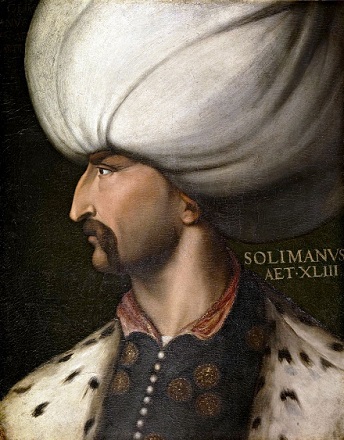
Not every great fortune begins in a mine, a bank, or a factory. Some begin in geography. The Ottoman Empire became one of the most formidable powers on earth by understanding a simple brutal fact: if enough people and goods need to move through your world, control over movement can become its own kind of treasure.
That is why the Ottoman story matters. Its wealth was less theatrical than a silver empire and less obvious than a corporate monopoly. It lived in the slow power of customs, land revenue, strategic cities, and administrative systems that made distance pay.
For Hidden Fortunes, that makes the Ottomans irresistible. They reveal how power can become profitable when an empire learns to charge for the architecture of the world around it.
The World Before the Fortune
_(14803077943).jpg)
Before the Ottoman Empire became a superpower, the regions it would eventually govern were already commercially vital. The eastern Mediterranean, Anatolia, the Balkans, and connections into the Middle East sat near some of the most important corridors of exchange in the premodern world. Whoever controlled these spaces could influence more than local markets. They could influence passage itself.
That possibility mattered because commerce across long distances requires order, permissions, and protection. Empires that can provide those things are not merely taxing movement after the fact. They are shaping the conditions that make movement possible. In that sense, revenue and security are twins.
The Ottoman rise should therefore be read as a story of strategic position meeting administrative ambition. Geography created opportunity, but only an organized imperial system could convert that opportunity into recurring financial power.
What makes this opening stage so important for modern readers is that early opportunity almost never looks polished. In every age, the future fortune begins inside disorder, partial information, and a market that still looks too unstable for cautious outsiders. The eventual winner is often the operator who can look past the noise and identify which layer of the system will still matter after the frenzy burns off.
The Rise

As Ottoman power expanded, conquest created the territorial base, but administration turned territory into income. Cities, routes, agricultural land, customs points, and provincial obligations all had to be woven into a workable imperial structure. The empire became rich not when it merely acquired land, but when it made that land legible enough to support regular collection.
The conquest of Constantinople in 1453 was especially significant because it represented far more than symbolic victory. It strengthened Ottoman control over a city with enormous strategic and commercial importance. A city at the center of routes can become more than a capital. It can become a valve through which political and economic power flows together.
As the empire matured, military strength and fiscal organization reinforced one another. Revenue supported armed power, and armed power protected revenue. This loop is familiar across history, but the Ottoman version stands out because of how strongly it was tied to geography and administrative resilience rather than to one single export miracle.
The emotional temptation in stories like this is to treat the rise as inevitable once the first decisive move is made. History is rarely that generous. The rise matters because it shows a sequence of disciplined choices, each one building on the last until competitors begin to mistake structure for destiny.
The Expansion of Power

Ottoman power expanded economically because the empire learned how to monetize breadth. Land taxes, customs duties, and provincial arrangements created multiple income streams across a very large and diverse territory. That diversity mattered. It meant the empire did not depend on one commodity alone. Instead, it drew strength from the fact that many different routes, regions, and obligations were feeding the center.
This kind of system can look less glamorous than a treasure empire, but it is often more durable. If one route weakens, another may still function. If one province struggles, another may continue to perform. The challenge is not simply finding wealth. It is keeping a large system coordinated enough that the wealth continues to move.
The Ottoman Empire accomplished that for centuries with a mixture of military force, local accommodation, administrative practice, and strategic location. That combination is why it deserves to be studied as a financial power rather than only a military one.
From an American business perspective, this is where the story stops being a historical curiosity and starts becoming a strategic case study. Expansion at this level does not come from hustle alone. It comes from turning one good position into a network of reinforcing positions, so that the system itself becomes harder to challenge than any single product, trade, or asset inside it.
The Hidden Strategy Behind the Fortune

The hidden strategy behind the fortune was monetized position. The Ottomans did not need every province to be identical or every trade flow to be under perfect control. They needed to sit over enough of the right spaces, tax enough of the right movements, and preserve enough imperial order that revenue became recurrent.
This is a subtle but important point. A weaker state experiences geography as scenery. A stronger state experiences geography as leverage. The Ottomans transformed cities, corridors, and agricultural regions into a network of permissions, duties, and obligations. That is what turned territorial scale into financial scale.
The model also reveals the power of administrative pragmatism. A vast empire cannot function on force alone. It must incorporate local realities while still preserving central extraction. The Ottomans were often effective because they were not trying to make every corner uniform before making it useful.
For modern business readers, the lesson is clear: if you can control the route, define the terms of passage, and build a system flexible enough to keep revenue moving across complexity, you can create durable power without relying on spectacle.
The premium lesson is restraint. Great fortunes often look dramatic from the outside, but internally they are usually built on cold sequencing. One advantage leads to another. One layer of control finances the next layer of control. The people who build enduring wealth are often the people who understand that timing, structure, and recurring leverage matter more than theatrical motion.
Seen clearly, the Ottoman financial model was a master class in earning from position rather than from spectacle. A state that can sit over enough strategic junctions does not need a treasure myth if it can keep customs, land revenue, and permissions functioning year after year. The empire’s wealth was therefore less about dramatic accumulation than about keeping movement legible, taxable, and governable across distance.
This is what makes the Ottoman case feel so contemporary. In modern markets, the firms and states with the most durable power are often not the loudest producers. They are the quiet toll collectors, gatekeepers, and standard setters that remain present every time someone else wants to move value from one place to another.
The Cost, Risk, or Decline
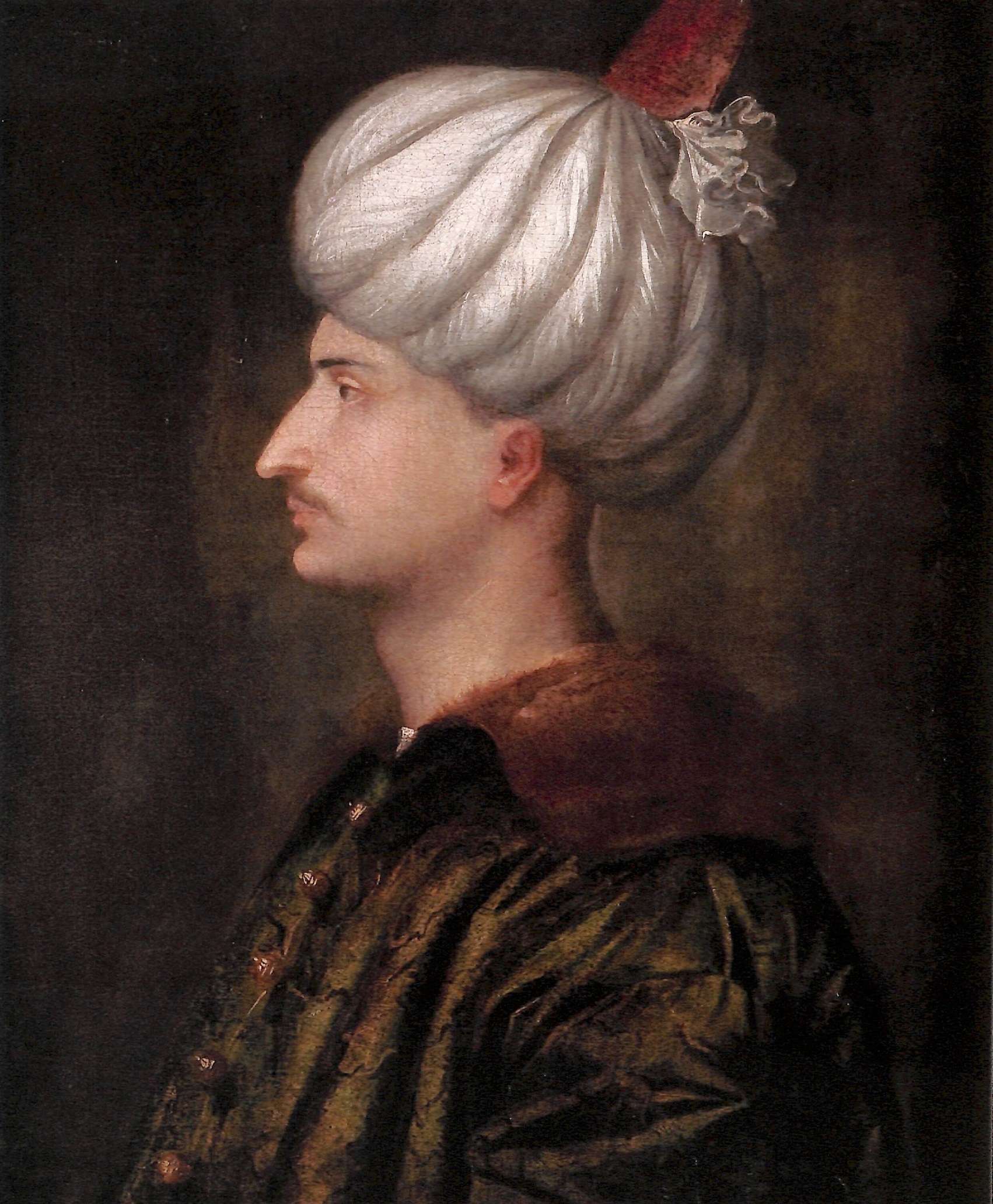
Over time, the same breadth that enriched the empire also became harder to manage. Rival powers, military modernization, fiscal pressure, and administrative strain changed the environment. Large systems built on coordination become vulnerable when coordination grows more expensive than the underlying flows can comfortably support.
That does not reduce the Ottoman Empire to a decline story. It underscores a deeper Hidden Fortunes lesson: even a brilliantly positioned system must keep adapting if it wants geography to remain an asset rather than become a burden.
That darker edge should not be treated as a footnote. It is part of the real anatomy of power. Many wealth systems become most impressive at the exact moment they are also becoming morally brittle, politically exposed, or structurally overconfident. Hidden Fortunes works only when the strategy remains visible without pretending the costs were imaginary.
Lessons for Modern Business Readers

1. Geography can be monetized
Strategic position becomes wealth when a system can govern, tax, and protect movement through that position.
2. Diversified revenue is often stronger than one glamorous source
The Ottoman system drew from multiple territories and channels rather than one single mineral jackpot.
3. Administration is what turns scale into money
Without recurring collection, large territory is just expensive scenery.
4. Flexibility can preserve extraction
Big systems often work best when they can adapt local arrangements without losing central leverage.
5. Routes matter as much as goods
Owning passage can be more valuable than owning every item passing through it.
6. Coordination costs eventually matter
A system that spans many regions must keep earning enough to justify the complexity of managing them.
The darker lesson underneath all of this is that fortune rarely comes from surface activity alone. In almost every era, the decisive wealth goes to the people who control the terms, not just the transaction. Hidden Fortunes exists to make that layer visible, and this story does exactly that.
For founders, investors, and operators in the United States and other English-speaking markets, the practical value of this history is not imitation at the surface level. It is pattern recognition. Every modern industry has its own version of routes, chokepoints, permissions, and recurring flows. The challenge is to identify them early, reach them before the market fully prices them in, and build enough discipline around them that success compounds instead of dispersing.
Book Recommendation
For readers who want the best next step, start with Lords of the Horizons by Jason Goodwin. It is the right Amazon follow-up for this topic because it gives the wider historical context behind the fortune, the machinery of power, and the strategic logic that made the story endure.