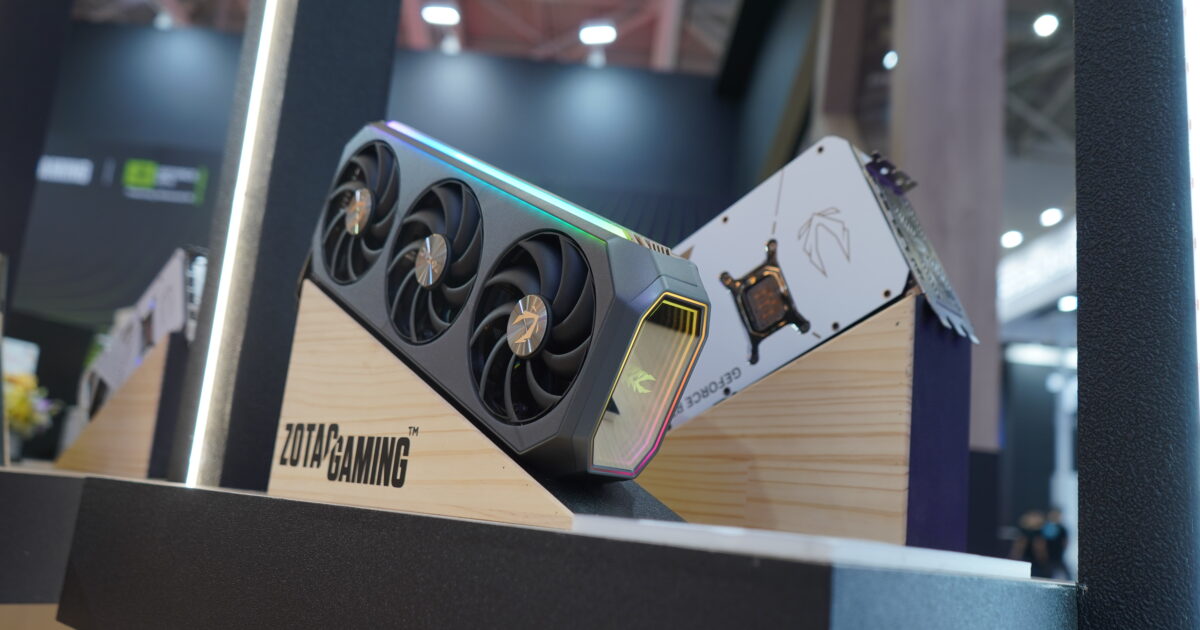
The owner of memory bandwidth can capture part of the AI boom without owning the most famous chip brand.
This is the hidden architecture of the AI supply chain. When analysts discuss the AI infrastructure buildout, they focus on GPUs — specifically Nvidia’s H100 and B200 accelerators, which have become the scarce inputs that determine which AI projects move forward and which ones wait. But underneath the GPU story is a quieter scarcity: High Bandwidth Memory, or HBM, the specialized DRAM technology that determines how fast a GPU can access and process data.
Without sufficient HBM, even the most advanced GPU cannot run AI workloads efficiently. The entity that controls HBM supply does not need to own the most famous chip brand. It sits one layer deeper in the stack — in the position that the most durable industrial monopolies have always occupied.
The World Before the Fortune
Standard DRAM memory — the type that goes into laptops and servers — is a commodity market. Prices fluctuate with the memory cycle, margins compress during oversupply, and differentiation is difficult. Samsung, SK Hynix, and Micron have competed in this market for decades, with periods of intense price competition followed by coordinated capacity cuts.
High Bandwidth Memory is a fundamentally different product. HBM stacks multiple layers of DRAM vertically, connected by thousands of tiny pathways called through-silicon vias. This architecture delivers data to the processor at rates that standard DRAM cannot approach — essential for the parallel processing that large language model training requires. Building HBM is significantly more difficult than building conventional DRAM. The yield rates are lower. The equipment is specialized. The learning curve is steep.
This technical complexity creates a natural chokepoint. As of mid-2026, SK Hynix is the leading supplier of HBM to Nvidia, with Samsung and Micron trailing significantly in both volume and per-chip performance. The market that was once a commodity race has become a capability oligopoly — and the capability that matters most is the ability to produce HBM3E and its successors in volume, at yield.
The Rise
The origins of HBM as an AI bottleneck trace to the training requirements of large neural networks. Transformer-based models, which underlie most current AI systems, require simultaneous access to enormous parameter sets during both training and inference. The memory bandwidth needed to keep a large GPU fully utilized exceeds what standard DDR memory can deliver.
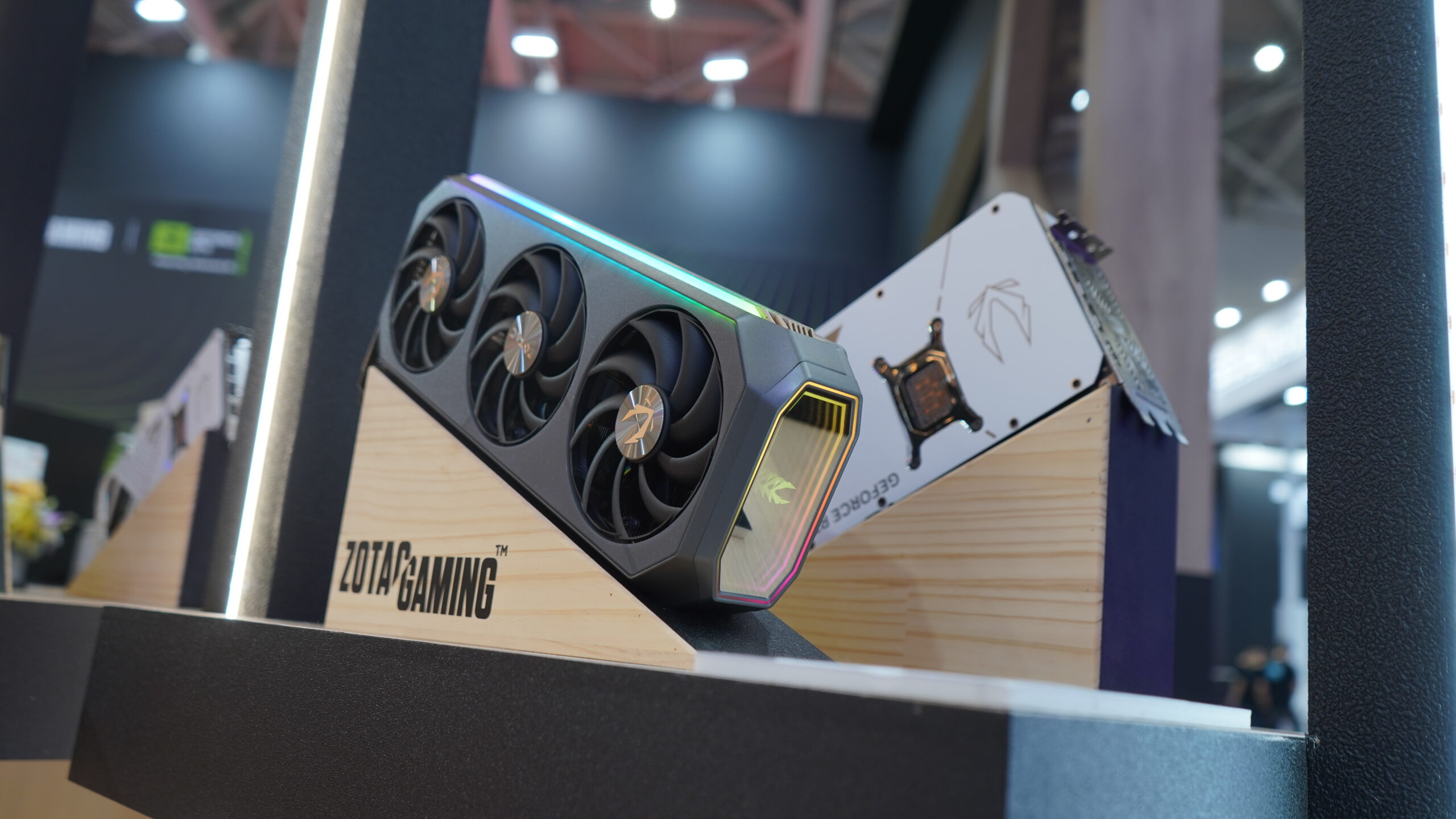
Nvidia recognized this constraint and designed its high-end accelerators around HBM from the H100 generation forward. The GPU and the memory are mounted together on an interposer — a substrate that allows extremely high-bandwidth connection between the chip and the memory stack. The two components are co-designed and inseparable; you cannot substitute standard DRAM for HBM in an H100 or B200.
As the data center land rush accelerated, demand for Nvidia accelerators drove equivalent demand for HBM — demand that the memory industry was not prepared to meet. SK Hynix had invested earlier and more aggressively in HBM capability than its rivals. That early investment, which looked like a risky bet on a niche product, became one of the most valuable positions in the semiconductor industry.
The Expansion of Power
The HBM supply constraint has ripple effects that extend far beyond the memory market itself.
A GPU that cannot be equipped with sufficient HBM cannot be sold. This means HBM yield and delivery schedules directly constrain Nvidia’s shipment capacity, which constrains the AI infrastructure companies that need those GPUs, which constrains the model developers who need that compute. The memory chokepoint propagates forward through the entire AI value chain.
This dynamic gives SK Hynix pricing power that a standard DRAM supplier would not have. HBM is priced at a significant premium to conventional DRAM — and because it is embedded in Nvidia’s chips rather than sold as a standalone commodity, the price is less visible to end buyers. Hyperscalers who buy H100s see a GPU price, not a memory price. The HBM margin is bundled into the GPU system cost.
The race to own the chips beneath AI is partly a race to own the memory beneath the chips. Companies that have secured HBM supply commitments — through direct agreements with SK Hynix, Samsung, or Micron — have structural advantages over competitors who depend on spot market availability.
The Hidden Strategy Behind the Fortune
The memory cartel question — whether HBM suppliers are exercising monopoly pricing — is difficult to answer precisely because HBM is embedded in integrated systems rather than sold as a standalone product.
What is clear is the structural position. SK Hynix’s early investment in HBM3 and HBM3E technology created a capability lead that rivals cannot close quickly. Samsung has faced yield issues that have delayed its HBM3E qualification at Nvidia. Micron entered the HBM market later and has been building capacity while competing on pricing. The result is a market with one dominant supplier, one improving challenger, and one late entrant — a structure that gives the dominant supplier significant pricing and allocation discretion.
The precedent for this kind of embedded component scarcity is instructive. When Intel dominated the microprocessor market in the 1990s and 2000s, its per-chip margins reflected not just manufacturing cost but the absence of credible alternatives. HBM suppliers in the 2020s occupy a structurally similar position — essential to products that cannot be built without them, with limited near-term substitution options.
The Cost, Risk, or Collapse
The HBM scarcity story has several potential resolutions — none of them immediate.
The most likely medium-term outcome is expanded capacity. SK Hynix, Samsung, and Micron are all investing heavily in HBM production. The technology itself is advancing — HBM4 will offer higher bandwidth and capacity per stack. As the supply curve shifts right, the degree of scarcity will diminish and with it the pricing premium that current scarcity supports.
A second risk is architectural. If AI accelerator designs evolve toward different memory architectures — processing-in-memory, near-memory computing, or chiplet designs that use different interconnect standards — the current HBM advantage could be disrupted from the design side rather than the supply side.
The third risk is geopolitical. SK Hynix’s leading HBM manufacturing is concentrated in South Korea. Any supply chain disruption — whether from export controls, natural disaster, or geopolitical tension in the region — would propagate immediately into AI infrastructure buildout globally.
Lessons for Modern Business Readers
The bottleneck one layer down from the famous product captures disproportionate value. HBM suppliers are not as famous as Nvidia. They may not need to be. The entity that supplies an essential input to a scarce product captures margin without carrying the brand risk.
Early investment in difficult technology creates durable advantage. SK Hynix’s HBM lead came from investing in a complex, low-yield technology before the market demanded it at scale. The lead is not permanent, but the time to replicate it is measured in years, not months.
Embedded components are harder to price than standalone products. HBM’s cost is invisible to most GPU buyers because it is bundled into the system. Invisible pricing is a feature for the component supplier: it decouples the supply chain margin from customer price sensitivity.
Capacity investment cycles create timing windows. The current HBM premium will compress as new capacity comes online. The window for capturing outsized returns is the gap between demand realization and capacity response — which in semiconductor manufacturing is typically two to four years.
Supply chain concentration is a risk for buyers and a revenue source for sellers. Hyperscalers who depend on one HBM supplier have the same vulnerability that the Meat Trust’s customers had to the cold-chain monopoly. The leverage is real; the only question is how long the concentration persists.
How This Fits the Hidden Fortunes System
The Memory Cartel Question adds the semiconductor supply chain layer to Hidden Fortunes’ coverage of the AI infrastructure buildout. It complements articles on data center land acquisition, GPU financing, and power procurement by identifying the component-level scarcity that constrains the entire system.
The pattern — a technically difficult enabling input, concentrated supplier base, embedded pricing, and a time-limited window before capacity catches up — recurs across the Hidden Fortunes archive in different eras and industries. The specific material changes. The structural position does not.
Conclusion
The Memory Cartel Question is not yet settled. Whether HBM suppliers are formally coordinating on price or simply benefiting from structural scarcity is less important than the underlying fact: the entity that controls the memory bandwidth that feeds AI accelerators is positioned one layer below the most visible competition — in exactly the position that the most durable industrial monopolies have always occupied.
The GPU race gets the headlines. The memory race determines who wins it.
Further Reading
For readers who want to go deeper on how semiconductor supply chains create strategic chokepoints, the history of DRAM market structure offers a longer-run view of how technically complex components move from commodity to scarce specialty and back. The HBM story is new in its AI context but familiar in its competitive logic.